The alchemy of gold recycling transforms trash into treasure through five calculated steps. First, materials are meticulously sorted and collected – from tarnished rings to electronic bits. Next comes chemical stripping and heat treatment to prep the gold-bearing items. The real magic happens in dissolution, where precise chemical solutions ionize the gold. Separation techniques then fish out the precious metal before final refining cranks up the heat to 1,947°F. Theres way more to this golden transformation than meets the eye.

Transforming old gold into gleaming new treasures isn’t just recycling – it’s practically financial alchemy. Gold recycling requires much less energy as mining operations do, making it highly efficient. The process starts with meticulous collection and sorting, where everything from tarnished jewelry to electronic scraps gets categorized by type. A simple magnet can separate gold-plated steel components, while acid testing kits reveal the true quality hiding beneath surface appearances. Professional recycling services are essential for processing large volumes efficiently and safely.
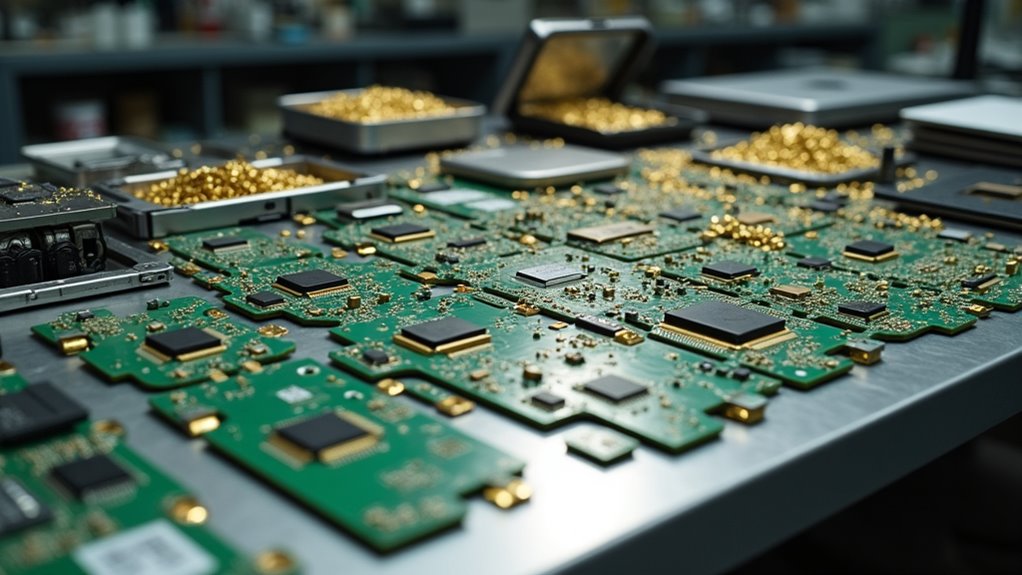
The real magic begins during preparation, where gold-bearing materials shed their mundane disguises. Electronic components surrender their precious cargo through chemical stripping, while heat treatment banishes pesky organic contaminants. It’s like watching a butterfly emerge from its chrysalis, except this metamorphosis involves more acid and less wing-fluttering. Eco-friendly methods for extraction are increasingly being adopted to enhance sustainability throughout the process.
Through chemistry’s embrace, old gold sheds its worn disguise, transforming from electronic waste into precious potential.
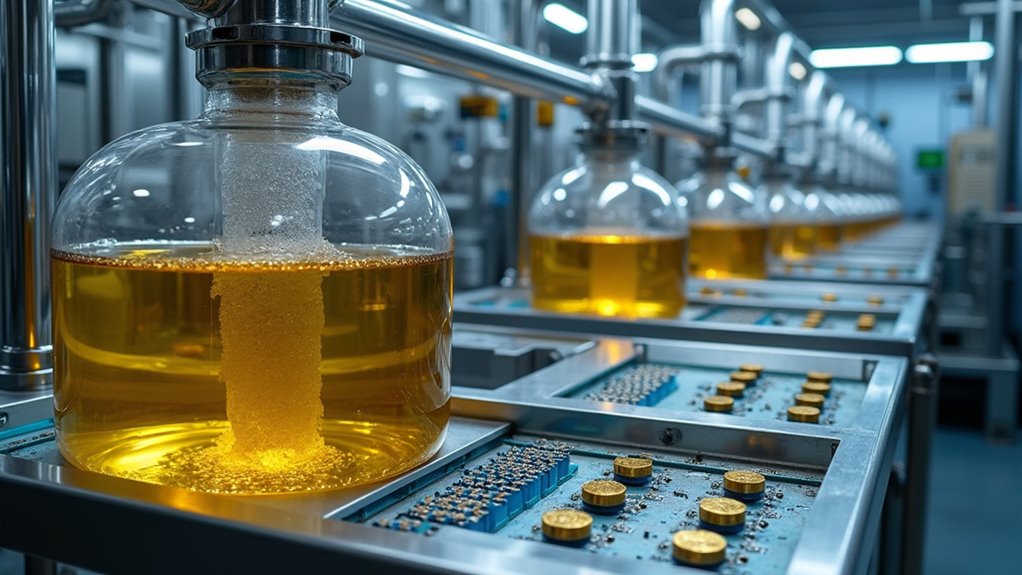
Next comes the critical dissolution phase, where chemistry takes center stage. Gold meets its match in solutions like aqua regia or cyanogen, transforming solid metal into a ionized dance of atoms. The process requires precise control – too much oxidizing agent and you’re literally throwing money down the drain, too little and your gold stays stubbornly solid.

Recovery and separation techniques follow, utilizing everything from electrolytic extraction to precipitation. It’s basically like fishing for gold molecules, except the bait is science and the catch is guaranteed (assuming you didn’t mess up the previous steps). The rough separation phase removes major impurities, prepping the material for its final transformation.
The refining stage is where perfection becomes obsession. Multiple rounds of purification push the gold toward that coveted 99.99% purity mark. Temperature control, chemical ratios, and timing must be spot-on – there’s no room for “good enough” when you’re aiming for 24-karat excellence.
The grand finale involves melting the purified gold at a toasty 1,947°F, pouring it into molds like some kind of metallurgical pastry chef. The resulting bars or ingots get stamped with their purity level, ready to begin life anew as whatever their next incarnation demands.
Throughout this entire process, environmental consciousness isn’t just a buzzword – it’s a necessity. Chemical neutralization, proper waste management, and minimizing harmful substances like cyanide guarantee that gold recycling doesn’t come at nature’s expense. After all, what good is recovered treasure if we poison the planet to get it?

The entire journey from scrap to pure gold demonstrates humanity’s ingenious ability to preserve and transform valuable resources. Each step builds upon the last, creating a symphony of scientific precision that turns yesterday’s discarded gold into tomorrow’s precious commodity.
It’s a process that demands respect, attention to detail, and just a touch of mad scientist enthusiasm – because let’s face it, who doesn’t love a good transformation story?
Frequently Asked Questions
How Much Does It Cost to Start a Gold Recycling Business?
Starting a gold recycling biz ain’t cheap! Total startup costs typically range from $100K to $500K for small/medium operations.
Major expenses include facility leases ($2K-$10K monthly), essential equipment like shredders and furnaces ($100K-$500K), permits ($5K-$50K), and environmental compliance ($10K-$100K).

Don’t forget operational costs – you’ll need initial inventory, tech systems, and skilled staff. The price tag varies by location and scale… but it’s definitely not pocket change!
What Permits and Licenses Are Required for Gold Recycling Operations?
Gold recycling operations require a serious stack of paperwork!
Essential permits include Title V operating permits for processing facilities, plus state-level scrap metal recycler licenses that need yearly renewal.
Can’t forget NPDES permits for any water discharge. Local zoning clearance is vital, and some jurisdictions demand specific business permits.
Environmental compliance is non-negotiable – gotta follow NESHAP standards and state regs.
Better get cozy with the permit office!
Can I Recycle Gold-Plated Items Using the Same Process?
No – gold-plated items require completely different recycling methods than solid gold.
The minuscule amount of gold (typically less than 0.5% of total weight) makes traditional recycling processes ineffective.

Professional refineries use specialized chemical stripping or electrolysis techniques to separate the thin gold layer from base metals.
For individuals, it’s rarely worth the effort or expense.
Most refiners won’t even accept gold-plated items unless in massive bulk quantities.
What Safety Equipment Is Essential for Handling Chemicals in Gold Recycling?
Essential safety gear for chemical handling includes a full-face respirator with proper filters, chemical-resistant nitrile gloves, and a protective suit or apron.
Safety goggles and a face shield provide vital eye/face protection. An emergency eyewash station and shower must be nearby.
Proper ventilation’s critical – ideally a fume hood.
Don’t forget the chemical spill kit and fire extinguisher rated for chemical fires.
This stuff ain’t optional – it’s life-or-death serious.
How Do I Identify Fake Gold Items Before Starting the Recycling Process?
Gold authenticity testing starts with careful visual inspection for hallmarks and authentic coloring.
Smart recyclers combine multiple verification methods – the trusty magnet test (real gold ain’t magnetic!), water test (genuine gold sinks like a rock), and acid testing when needed.
But here’s the kicker: even these methods aren’t foolproof.
Professional XRF analysis provides the most reliable results, especially for bulk processing.
Never skip testing – fake gold‘s a major pain!