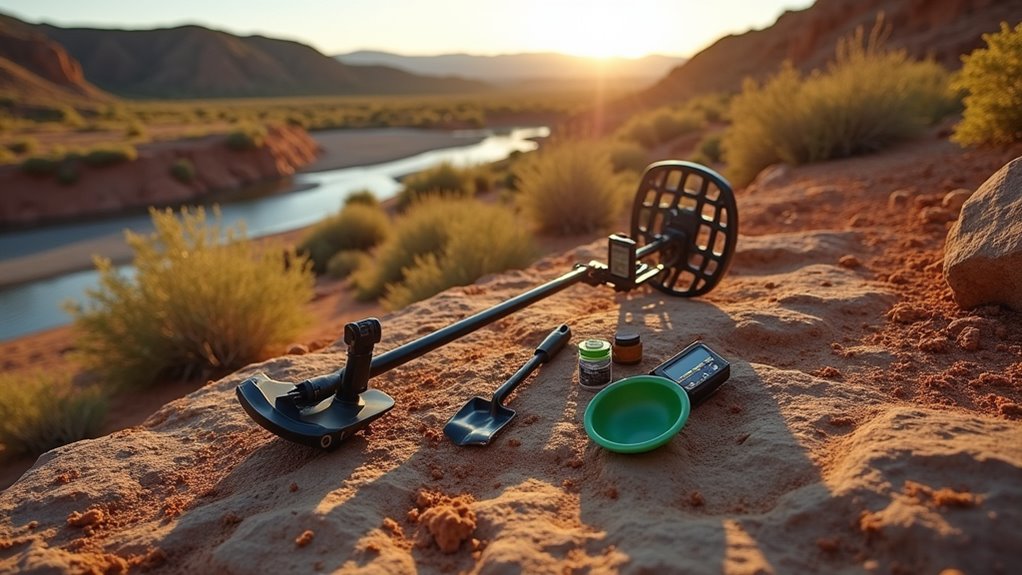
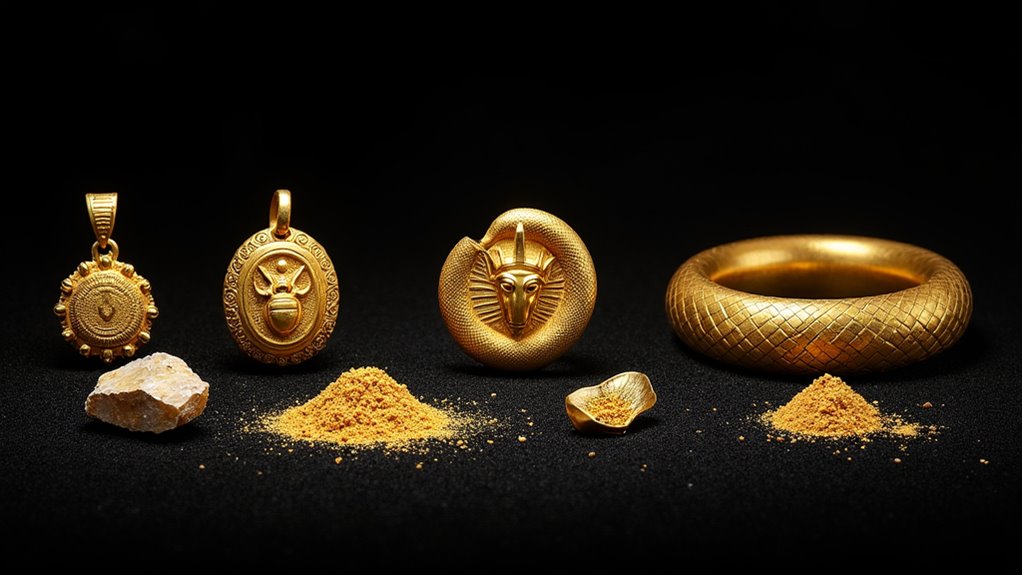
Gold transcended mere ornamentation in indigenous cultures, weaving spiritual beliefs with masterful metalworking. Ancient artisans crafted intricate designs that encoded their worldviews, while trade networks spread techniques across the Americas. From burial masks to ceremonial bling, gold pieces told stories of status and divine connection. Indigenous metalworkers mixed gold with copper for durability, creating lasting works that bridged earthly and supernatural domains. The ancient secrets of these golden traditions still shimmer beneath the surface.

Glitter and mystique – indigenous artisans didn’t just work with gold, they breathed life into it. Ancient civilizations across the Americas transformed this precious metal into something far beyond mere adornment, creating pieces that spoke volumes about their spiritual beliefs, social hierarchies, and cultural identities. Through masterful metalworking techniques like casting and hammering, they produced intricate designs that continue to captivate modern observers. Gold’s impact on medieval society illustrates a parallel in how precious metals have shaped different cultures.
These ancient craftspeople weren’t just making pretty trinkets – they were encoding their entire worldview into metal. The connection between gold and the divine was particularly profound, with the metal’s sunlike radiance serving as a bridge between earthly and supernatural domains. In Colombia, folks would literally give their gold pieces a sunbath, believing it would recharge their spiritual mojo. Talk about a high-end tanning session! In many cultures, gold was also seen as a symbol of wealth that transcended mere economic value, embodying social status and divine favor. Moreover, the ethical implications of conflict-free sourcing were already a concern in historical trade practices, as the value of gold often intersected with power dynamics.
Ancient gold artisans weren’t just making jewelry – they were crafting cosmic connections between heaven and earth through their dazzling metalwork.
The trade networks that developed around gold were absolutely bonkers. This stuff wasn’t just valuable – it was portable power. Indigenous societies used it as a seriously fancy form of currency, trading it for everything from exotic animals to textiles that would make today’s fashion designers jealous. And let’s be real, nothing said “I’m kind of a big deal” quite like sporting some gold bling at a ceremonial gathering.

But the real flexing happened in death. When important figures kicked the bucket, they didn’t just take their gold to the grave – they practically turned their tombs into metallic art galleries. The Moche and other Andean societies went all out, creating elaborate masks and ornaments that were basically ancient versions of an eternal Instagram filter. These burial practices weren’t just about showing off; they reflected a deep belief that gold’s incorruptibility could somehow transfer to the soul.
The technical skills these artisans developed were mind-blowing. They figured out how to mix gold with copper to make it more durable while keeping its bling factor intact. The Mixtec and Aztec metalworkers were particularly extra with their filigree work, creating pieces so detailed they’d make a modern jeweler weep.
And get this – these techniques spread like wildfire, from the Andes all the way up to North America, creating a sort of ancient metallurgical influencer network.
Every piece told a story – whether it was a necklace showing off supernatural beings or ear spools carved with mythological scenes. These weren’t just accessories; they were walking, talking history books made of precious metal. The cultural significance was so deep that specific designs became like medieval coats of arms, instantly identifying which community you belonged to.

Fundamentally, indigenous gold work wasn’t just art – it was identity, spirituality, and social currency all rolled into one glittering package. Additionally, the environmental impact of sustainable gold mining poses ongoing challenges for modern practices that seek to respect the traditions of these ancient cultures.
Frequently Asked Questions
How Did Indigenous Peoples Extract and Purify Gold for Their Artworks?
Indigenous peoples were seriously savvy with their gold game! They’d use the mazamorro technique – basically washing gold-bearing gravel in water (genius, right?).
These early metallurgists crushed ore using tools like the batea and barra, then got fancy with mercury amalgamation to purify their precious metal.
Talk about skills – they’d heat that mercury-gold mixture til’ the mercury evaporated, leaving behind some seriously pure gold.

Pretty advanced stuff for “primitive” times!
What Spiritual Significance Does Gold Hold in Different Indigenous Cultures?
Gold carries profound spiritual weight across indigenous cultures worldwide.
In the Ashanti Kingdom, the Golden Stool embodies their collective soul, while Aztec civilizations saw it as a direct link to their sun deity. Its unchanging luster convinced many tribes it was a divine gift – pure spiritual energy in physical form.
From shamanic rituals to sacred ceremonies, gold’s role transcends mere decoration, serving as a bridge between earthly and spiritual domains.
Which Indigenous Tribes Were Known for Their Most Sophisticated Gold-Working Techniques?

The Sinú people of Colombia were absolute masters of tumbaga alloys, perfecting depletion gilding techniques that’d make modern jewelers weep.
But let’s not sleep on the Moche – their fusion gilding game was next-level stuff.
The Inca? They were basically running ancient gold refineries with mercury amalgamation before Europe caught on.
And those Mixtec artisans? Their filigree work was so precise it’ll make your eyes hurt just looking at it.
How Did Colonization Affect Indigenous Peoples’ Access to Gold Resources?
Colonization brutally disrupted Indigenous Peoples’ access to gold resources through systematic displacement and exploitation.
Large-scale colonial mining operations literally shoved indigenous miners off their ancestral lands, while mercury pollution poisoned traditional mining sites.
The real gut-punch? Sacred sites got bulldozed for profit.
Indigenous communities lost both physical access to gold deposits and their sovereign rights to extract the precious metal they’d worked with for centuries.
What Modern Indigenous Artists Still Incorporate Traditional Gold-Working Methods Today?

Several Indigenous artists keep traditional gold-working alive today.
Dorothy Grant, a Haida designer, incorporates traditional formline patterns into contemporary gold jewelry.
Denise Wallace, an Aleut metalsmith, blends ancestral techniques with modern materials.
The Paraguayan Nivacle artist, Flores Balbuena, uses ancient filigree methods in her pieces.
Meanwhile, Australian Aboriginal artist Regina Wilson creates stunning works featuring traditional gold-leafing techniques passed down through generations.