Gold’s role in sculpture has evolved from ancient Egyptian ceremonial objects to mind-bending contemporary installations. Artists combine traditional techniques like fire gilding with modern innovations, layering gold over diverse materials for dramatic effect. The precious metal’s reflective properties and symbolic power make it a versatile medium for creative expression. Contemporary artists push boundaries by mixing gold nanoparticles with resins and critiquing wealth – while gold’s timeless allure continues shaping artistic innovation. There’s more to this glittering story than meets the eye.

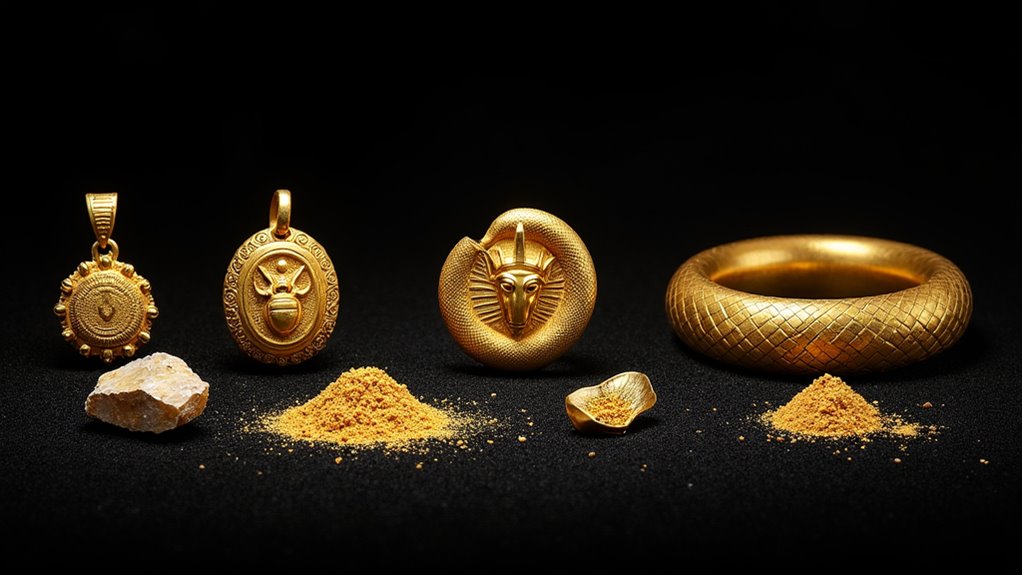
Three millennia of art history couldn’t be wrong – gold’s allure in sculpture is simply undeniable. From ancient Egyptian treasures to contemporary installations, this precious metal has transcended its role as mere currency to become an artistic medium that speaks volumes about power, divinity, and timeless beauty. The ancients weren’t playing around when they developed techniques like fire gilding, mixing mercury with gold to create surfaces that still gleam today (though maybe skip the mercury part nowadays, folks). In many cultures, gold is also used in ceremonial objects, highlighting its importance beyond just aesthetics. Furthermore, in various Indigenous cultures, gold often represents spiritual significance and is woven into their artistic expressions.
The evolution of gold in sculpture reads like a glittering timeline of human innovation. Those clever Renaissance artists figured out how to hammer gold into sheets so thin you could practically read through them, while the Sasanians and Mongols went all-in with elaborate metalwork that’d make modern jewelers sweat. Additionally, the demand for gold in various technological applications has influenced its availability for artistic purposes.
From ancient hammered sheets to intricate metalwork, gold’s journey through art history showcases humanity’s endless drive to innovate and create.
And let’s be real – when Baroque sculptors decided to gild everything in sight, they weren’t exactly going for subtlety.

Modern artists have taken these ancient techniques and cranked them up to eleven. They’re mixing gold nanoparticles with resins, combining precious metals with decidedly un-precious materials, and creating installations that make you question everything you thought you knew about value. Artists like Michelle Gagliano are pushing boundaries, manipulating gold’s reflective properties to create pieces that seem to dance with light – pretty fancy stuff for a metal that usually just sits in bank vaults.
The contemporary art scene has embraced gold’s contradictions with open arms. It’s being used to critique the very wealth it represents (oh, the irony), while simultaneously creating some of the most expensive pieces in modern galleries. Artists are layering it over everything from ceramic to wood, proving that this old-school status symbol can play nice with pretty much any material you throw at it.
The technical mastery required for working with gold in sculpture hasn’t gotten any easier over time. Whether its fire gilding from centuries ago or today’s high-tech coating processes, artists still need steady hands and nerves of steel – or should we say nerves of gold?
The difference is that now they’re combining these traditional techniques with modern innovations, creating hybrid works that would make ancient artisans’ heads spin.

What’s particularly fascinating is how gold continues to hold its symbolic power while adapting to contemporary artistic expression. In installations and mixed-media pieces, it still manages to convey that sense of transcendence and timelessness that made it so appealing to ancient civilizations. Furthermore, the importance of ethical gold sourcing is increasingly recognized in the art world, ensuring that the materials used reflect a commitment to sustainability.
Whether it’s Constantin Brancusi’s elegantly gilded forms or today’s avant-garde experimentations, gold keeps proving itself as versatile as it is valuable. Not bad for a metal that’s basically just sitting there being shiny, right?
Frequently Asked Questions
How Long Does Gold Leaf Last on Outdoor Sculptures?
Properly applied 23kt+ gold leaf on outdoor sculptures can survive 30-40 years – sometimes longer if the stars align!
It’s all about that sweet spot of installation technique and environment. Heavy-duty leaf (21-23g per 1000 leaves) laughs in the face of weather, while cheaper imitations might tap out after a few years.

But watch out – coastal air and pollution are total party poopers, accelerting degradation even on premium gilding jobs.
Can Gold-Plated Sculptures Be Restored if Damaged?
Yes, damaged gold-plated sculptures can absolutely be restored through several proven techniques.
Expert conservators use DC electroplating for even gold deposition or traditional gold leafing for intricate details. Success depends on proper surface prep – cleaning and smoothing are essential first steps.
While restoration costs can be steep (24k gold ain’t cheap!), skilled artisans combine modern electroplating with old-school gilding methods to achieve durable, visually-seamless repairs that bring damaged pieces back to life.
What Alternatives to Gold Are Used in Modern Sculpture?

Modern sculptors have embraced a diverse range of materials beyond gold.
Bronze leads the pack, offering that coveted metallic gleam while being way more budget-friendly.
Stainless steel’s made quite the splash, especially after David Smith turned it into art-world gold (pun intended!).
Titanium’s the new kid on the block, bringing wild color possibilities when treated.
Even aluminum’s getting its moment to shine, literally – its reflective surface creates some seriously eye-catching pieces.
How Much Does Gold Leaf Application Typically Cost for Sculptures?
Gold leaf application costs for sculptures typically range from $350 to $2,500, depending on several key factors.
The price fluctuates based on surface area, complexity of design, and application technique.
Water gilding, the traditional hand-applied method, commands premium rates due to its labor-intensive nature.

Machine-applied techniques offer more budget-friendly options, while factors like surface prep, protective coatings, and the artists expertise can nudge costs higher.
Are There Regulations for Using Gold in Public Art Installations?
Yes – public art installations using gold face strict regulatory oversight.
Local authorities typically require detailed documentation of material specs, safety assessments, and maintenance plans.
Artists must navigate zoning laws, cultural district guidelines, and “Percent for Art” ordinances that govern precious metal use.
Insurance requirements are especially rigid for gold installations, and some jurisdictions even restrict its use to avoid appearing elitist.
Environmental impact and theft-prevention measures are also mandatory considerations.