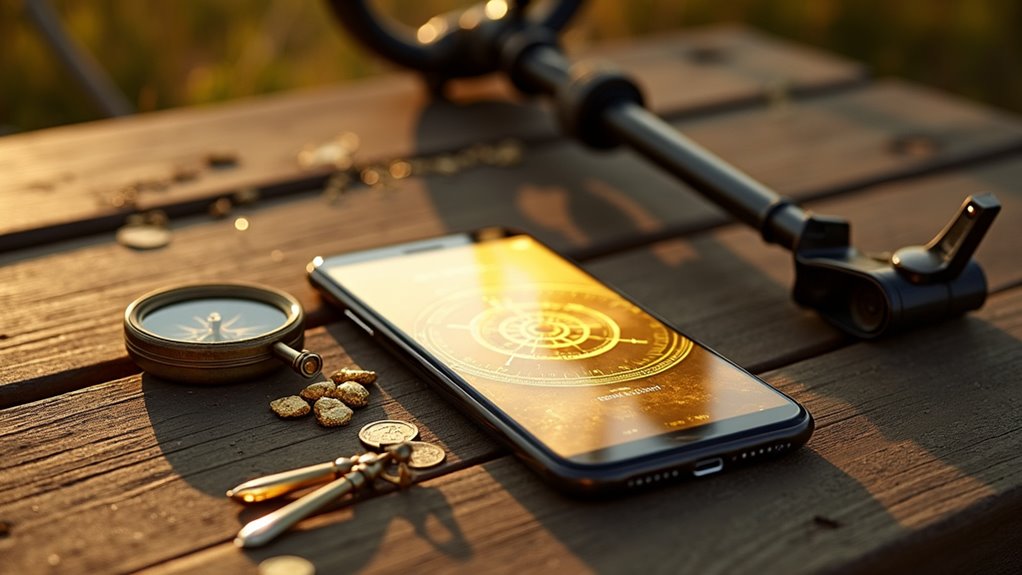
Gold’s grip on human imagination transcends time and borders. Ancient Egyptians saw it as divine flesh, while Buddhists linked it to enlightnment. From Ra’s solar connection to Lakshmi’s prosperity blessings, cultures worldwide wove gold into their sacred stories and rituals. It’s indestructible nature and eternal shine reinforced beliefs in its mystical origins – many thought it came from actual sunbeams! The precious metal’s symbolism runs deeper than its gleaming surface suggests…

Mythology and Symbolism of Gold****
The mythology and symbolism of gold stretches across the tapestry of human civilization like a glittering thread that just won’t quit. From the sun-kissed temples of ancient Egypt to the elaborate ceremonies of Asian dynasties, gold has captivated humanity’s imagination and sparked divine connections that refuse to fade. The Egyptians, ever the goldbugs, dubbed it “the flesh of the gods” – talk about taking your precious metals seriously!
Ancient mythologies worldwide couldn’t get enough of the yellow metal. Norse legends tell of Sif’s magical golden hair (seriously, who wouldn’t want that kind of bling?), while Hindu mythology claims gold emerged during the cosmic “Churning of the Ocean” – becuz obviously, that’s where all the best stuff comes from. The Celts, not to be outdone, had their golden cauldron of the Dagda, which probably made chicken soup taste absolutely divine.

Spirituality and religion? Gold’s got that market cornered too. Buddhists see it as enlightenment incarnate, while Christians slather their sacred objects in it faster than you can say “divine presence.” Hindu goddess Lakshmi basically owns the gold market when it comes to prosperity vibes, and shamans used it to phone the spirit world – no roaming charges applied! Furthermore, many cultures incorporate gold into ceremonial objects that hold significant spiritual value, reinforcing its role as a timeless symbol of faith and devotion. The increasing consumer demand for sustainable gold is reshaping the way these spiritual artifacts are sourced and valued.
But lets be real – nothing screams “I’m kind of a big deal” quite like gold. Medieval European monarchs wore it like they were trying to blind their subjects, while Egyptian pharoahs basically turned themselves into walking gold advertisements for their supposed divine connections. Even today, flash a 24K gold anything and watch peoples eyes go wide – some things never change.
The physical properties of gold only amp up its mystical street cred. Its indestructible? Check. Doesn’t tarnish? You bet. Reflects light like nobody’s business? Absolutely. No wonder every culture from the Aztecs to the Chinese thought it was literally made of sunbeams and divine essence. And dont even get us started on its malleability – ancient artisans must’ve thought they’d hit the jackpot with this stuff.
Cultural celebrations worldwide still cant resist golds allure. Indian festivals shower it around like confetti, East Asian New Year traditions practically require it, and weddings? Well, good luck finding one that doesn’t feature gold somewhere in the mix. Even in death, ancient Egyptians packed their tombs with enough gold to make a modern banker blush – talk about taking it with you!

The fascinating thing about gold’s symbolism is how it manages to mean basically the same thing everywhere – divinity, power, eternity, and wealth – while each culture adds its own special sauce to the mix. Whether you’re talking about Ra’s solar connection or Lakshmi’s prosperity blessing’s, gold’s symbolic value has proven more enduring than any currency ever minted. Additionally, gold is often used in religious artifacts to signify its sacredness and spiritual value, a testament to its enduring significance in human culture.
Frequently Asked Questions
How Did Ancient Civilizations First Discover and Extract Gold?
Ancient civilizations first stumbled upon gold in riverbeds – shiny nuggets that caught their eye while gathering water.
Early discoverers used simple panning techniques, swirling water in shallow containers to separate those precious yellow bits from worthless dirt.
By 4000 BCE, Mesopotamians were already gold-hunting pros!

The Egyptians took it next-level around 2600 BCE, developing underground mines and grinding mills.
Even used sluices – pretty advanced stuff for ancient times!
What Is the Scientific Explanation for Gold’s Resistance to Tarnishing?
Gold’s remarkable resistance to tarnishing comes down to pure atomic chemistry.
Its face-centered cubic structure and complete outer electron shell make it incredibly stable. While other metals readily give up electrons to form oxides, gold’s electrons are held tight – they’re basically in a committed relationship with the nucleus!

Plus, those 12 neighboring atoms in the crystal structure form a protective squad, blocking chemical attacks and keeping gold’s shine intact.
Which Culture Historically Placed the Highest Monetary Value on Gold?
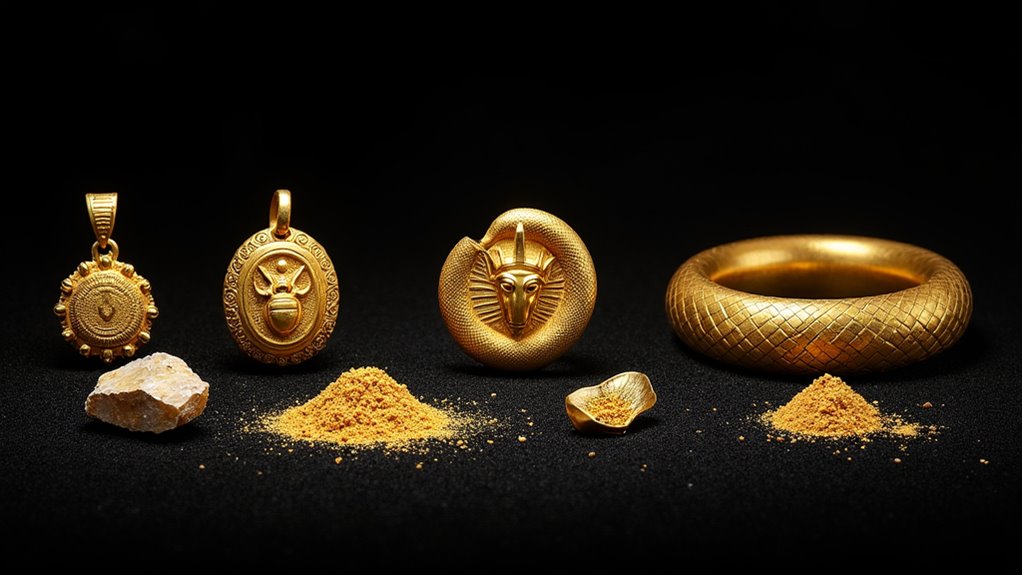
The Ancient Egyptians undisputedly placed the highest monetary value on gold, viewing it as literally “the flesh of the gods.”
Their economy revolved around gold’s divine status, with pharaohs hoarding massive quantities in royal treasuries.
While other civilizations like Rome and Byzantium valued gold highly, none matched Egypt’s fanatical obsession with the metal.
They’d literally kill for it – just ask those unfortunate tomb builders who got sealed inside with the pharaoh’s gold!
How Did Gold Influence Early Trade Routes and Cultural Exchanges?
Gold absolutely revolutionized ancient trade networks! The precious metal’s universal value drove the establishment of major routes like the Silk Road and trans-Saharan passages, connecting distant civilizations.
From 7th-14th centuries, gold trade sparked massive cultural exchanges, linking African empires with Mediterranean markets. It wasn’t just about wealth – these routes became highways for exchanging ideas, technologies, and religious practices.
Gold literally shaped how ancient societies interacted and evolved!
Why Does Gold Appear in Religious Artifacts Across Unconnected Ancient Civilizations?
Gold’s universal religious significance across disconnected civilizations stems from its unique physical properties that naturally inspired divine associations.

Its untarnishable nature suggested immortality, while its radiant yellow color resembled the sun’s power.
Ancient cultures, from Aztecs to Egyptians, independently recognized these qualities, leading them to incorporate gold into sacred artifacts.
The metal’s scarcity and resistance to corrosion further reinforced its perceived supernatural status in religious practices worldwide.