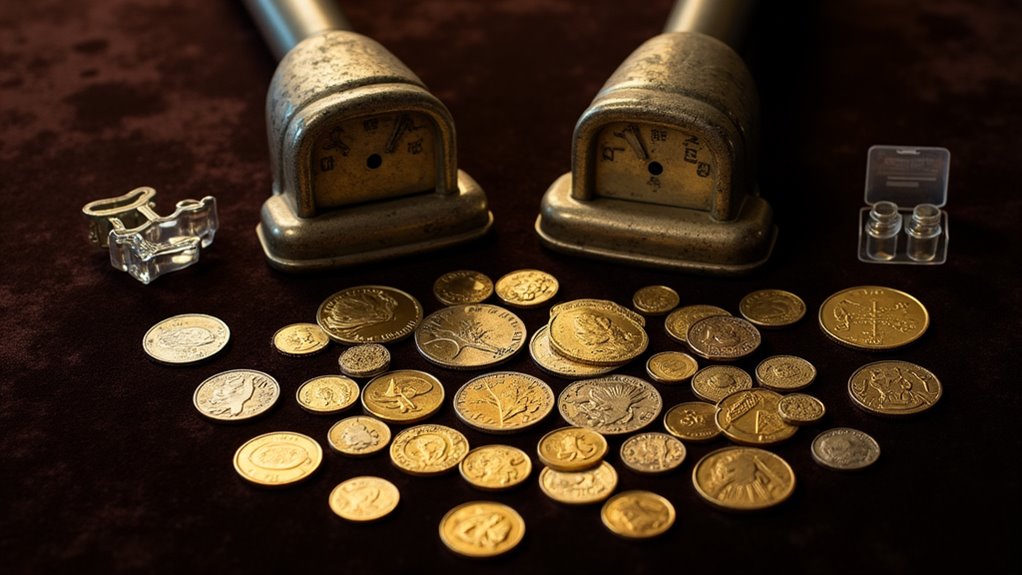
Gold lurks everywhere these days – from grandma’s dusty wedding bands to that drawer full of defunct Nokia phones. Jewelry remains the heavyweight champ, accounting for 90% of recycled gold, but e-waste is the sneaky contender gaining ground. One ton of mobile phones actually packs 80 times more gold than natural mines (yeah, you read that right). Those obsolete laptops and tangled necklaces? They’re basically urban gold mines waiting to be tapped.

Every scrap of gold has a story to tell – and nowadays, that story increasingly begins in our junk drawers rather than underground. The shimmering metal that once required massive mining operations can now be found hiding in plain sight, from that old Nokia brick phone to grandma’s tarnished wedding band. A whopping 90% of recycled gold actually comes from jewelry, where pieces are sorted by karat purity before taking a scorching hot bath at over 1,900 degrees Fahrenheit. Gold recycling has become essential as unmined gold supply could be depleted within decades.
Gold’s modern journey starts in our homes, not mines – hidden in old phones and forgotten jewelry waiting to be rediscovered.
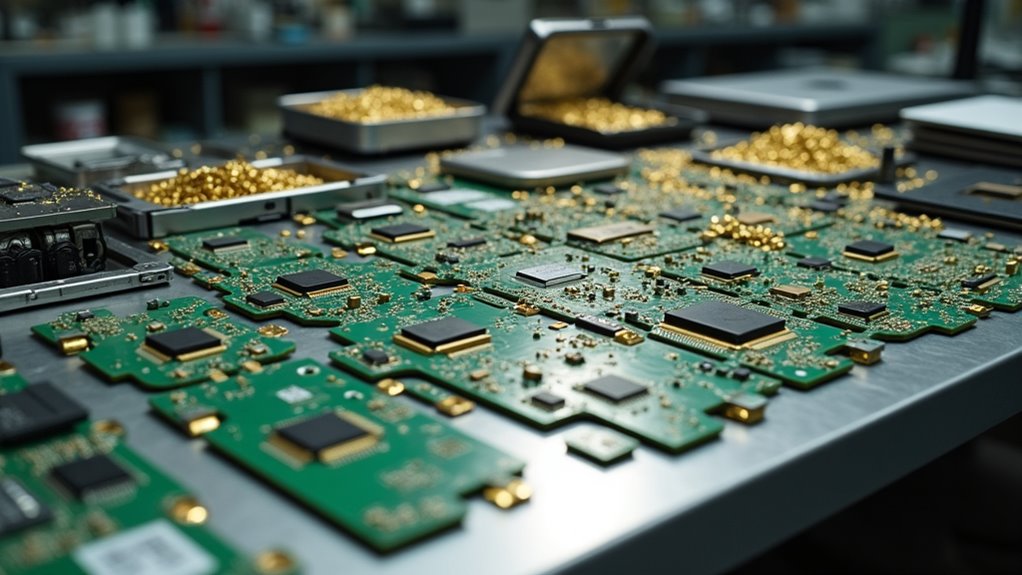
But here’s where things get interesting – electronic waste is becoming a veritable gold mine, quite literally. One ton of mobile phones contains 80 times more gold than what you’d find in a natural gold mine. That’s right, your obsolete iPhone collection might be worth more than you think. Circuit boards, particularly those found in computers and phones, are practically dripping with precious metals (okay, maybe not dripping, but you get the point). With the world producing 50 million tonnes of electronic waste annually, the potential for gold recovery is enormous. This has led to a surge in innovations for refining gold from e-waste.
The Royal Mint caught onto this urban mining trend and built a whole factory dedicated to extracting gold from printed circuit boards. These PCBs, which lurk inside everything from laptops to gaming consoles, pack a gold concentration that’s 10 times higher than natural ores. We’re talking about 0.09 kg of gold per ton – not exactly chump change when you consider they can process 4,000 tonnes annually.

Desktop computers are particularly juicy targets for recycling. Each one requires a staggering 530 pounds of fossil fuels and 1.5 tons of water to produce, making recycling not just profitable but environmentally essential. From power supplies to DVD drives, these electronic behemoths are loaded with recyclable components that contain precious gold deposits.
The urban mining revolution doesn’t stop there. Obsolete stereos, printers that gave up the ghost years ago, and those dust-collecting game consoles from three generations back – they’re all gold mines in disguise. Fun fact: even Olympic medals are now being crafted from recycled electronics gold, proving that today’s e-waste could literally become tomorrow’s glory.
But it’s not just about the gold. These devices also harbor rare earth elements (REEs) used in everything from high-power magnets to fluorescent lamps. These vital materials, found in mobile phones, televisions, and catalytic converters, make the recycling process even more valuable. It’s like finding bonus treasure while hunting for gold – except this treasure helps power our modern world.
The next time you’re about to toss that ancient laptop or tangled mess of jewelry into a drawer, remember: you’re not just hoarding junk, you’re sitting on a potential goldmine. And while we might not all strike it rich recycling our old electronics, at least we’re giving these precious materials a second chance to shine – literally.
Frequently Asked Questions
How Much Does It Cost to Start Recycling Gold at Home?
Starting a home gold recycling operation isn’t cheap! Basic startup costs range from $1,300 to $9,500, depending on equipment quality and permit requirements.
The biggest expenses? That pesky ventilation system ($200-$1000) and those annoying-but-necessary environmental permits ($200-$5000).

Plus, don’t forget monthly chemical costs of $100-$500. Serious recyclers need proper licensing, safety gear, and refined equipment – no cutting corners when dealing with precious metals!
What Chemicals Are Needed to Extract Gold From Electronic Waste?
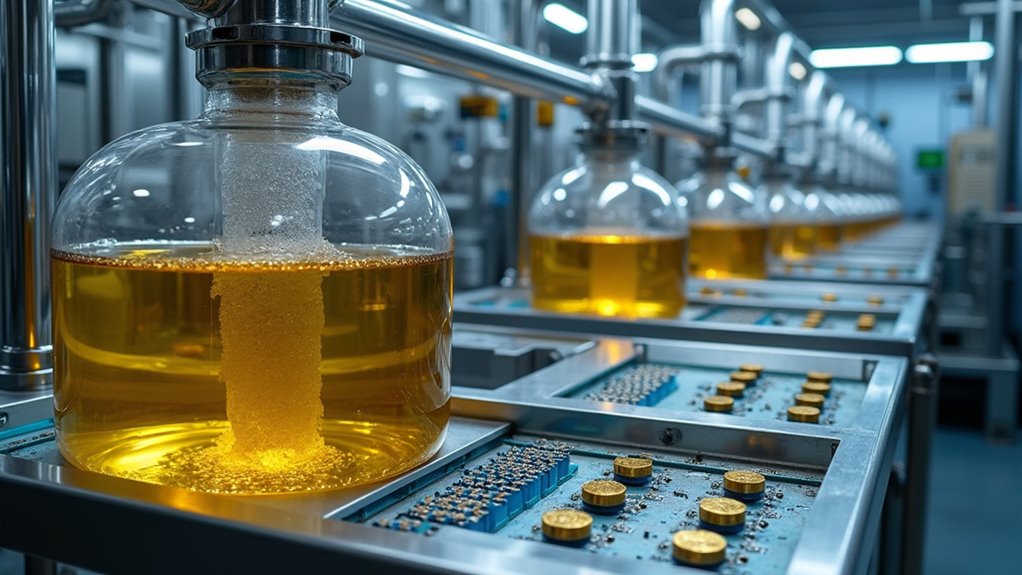
The main chemicals used in gold extraction from e-waste are nitric acid and hydrochloric acid, which combine to form aqua regia – the infamous “royal water” that dissolves precious metals.
Some recyclers also use cyanide solutions or ammonium thiosulfate.
However, these processes are extremely dangerous and illegal in most residential areas.

The chemicals produce toxic fumes and hazardous waste that require special handling and disposal protocols.
Is Selling Recycled Gold Legally Regulated in Different Countries?
Gold recycling regulations vary dramatically worldwide – it’s seriously a mixed bag!
The U.S. keeps things tight with Dodd-Frank and CFTC oversight, while the EU’s got their act together with extensive frameworks.
But Asia? That’s where it gets messy. China and India are basically the Wild West of recycling, with informal operations everywhere.
LBMA and RJC certifications matter globally, but enforcement’s spotty.
Basically, Western markets = strict rules, Asian markets = catch-me-if-you-can vibes!
How Pure Is Recycled Gold Compared to Newly Mined Gold?
Recycled gold can achieve identical purity levels as newly mined gold – that’s the fascinating truth!
When properly refined, recycled gold hits that sweet 24K mark (99.99% pure) just like its fresh-from-the-earth cousin.

Here’s the kicker: gold’s atomic structure doesn’t degrade during recycling.
Whether it’s melted down a hundred times or just once, that 1,064°C melting point stays rock-solid.
The only real difference? The path it took to get there!
Which Recycling Facilities Accept Gold-Containing Materials From Individual Collectors?
Multiple facilities enthusiastically accept gold from individual collectors.
Precious metals refineries welcome everything from broken chains to dental gold, offering free appraisals.
Local jewelry stores and pawn shops provide quick cash for smaller quantities, though rates vary wildly.
E-waste recycling centers take gold-containing electronics, while specialized recyclers handle circuit boards and components.
Most facilities require proper ID and proof of ownership – no questions asked isn’t really a thing anymore!