Gold recovery from electronics ain’t for the faint-hearted! Those shiny circuit boards pack roughly 0.2 grams of gold per computer – not bad considering most folks toss ’em like yesterday’s news. The extraction process demands serious safety gear and precise chemical handling, using either manual dismantling, acid treatment, or reverse electrolysis. But watch out – this ain’t your grandma’s jewelry cleaning. Legal requirements and proper disposal protocols make this a complex dance that requires more than just basic knowhow.

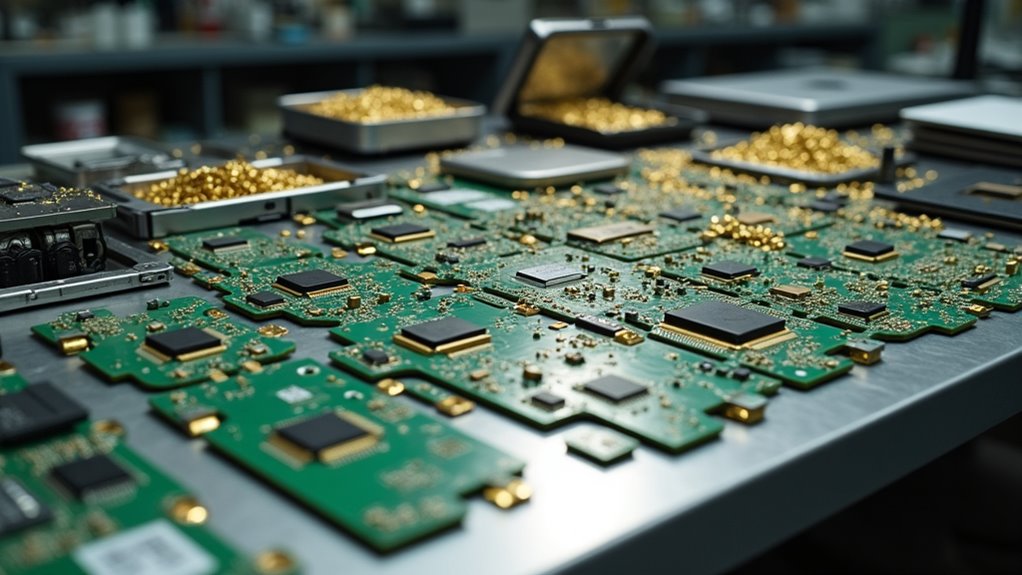
Buried inside your dusty old computer lies a golden opportunity – literally. While most people see obsolete electronics as junk, savvy individuals recognize these devices contain precious metals, particularly gold. The average computer contains roughly 0.2 grams of gold, primarily in circuit boards and components where the metal’s conductivity and resistance to corrosion make it invaluable. This makes gold recycling an essential and growing industry.
The process of recovering gold from computers isn’t for the faint of heart – it requires careful attention to safety and proper equipment. Before attempting any extraction, one must don protective gear including gloves, goggles, and a respirator. Working in well-ventilated areas is essential, as the chemicals involved can produce dangerous fumes that nobody wants to inhale (trust us on this one). It’s critical to have a disposal plan ready before starting any extraction process.
Several methods exist for extracting that coveted yellow metal. The manual approach involves painstakingly dismantling computers to access gold-plated components and connectors. While time-consuming, this method minimizes chemical exposure and suits those with more patience than sense. A careful mixture of hydrochloric acid and peroxide in a 2:1 ratio is essential for effectively dissolving the metals.

For the chemically inclined, a solution of hydrochloric acid and hydrogen peroxide can dissolve base metals, leaving those precious gold flakes behind – just don’t expect this to smell like roses.
Reverse electrolysis offers another route, utilizing an electrolyte solution and electrical current to separate gold from other metals. This method requires specialized equipment and know-how, but it’s less messy than dealing with acid baths. The separated gold collects at an electrode, ready for collection and further refinement.
The final step in any recovery method involves smelting and refining. This process melts the recovered gold at high temperatures, using flux to remove impurities. The molten gold is then poured into molds and may undergo additional chemical refinement to achieve higher purity. It’s like cooking, except way more dangerous and with better potential returns.
Before jumping into gold recovery, consider the legal and environmental implications. Many jurisdictions regulate e-waste processing, and proper chemical disposal is essential. Large-scale operations might require permits, and there could be tax implications when selling recovered gold.

Plus, newer devices typically contain less gold than their older counterparts – manufacturers aren’t exactly throwing the stuff around these days.
The whole endeavor requires a delicate balance of patience, knowledge, and respect for safety protocols. While the potential rewards might glitter enticingly, the process isn’t exactly a get-rich-quick scheme.
But for those willing to invest the time and effort, extracting gold from computers can be both a fascinating hobby and a potentially profitable venture – just remember to file those taxes, because the IRS loves precious metals almost as much as we do.
Frequently Asked Questions
How Much Gold Can Be Extracted From a Single Computer?
A typical desktop computer contains roughly 0.2 grams of gold – that’s about $10-15 worth at current prices!

The actual yield varies wildly tho, depending on the computer’s age and specs.
Older machines are gold mines (pun intended!), packing up to 0.5 grams, while newer models might disappoint with just 0.1 grams.
Pro recycling facilities squeeze out every last speck, but DIY extraction? Don’t expect miracles.
Is Gold Recovery From Electronics Legal in Residential Areas?
Gold recovery from electronics in residential areas is typically illegal without proper permits and licensing.

Local zoning laws explicitly prohibit industrial processes like e-waste extraction in homes.
Beyond legality, the chemical processes pose serious environmental and health risks that residential areas aren’t equipped to handle.
Violators face hefty fines and potential criminal charges.
The safe, legal alternative is working with certified e-waste recyclers who have proper facilities and permits.
What Safety Equipment Is Required for Gold Recovery?
Essential safety gear for gold recovery includes chemical-resistant gloves, safety goggles, and a proper respirator mask rated for chemical fumes.
A rubber apron protects against corrosive splashes.
Working under a fume hood or in well-ventilated areas is vital.
Emergency equipment like spill kits, eyewash stations, and fire extinguishers must be readily available.
Proper chemical storage containers and clear labelling are non-negotiable.

Never skimp on safety gear – your life depends on it!
Are There Any Eco-Friendly Methods to Extract Gold From Electronics?
Several eco-friendly gold extraction methods are revolutionizing e-waste recycling.
Whey protein fibril sponges – a dairy industry byproduct – selectively grab gold ions and transform them into metallic flakes.
Thiosulfate leaching offers a less toxic alternative to traditional chemicals, while bacterial extraction uses microorganisms to do nature’s dirty work.
Even mechanical separation’s getting in on the green game, crushing and sorting without harsh chemicals.
These methods slash environmental impact while keeping recovery rates high.
Which Electronic Components Contain the Highest Concentration of Gold?
Vintage ceramic Intel 386/486 processors pack the biggest gold punch, with up to 0.5g per unit.
The Pentium Pro‘s also a golden heavyweight, sporting around 0.33g.
Those 1960-70s CPUs? Pure treasure troves, thanks to strict military specs.
Mobile phone circuit boards ain’t too shabby either – a million phones yield 75 pounds of the shiny stuff!
RAM and specialty defense components follow, but they’re just not in the same league as those old-school processors.