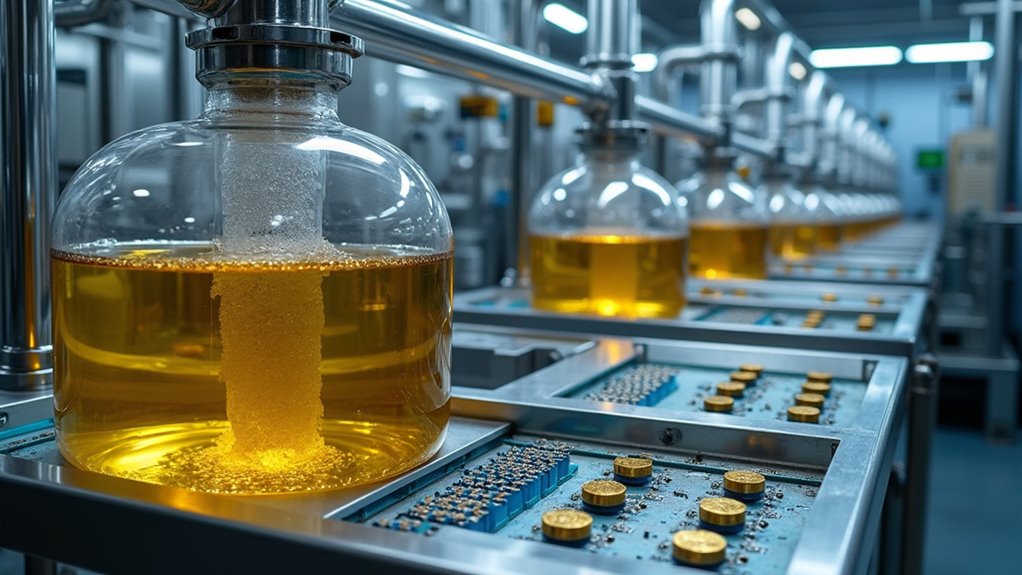
Modern gold recovery’s going green – and it’s about time! Game-changing innovations like cornstarch derivatives and forest-based biodiesel are kicking toxic cyanide to the curb. Graphene-chitosan composites extract gold 10x more efficiently, while bioleaching microorganisms munch through e-waste like pac-man. The real kicker? These eco-friendly methods slash costs by 50% compared to traditional mining. With 3-5% more e-waste piling up yearly, sustainable gold recovery‘s becoming pure gold for our future.
While the gold industry has long been tarnished by its environmentally-destructive practices, a surge of eco-friendly innovations is finally dragging precious metal recovery into the 21st century – and holy crap, it’s about time!
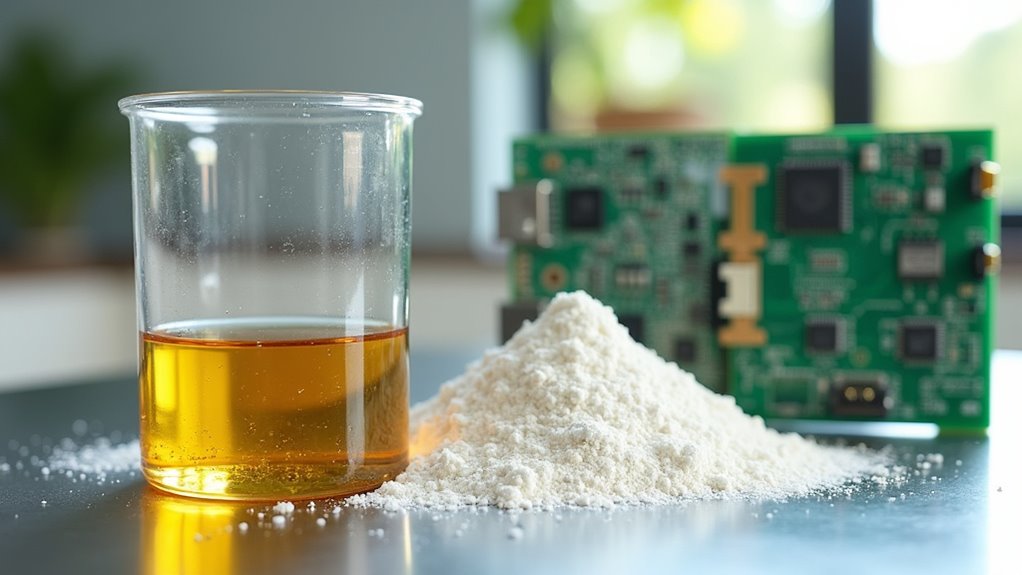
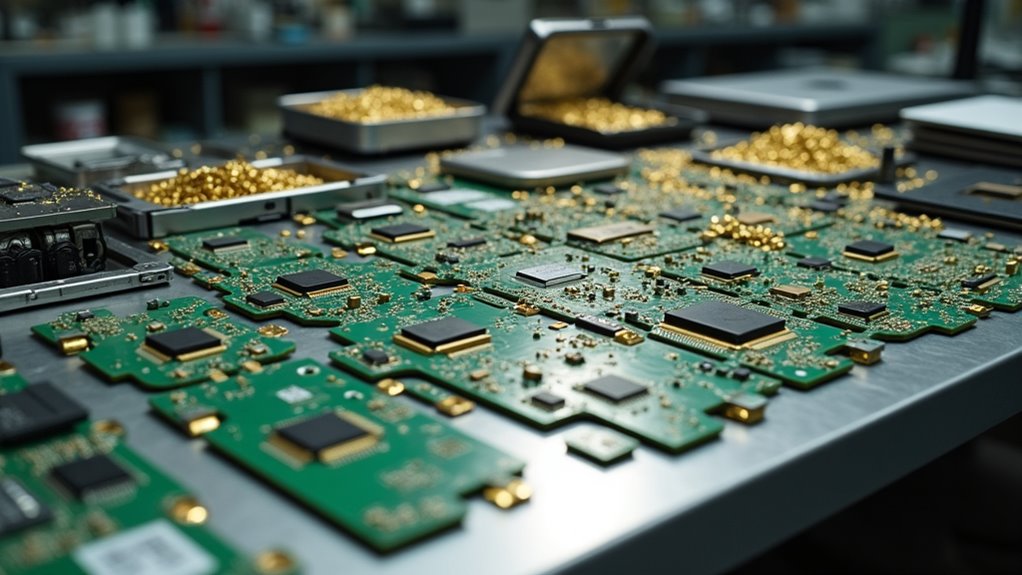
The most mind-blowing development has got to be the accidental discovery by Northwestern University scientists that plain old cornstarch – yes, the stuff in your pantry – can revolutionize gold extraction. Through its derivative alpha-cyclodextrin, this humble ingredient efficiently isolates gold while giving toxic cyanide the boot. And it’s selective too, leaving other metals alone like a picky eater at a buffet. The process also delivers impressive cost savings of 50% compared to traditional mining methods. Traditional mining has caused severe environmental damage, but material recovery from secondary sources offers a sustainable alternative. In fact, the recycling of circuit boards can yield significant amounts of gold, making it a viable source for eco-friendly recovery.
Mother Nature’s ultimate gold digger: cornstarch’s alpha-cyclodextrin selectively snags gold while giving other metals the cold shoulder.
But wait, there’s more! The forest industry’s getting in on the action with HVO100 biodiesel, which is basically nature’s answer to fossil fuels in metal purification. This stuff’s produced from forest and pulp industry leftovers (talk about recycling!) and doesn’t mess around with those nasty aromatic hydrocarbons. It’s not just for gold either – platinum, nickel, and cobalt are all invited to this eco-party.

Speaking of game-changers, the graphene-chitosan composite is turning heads in e-waste recovery. This bad boy is 10 times more efficient than previous methods and can extract a whopping 17g/g of Au3+ ions in just 10 minutes. No external power needed – it’s like the Tesla of gold recovery, but without Elon’s tweets.
The microorganisms are getting their share of the spotlight too. Bioleaching is proving that sometimes the tiniest helpers pack the biggest punch. These microscopic miners dissolve gold from ores and waste without the environmental drama of traditional methods. It’s like having an army of eco-conscious nanobots working 24/7.
Thiosulfate leaching is another rising star in the gold recovery scene. It’s giving cyanide the middle finger while maintaining impressive recovery rates. Meanwhile, electrochemical techniques are zapping their way through dilute solutions, proving that sometimes the best solutions are electrifying (sorry not sorry for the pun).
E-waste recycling tech is evolving faster than your smartphone becomes obsolete. With electronic waste growing 3-5% annually, these innovations couldn’t come at a better time. Through a combo of shredding, sorting, and chemical extraction, we’re finally getting smart about recovering gold from our outdated gadgets.

These developments aren’t just feel-good stories for environmentalists – they’re reshaping the entire precious metals landscape. The gold industry is finally showing that you can teach an old dog new tricks, and these tricks are actually good for the planet. Who knew that going green could be so… golden?
Frequently Asked Questions
How Much Gold Can Be Recovered From Electronic Waste per Ton?
E-waste is a gold mine – literally! One ton of printed circuit boards (PCBs) yields approximately 90 grams of gold, while cellphones pack an even bigger punch.
That’s roughly 80x more gold than traditional mining! The real kicker? Only 20% of this precious booty gets recycled currently.
With advanced recovery methods hitting 99.9% efficiency, there’s serious money being left on the table. Talk about a golden opportunity! *wink*
What Certifications Are Required to Operate Eco-Friendly Gold Recovery Facilities?

Operating eco-friendly gold recovery facilities requires several key certifications.
RMI certification guarantees conflict-free sourcing and OECD guideline compliance, while SCS Global verifies recycled materials usage.
Fairmined certification’s essential for facilities working with artisanal mines, guaranteeing fair labor practices.
ECOLOGO validates environmental impact reduction across operations.

Some facilities might need multiple certifications depending on their specific recovery methods and material sources – it’s not a one-size-fits-all scenario.
How Long Does the Environmentally-Friendly Gold Recovery Process Typically Take?
Modern eco-friendly gold recovery methods have dramatically slashed processing times.
While conventional cyanide leaching drags on for days or even months, newer techniques are blazingly fast.
Alpha-cyclodextrin extraction takes just 10 minutes, biodiesel-based methods clock in around the same timeframe, and eco-friendly stripping powder requires 6-15 hours.
Even the slowest green recovery process maxes out at 36 hours – a fraction of traditional methods’ timeline.
What Is the Cost Difference Between Traditional and Eco-Friendly Gold Recovery?
The cost gap between traditional and eco-friendly gold recovery is staggering!
Traditional extraction hits wallets hard at $1,520 per kg, while the new eco-friendly method slashes costs to just $66 per kg – that’s a jaw-dropping 96% reduction.
Smart money’s watching this development like a hawk, because who doesn’t love saving a fortune?

The dramatic difference suggests traditional methods might be headed for extinction in the not-so-distant future.
Can Small-Scale Miners Afford to Implement These Eco-Friendly Recovery Technologies?
Small-scale miners can indeed access eco-friendly gold recovery tech, thanks to flexible financing and scaled-down solutions.
Companies like Eco-Goldex offer starter packages from $5,000 – way cheaper than traditional setups. The 30-50% reduction in operating costs helps offset initial investments, while tech providers’ support and training sweeten the deal.
Plus, government incentives and green loans are making the switch more manageable for those tiny operations that’re willing to take the plunge.