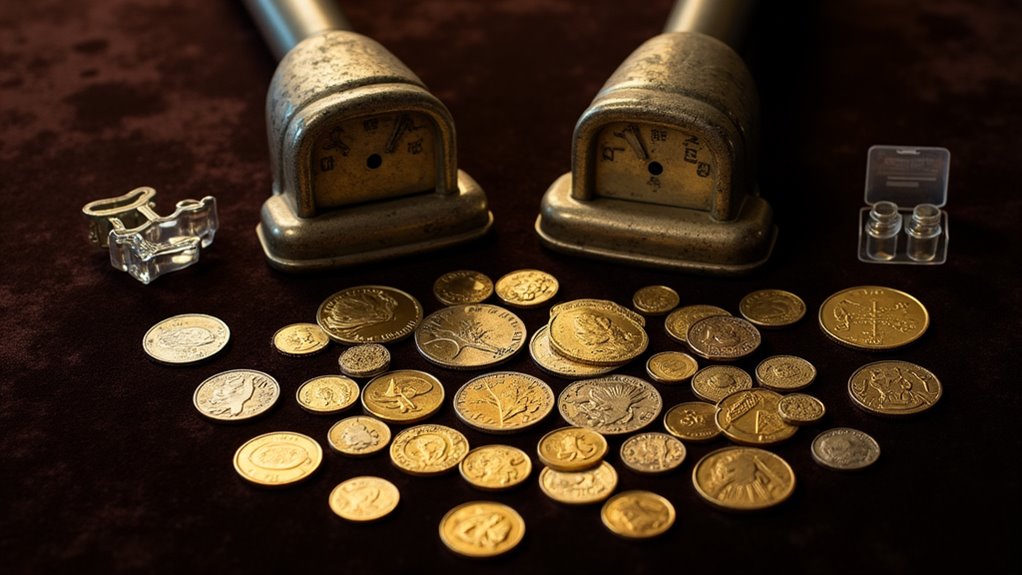
Gold recycling packs a serious environmental punch, delivering a knockout 90% reduction in energy use compared to traditional mining. The practice preserves natural landscapes, protects wildlife habitats, and slashes water pollution from toxic mining byproducts. Beyond energy savings, recycling eliminates the need for new mines – saving forests, preventing soil erosion, and cutting greenhouse gas emissions. There’s a whole treasure trove of benefits waiting to be discovered in this sustainable gold rush.

While gold has long been the poster child of luxury and wealth, its recycling might just be the real treasure we’ve been overlooking. In an age where environmental consciousness is finally getting its moment in the spotlight, gold recycling emerges as a powerhouse solution for reducing the devastating impact of traditional mining operations. The numbers are staggering – recycling gold slashes energy consumption by up to 90% compared to mining, and that’s just the beginning of this glittering environmental success story.
Recycling gold isn’t just about saving money – it’s about revolutionizing how we think about luxury while protecting our planet’s future.
The environmental footprint of conventional gold mining is, let’s face it, pretty ugly. But recycling gold? That’s a game-changer that’s preserving natural landscapes, protecting wildlife habitats, and keeping hazardous waste out of our landfills. Every ounce of recycled gold means less soil erosion, less deforestation, and considerably reduced water pollution. Advanced technology maximizes the recovery of precious metals from recycled materials. It’s like giving Mother Nature a much-needed break from our relentless pursuit of shiny things. Modern smartphones contain approximately 30 mg of gold that can be recovered and reused, contributing to a circular economy that minimizes waste.
Water conservation is another brilliant benefit that deserves some serious attention. Traditional mining operations gulp down massive amounts of water and often leave behind a toxic cocktail that threatens local water tables. Recycling gold bypasses these issues entirely, helping preserve precious aquatic ecosystems and keeping our water resources pristine. No more acid mine drainage nightmares – just smart, sustainable resource management.

The greenhouse gas situation? Well, recycling gold is basically giving climate change the middle finger. By reducing the need for new mining operations, we’re cutting down on CO2 emissions, methane releases, and all those nasty transportation-related pollutants. Plus, when we’re not chopping down forests for new mines, we’re keeping all that stored carbon right where it belongs – in the ground.
Here’s where it gets really interesting – the economic and social benefits are just as impressive as the environmental ones. Recycling gold is creating jobs in the refining sector, reducing health impacts on mining communities, and driving innovation in sustainable technologies. It’s like a positive feedback loop that keeps on giving, supporting the development of a circular economy while preserving finite gold deposits for future generations.
The waste reduction aspect is particularly remarkable, especially when considering the mountains of electronic waste piling up globally. Gold recycling diverts valuable materials from landfills, reduces hazardous waste from mining processes, and minimizes those unsightly tailings ponds that dot mining landscapes. Every gram of recycled gold represents a step toward a more sustainable future in the precious metals industry.
Frequently Asked Questions
How Much Is Recycled Gold Worth Compared to Newly Mined Gold?
The market doesn’t discriminate – recycled gold commands fundamentally the same price as its freshly-mined counterpart. Both trade based on purity and global market conditions, period.
Here’s the kicker: some eco-conscious retailers slap a 10% premium on recycled gold, marketing it as the sustainable choice.

But strip away the green messaging, and the core value remains identical. The market cares about karats, not origin stories.
Fun fact: smart dealers actually prefer recycled gold since it costs less to process!
*Market prices current as of publication. Values subject to change.*
What Household Items Commonly Contain Recyclable Gold?
Recyclable gold lurks in more places than most folks realize!
The biggest gold mines in your home? Electronics are absolute treasure troves – smartphones pack about 0.03g each, while computers and laptops hide it in their motherboards and CPUs.

Older appliances like TVs and DVD players got those sweet gold-plated connectors.
Don’t forget jewelry drawer’s rejects – that’s where the real motherlode is.
Even random stuff like old dental work can be gold paydirt!
Where Can I Sell My Old Gold Items for Recycling?
Several viable options exist for selling gold items for recycling.
Online buyers attract sellers with competitive rates and free shipping kits, while local jewelers and pawnshops offer immediate cash and face-to-face transactions.
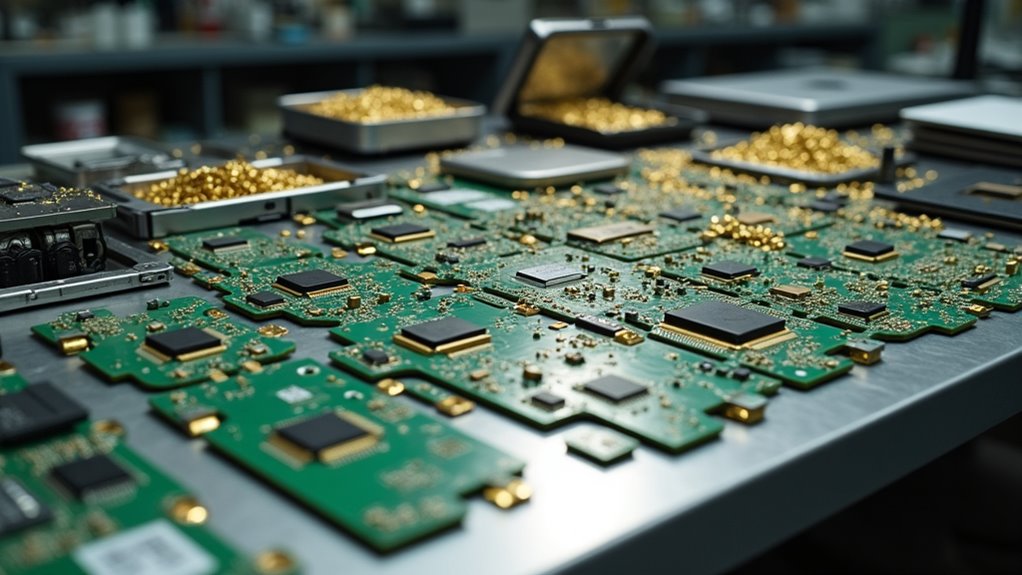
For potentially higher payouts, refineries and recycling companies cut out middlemen but require longer processing times.
Specialty recyclers focus on specific items like gold-filled jewelry, accepting various forms without minimum quantities – perfect for smaller sellers!
How Is Gold Separated From Other Materials During Recycling?
Gold recycling involves multiple separation methods to isolate pure gold from other materials.
The process typically starts with physical sorting, followed by melting at 1,947°F.

Chemical processes like acid treatments or cyanide leaching dissolve the gold, while other metals stay solid.
Advanced techniques like the Miller process use chlorine gas, while the Wohlwill process achieves ultra-high purity through electrolysis.
Each step carefully removes different contaminants until only pure gold remains.
What Percentage of Gold Jewelry Is Made From Recycled Materials?
According to industry data, about 28% of gold jewelry currently comes from recycled sources – that’s a pretty sizeable chunk!
Most recycled gold jewelry originates from melted-down vintage pieces, while a smaller portion comes from e-waste.

Companies like Pandora are pushing these numbers even higher, aiming for 100% recycled metals by 2024.
Though exact percentages vary by manufacturer and region, the trend’s definitely heading upward as sustainability becomes more essential in the jewelry biz.