Recycled gold packs a serious environmental punch compared to its freshly-mined cousin. While mining ops spew mercury and cyanide into ecosystems (yikes!), recycled gold keeps things squeaky clean. But here’s the kicker – recycled gold’s limited supply can’t satisfy global demand, even though it’s cheaper. Mining still employs millions worldwide, albeit under sketchy conditions. Both types hit the same purity levels, but traceability remains tricky. The full story behind this golden dilemma gets even juicier.

As the global gold industry grapples with mounting environmental pressures, the battle between recycled and mined gold has become more heated than a refiner’s furnace. The numbers tell a stark tale – mining operations account for a whopping 38% of global mercury emissions, while recycled gold struts around with barely an environmental footprint to its name. Yet here’s the kicker: recycling only supplies about 25% of the world’s annual gold demand, leaving us still heavily dependent on those earth-churning mining operations. Small-scale mining employs well over 90% of the gold mining workforce globally.
Mining spews mercury while recycled gold treads lightly, yet we still depend heavily on fresh-mined gold to meet global demand.
Let’s get real about the dirty business of mining. We’re talking massive open pits, underground tunnels, and enough toxic chemicals to make your head spin. Cyanide leaching? That’s just Tuesday in the mining world. Meanwhile, recycled gold’s sitting pretty, sourced from your grandma’s old jewelry and those defunct smartphones collecting dust in your drawer. No mercury, no cyanide, and definitely no destroyed ecosystems. Small-scale illegal operations frequently operate without proper oversight, leading to devastating environmental consequences. In fact, recycling gold not only conserves resources but also significantly lowers carbon emissions across industries.
The economics paint an interesting picture – recycled gold typically costs less than its freshly-mined cousin, but mining still pumps about £100 billion into the global economy annually. It’s a classic case of cheap-but-limited versus expensive-but-plentiful. Mining creates jobs, sure, but often under conditions that’d make an OSHA inspector faint.

And while artisanal mining supports roughly 19 million workers and their families, it’s frequently tangled up in conflict zones and human rights violations that’d curl your toes.
Here’s where things get messy – traceability. Newly mined gold often comes with a neat little paper trail, while recycled gold’s origins can be harder to pin down than a greased pig. Both types can be refined to identical purity, but good luck figuring out whether that recycled wedding band started life as a cartel kingpin’s necklace or a retired dentist’s fillings.
The future’s looking increasingly circular, with major brands pledging to go 100% recycled by 2025. But let’s not kid ourselves – completely ditching mining isn’t happening anytime soon. Global demand for the shiny stuff far outstrips what recycling can provide, even with fancy new recovery technologies coming online.
The real story here is about balance. Mining’s environmental and social costs are becoming harder to ignore, yet it remains essential to meeting global demand. Recycled gold offers a cleaner alternative but can’t carry the whole market on its shoulders.

As regulations tighten and sustainability becomes more than just a buzzword, the gold industry faces some tough choices. For now, both sources will continue their complicated dance, with recycled gold slowly but surely gaining ground in a world that’s increasingly conscious of where its precious metals come from.
Frequently Asked Questions
How Long Does It Take to Process Recycled Gold Versus Mined Gold?
Recycled gold zips through processing in just 4-9 days total – talk about fast fashion for metals!
Meanwhile, mined gold‘s taking its sweet time, dragging on for 1-4 weeks from ground to glamour.
The recycling fast-track includes sorting, melting, and quality checks, while mining’s got that whole extraction drama going on.

It’s like comparing a gold sprint to a marathon, with recycling winning the efficiency race hands dwn (whoops, down!).
Can Jewelry Made From Recycled Gold Be Insured Like Mined Gold?
Insurance companies treat recycled gold jewelry just like its mined counterpart. The source of the gold doesn’t affect coverage – it’s all about the piece’s appraised value and craftsmanship.
Major insurers like Jewelers Mutual offer identical protection for both types, covering theft, loss, and damage.
Pro tip: professional appraisals are key, and recycled pieces get evaluated using the same strict criteria. No discrimination in the insurance game!
Does Recycled Gold Tarnish More Quickly Than Newly Mined Gold?

No – recycled gold doesn’t tarnish any faster than newly mined gold.
Here’s the deal: once gold’s refined, it’s chemically identical whether it came from grandma’s wedding ring or straight outta the mine.
The science is crystal clear on this one! Both types maintain the same tarnish resistance at identical purity levels.
What really affects tarnish? It’s all about the karat level and those pesky environmental factors, not the gold’s origin story.
What Percentage of Gold Jewelry Worldwide Is Made From Recycled Gold?
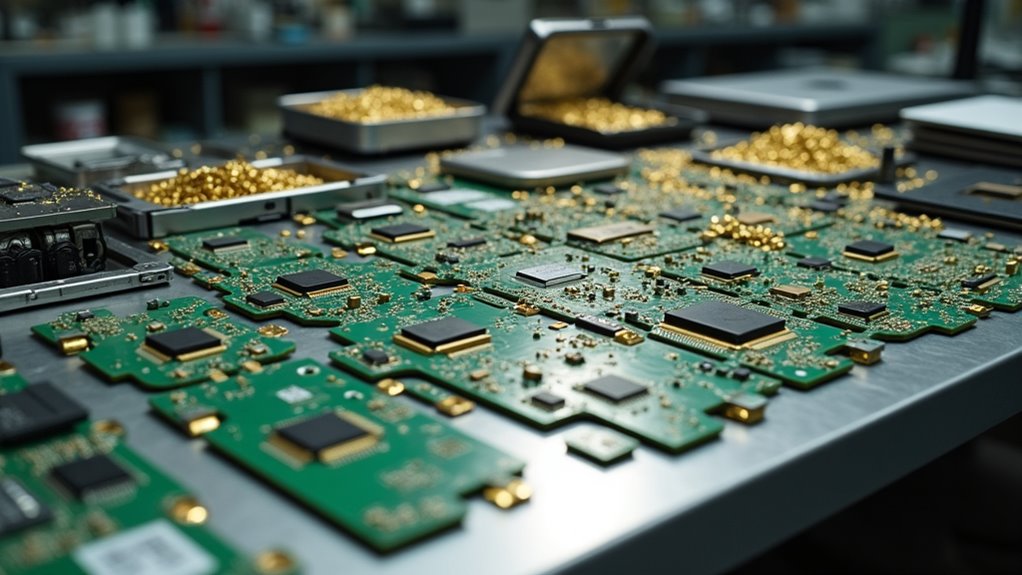
The exact percentage of recycled gold in global jewelry production remains frustratingly elusive!
Industry data suggests somewhere between 25-30% of jewelry contains recycled gold, though these numbers fluctuate wildly based on market conditions and availability.
While some brands like Pandora go full-recycled, most jewelers mix both recycled and newly-mined gold.
The reality? Demand for jewelry usually outstrips the recycled gold supply, forcing continued reliance on fresh-mined material.
Are There Any Countries That Restrict the Sale of Recycled Gold?

The gold recycling scene‘s getting wild with restrictions!
While most countries don’t explicitly ban recycled gold sales, they’re tightening those regulatory screws.
India’s keeping a hawk-eye on imports, especially after that UAE deal raised red flags.
The real kicker? It’s not about banning sales – it’s about tracking origins.
LBMA-accredited refiners gotta prove their gold’s legit, while places like Dubai… well, let’s just say their controls are about as solid as a chocolate teapot.