14K gold packs a punch with its 58.3% pure gold content mixed with a cocktail of copper, silver, and other metals. This powerhouse combo creates jewelry that’s tough enough for daily wear while maintaining that coveted golden glow. It’s the sweet spot between durability and luxury, though it might throw a tantrum if exposed to chlorine or rough handling. Its versatility makes it a jewelry industry darling – and there’s way more to this golden story.

The seductive shimmer of 14K gold has long captivated jewelry enthusiasts and casual collectors alike – but what’s really going on beneath that gleaming surface?
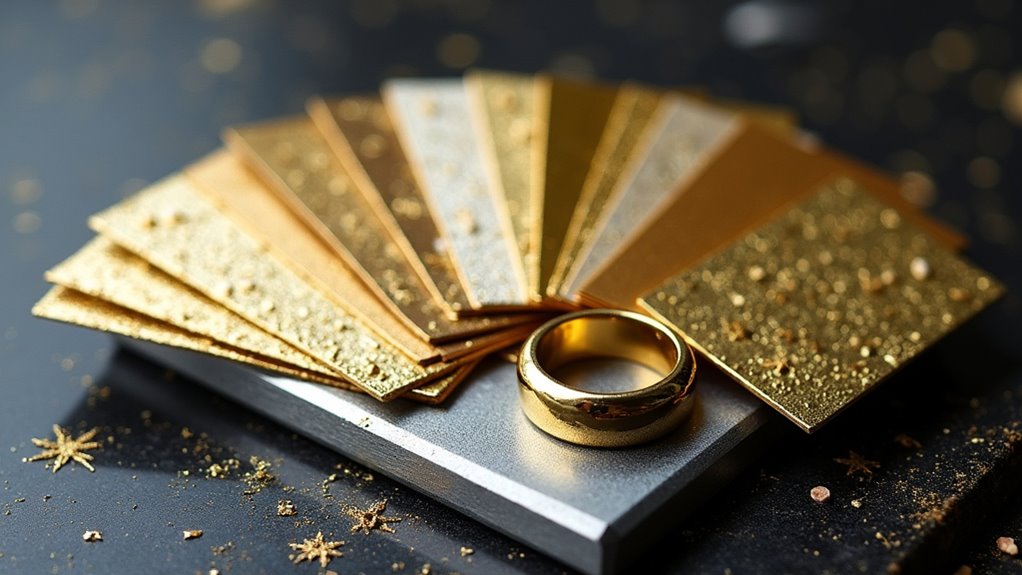
At its core, 14K gold is a carefully orchestrated dance of metals, with pure gold taking the lead at 58.3% while copper, silver, zinc, nickel, and palladium play supporting roles making up the remaining 41.7%. This precise ratio creates an alloy that’s tough enough for daily wear yet retains that coveted golden glow. Think of it as gold’s sweet spot – not too soft like its pure 24K cousin, but not as rigid as 10K either. This unique blend of metals gives 14K gold an ideal balance of strength and beauty that many jewelry buyers appreciate. Additionally, 14K gold is often favored for its affordability and durability, making it a popular choice for everyday jewelry. Common gold alloys like 14K gold provide a versatile option for various jewelry styles and preferences.
14K gold masterfully blends 58.3% pure gold with other metals, creating the perfect balance of durability and classic golden beauty.
The magic happens when jewelers start playing with the supporting cast of metals. Toss in more copper, and suddenly you’ve got that trendy rose gold that’s been dominating Instagram feeds. Mix in some palladium or nickel, and voila – white gold emerges (though it’ll probably need a rhodium coating to keep its cool, crisp appearance). It’s like alchemy, except it actually works!

This versatile composition gives 14K gold some serious street cred in the durability department. It’s hardy enough to handle your morning coffee routine without warping, yet malleable enough for craftsmen to shape into those intricate engagement rings that make proposal photos go viral.
Sure, it might not have the pure golden richness of 18K, but it’s got something better – practicality with a dash of affordability. Additionally, the 18K yellow gold alloy provides context for understanding the differences in durability and value among gold compositions.
But let’s not sugar-coat it – 14K gold isn’t perfect (what is, really?). It can get scratched up more easily than 10K, and some folks might find themselves getting itchy from the nickel content in certain variations. Plus, that copper content means it’ll eventually throw a tiny tarnish tantrum if you don’t treat it right.
Speaking of treatment, 14K gold demands respect but isn’t high-maintenance. Regular cleaning with gentle jewelry cleaner keeps it strutting its stuff, and storing it separately from other jewelry prevents it from getting into scratchy situations. Just remember to take it off before diving into the pool – chlorine is basically kryptonite to these alloys.

The bottom line? 14K gold strikes that perfect balance between luxury and practicality. It’s the goldilocks of precious metals – not too soft, not too hard, not too expensive, but just right.
Whether it’s destined for a wedding band that’ll witness decades of love or a statement piece that’ll turn heads at next month’s charity gala, 14K gold proves that sometimes the middle ground is exactly where you want to be.
Frequently Asked Questions
Can 14K Gold Be Worn in Swimming Pools and Hot Tubs?
Nope, wearing 14K gold in pools and hot tubs is a major no-no!
The chlorine and bromine in these waters are basically kryptonite for gold jewelry, causing some serious damage over time.

Hot tubs are even worse – those high temps accelerate the chemical assault on your precious pieces.
The result? Weakend prongs, cracking, and a seriously compromised structure that’ll have your jewelry looking rough.
Keep those golden beauties far from the pool!
How Can I Test if My 14K Gold Jewelry Is Authentic?
Testing 14K gold authenticity is quite the detective game!
Several reliable methods exist: the hallmark check (look for that “14K” stamp), the trusty magnet test (real gold tells magnets to buzz off), and the classic ceramic scratch test that reveals gold’s true colors.
For the scientifically-inclined, acid testing kits work wonders – though maybe leave that to the pros.
When in doubt, a reputable jeweler’s expertise is worth its weight in, well… gold!
Why Does 14K Gold Sometimes Cause Skin Reactions?
14k gold packs quite the sneaky punch when it comes to skin reactions!
The culprit? That 41.7% non-gold content – typically filled with reactive metals like nickel and copper that love causing drama on sensitive skin.

Add some sweaty situations or trapped moisture beneath that ring, and you’ve got a recipe for irritation.
Even the gold itself can trigger reactions in some folks, especially when mixed with everyday products like sunscreen’s titanium dioxide.
Who knew bling could bite back?
Does 14K Gold Tarnish or Change Color Over Time?
Yes, 14K gold does tarnish and change color over time – it’s not as pristine as its purer cousins.
The culprits? Those pesky alloy metals, especially copper and silver, love to oxidize when they meet air and moisture.

You’ll spot dull gray, greenish, or even bluish tints developing on the surface.
The good news? It’s just superficial stuff. A quick polish brings back that signature shine.
Just don’t let it marinate in chemicals or heavy pollution!
What Is the Best Way to Clean and Maintain 14K Gold?
Regular cleaning keeps 14K gold looking pristine.
A monthly bath in warm water with mild dish soap (15-30 mins) followed by gentle scrubbing with a soft toothbrush does wonders.
Pat dry with a lint-free cloth – boom, good as new!
Pro tip: skip the shower-wearing routine and keep those lotions, perfumes at bay.
For stubborn grime, mix baking soda and water into a paste.
When in doubt? Let a pro jeweler handle the deep cleaning.