14K and 18K white gold offer distinct trade-offs that’ll make ya think twice. 18K packs more pure gold (75%) for that luxe feel, while 14K (58.3% gold) brings extra durability through higher alloy content. Budget-conscious shoppers gravitate toward 14K’s sweet spot of quality and affordability, but sensitive skin types might prefer 18K’s fewer irritating metals. Think SUV vs sports car – 14K’s ready for daily battles, while 18K flaunts its premium pedigree. There’s more to this golden story than meets the eye.

While both variants sparkle with undeniable allure, 14K and 18K white gold are locked in an eternal tug-of-war for jewelry supremacy. The battle lines are drawn along composition – 18K white gold flaunts its 75% pure gold content, while 14K settles for a more modest 58.3%. This difference isn’t just about numbers though; it fundamentally shapes everything from durability to price point.
The higher gold content in 18K translates to a more luxurious feel and brighter luster that catches light like nobody’s business. But here’s the plot twist – that same purity makes it softer and more prone to scratches. Additionally, the type of alloys used plays a significant role in determining the overall quality and appearance of the gold. Common gold alloys such as nickel and palladium are often used to create white gold. In fact, gold plating can enhance the appearance of jewelry but may not provide the same lasting value as solid gold.
Meanwhile, 14K’s higher alloy content creates a tougher, more resilient material that laughs in the face of daily wear and tear. It’s like choosing between a delicate sports car and a rugged SUV – both’ll get you there, but in very different styles.
Just like a battle-tested SUV versus a sleek Ferrari, 14K white gold proves its worth through unmatched everyday resilience.

When it comes to appearance (whoops, appearance), both varieties typically rock a rhodium plating that gives them that coveted bright white finish. Over time though, this coating wears off, revealing their true colors – 18K tends toward a warmer white, while 14K shows its slightly cooler undertones.
It’s like watching a fancy mask slowly slip away at a metallic masquerade ball.
The price tag tells another story entirely. 14K’s lower gold content makes it the budget-friendly choice without sacrificing too much of that precious shine. For the practical jewelry enthusiast who’d rather not sell a kidney for their next piece, 14K offers a solid compromise between quality and cost.
18K, on the other hand, proudly wears its premium price tag like a badge of honor.

Here’s where things get interesting – metal allergies enter the chat. 18K’s higher gold content means fewer potentially irritating alloys, making it the go-to choice for sensitive souls. Additionally, the composition of 14k gold includes a higher percentage of nickel which can lead to allergic reactions in some individuals.
14K, with its higher percentage of nickel and other metals, might cause some folks to break out in an unwanted jewelry-induced dance.
In practical terms, 14K white gold dominates the everyday jewelry scene, especially for engagement rings and other pieces that face constant exposure to life’s bumps and scrapes. Its durability and affordability make it the practical choice for active lifestyles.
Meanwhile, 18K white gold finds its niche in high-end pieces and special occasion jewelry, where its superior luster and prestigious composition justify the splurge.

The choice between these two contenders ultimately depends on individual priorities – whether you value durability and practicality over pure luxury, or if you’re willing to baby your jewelry in exchange for that extra touch of elegance.
Either way, both options continue to dazzle in their own unique ways, proving that sometimes the best choice isn’t always crystal clear.
Frequently Asked Questions
How Should I Clean and Maintain White Gold Jewelry?
White gold jewelry demands specific TLC to maintain its stellar shine.
Cleaning involves gentle scrubbing with warm water and mild soap using a soft-bristled brush – no harsh chemicals allowed!
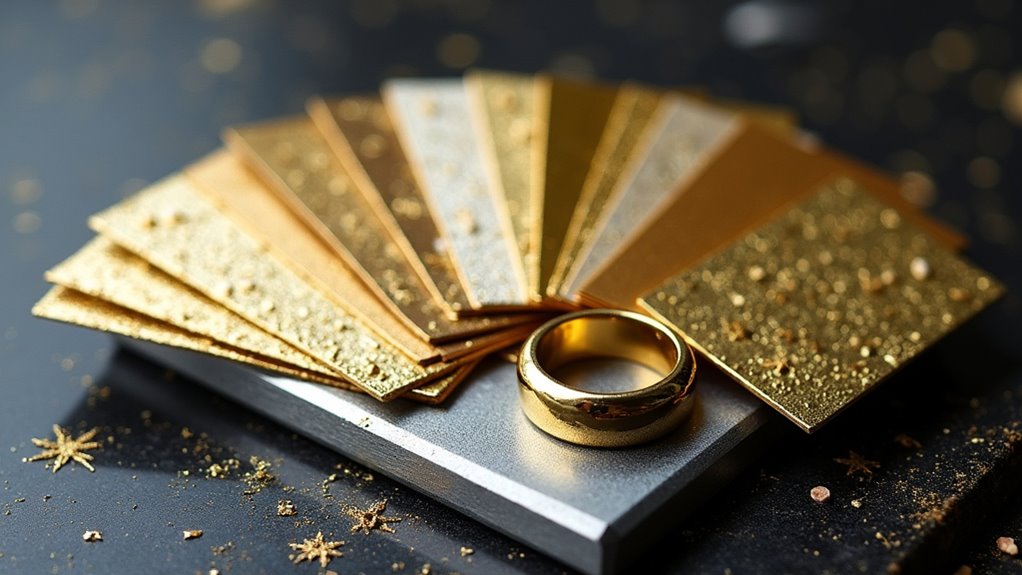
Regular maintenance is essential: store pieces separately (scratches are a no-no), and ditch the jewelry before swimming or heavy chores.
Pro tip: that rhodium plating needs a refresh every couple years, so buddy up with a jeweler for professional cleanings at least annually.
Can White Gold Trigger Allergic Reactions in Sensitive Individuals?
White gold can absolutely trigger allergic reactions, especially in people sensitive to nickel – one of its primary alloying metals.
Up to 17% of women and 3% of men are affected by nickel allergies (yikes!). The typical symptoms? Think itching, redness, and that lovely swelling where the jewelry touches skin.

Here’s the kicker – even rhodium-plated pieces can cause reactions once the coating wears off.
For sensitive folks, palladium-based white gold or platinum might be smarter choices.
Does White Gold Tarnish Over Time?
White gold does indeed tarnish over time, but it’s not quite what you’d expect.
The real culprit? That stunning rhodium plating wearing away to reveal the natural yellowish alloy underneath.

While pure gold stays pristine forever, white gold’s journey is more… complicated.
Environmental factors like sweat, chemicals, and humidity speed up the process, turning that brilliant white finish into something less sparkly.
But hey, nothing a fresh rhodium dip can’t fix!
What Is the Rhodium Plating Process for White Gold?
Rhodium plating transforms white gold into a dazzling showstopper through a meticulous process.
First, the jewelry gets polished and ultra-cleaned to surgical perfection.
Then comes the science-y part – the piece takes a dip in an activator bath before being suspended in rhodium solution for 30 thrilling seconds.
A quick rinse later, and voilà! The result? A brilliant white finish that’ll make regular gold jealous.
Just remember, this gorgeous coating needs occasional touch-ups.
How Often Should White Gold Jewelry Be Professionally Inspected?
Professional inspection frequency for white gold jewelry depends on wear patterns.
Daily-worn pieces need checks every 6 months, while occasional-use items can go annual.
But here’s the kicker – that rhodium plating isn’t forever! It typically needs a refresh every 12-18 months, depending on usage.
Immediate inspections are necessary (oops!) if there’s visible damage, loose stones, or that dreaded yellowing starts showing through.
Don’t skimp on those check-ups – they’re cheaper than replacing lost diamonds!