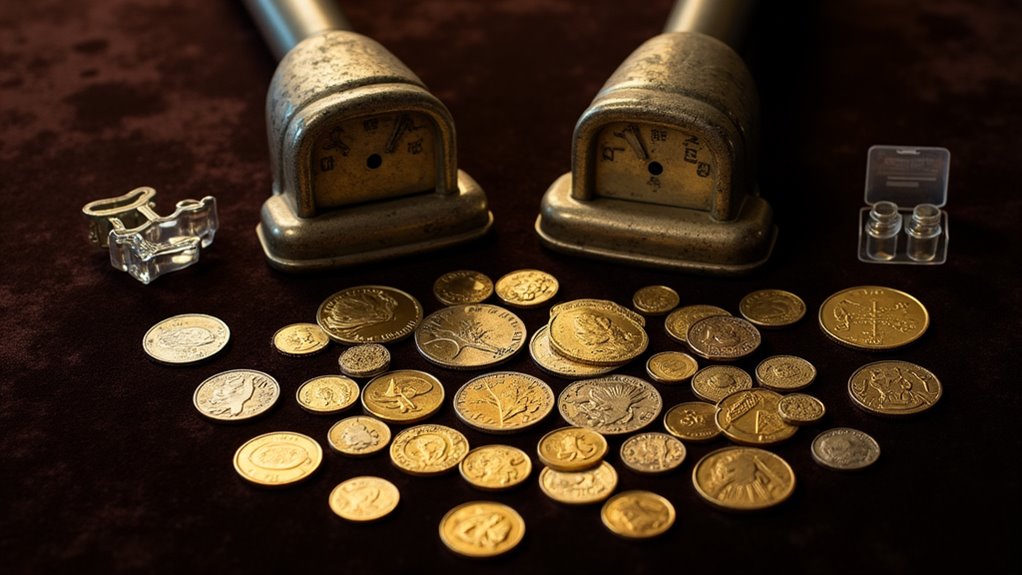
Gold alloys dominate both jewelry and industry, transforming soft pure gold into practical powerhouses. Yellow gold pairs with copper and silver for that classic look, while white gold rocks palladium or nickel with a rhodium finish. Rose gold? That’s copper working its magic for that coveted pink blush. Beyond the bling, these alloys crush it in electronics, dental work, and aerospace tech. Each composition tells its own story of strength meets beauty – and there’s way more where that came from.

Common Gold Alloys
While pure gold may be the stuff of treasure chest dreams, its butter-soft nature makes it about as practical as chocolate coins in a heat wave. That’s precisely why jewelers and manufacturers have mastered the art of mixing gold with other metals to create alloys that combine beauty with practicality.
These mixtures of metals transform pure gold from a soft, impractical material into durable compositions suitable for everything from engagement rings to electronic components.

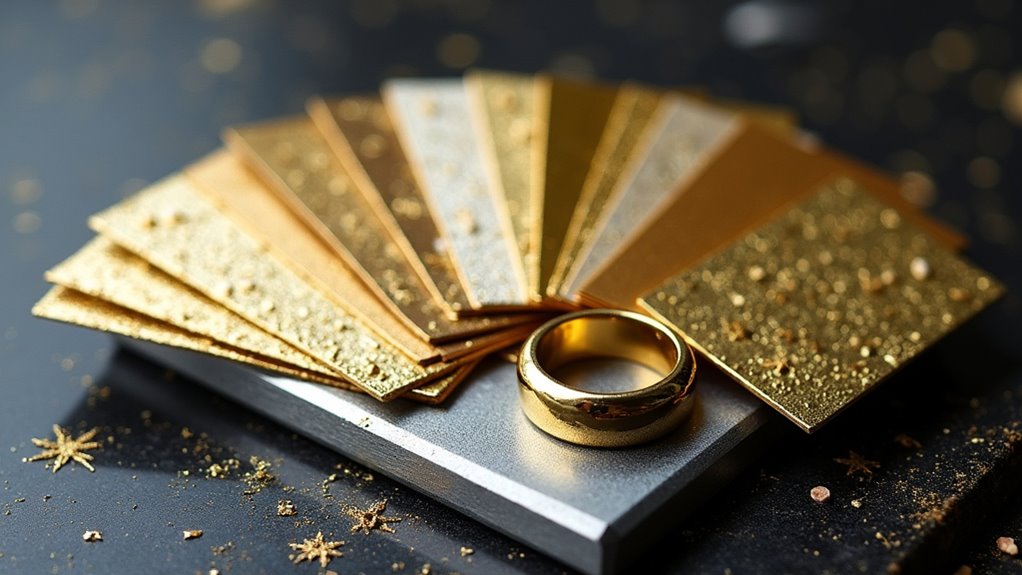
Yellow gold alloys remain the classic choice, combining gold with copper and silver to achieve that warm, traditional glow we’ve all come to associate with precious jewelry. A typical 22K yellow gold mixture contains a whopping 91.67% gold, with smaller amounts of silver, copper, and zinc thrown in for good measure. The result? A piece that’s considerably stronger than pure gold while maintaining that coveted butter-yellow hue. The 18k yellow gold alloy is particularly popular for its balance of durability and value, and its composition includes 58.3% gold content that contributes to its strength.
Nothing beats the timeless appeal of yellow gold, where nature’s finest meets human ingenuity to create jewelry’s most enduring classic.
White gold has stormed onto the scene as a modern alternative, achieved by blending gold with metals like palladium or nickel. Most white gold jewelry gets a final rhodium plating – think of it as the cherry on top that gives these pieces their mirror-like shine. White gold alloy metals create a stunning appearance while also ensuring durability.
And for those whose skin throws a fit at the mere mention of nickel, there are plenty of nickel-free options that won’t trigger an allergic meltdown.
Rose gold has been having its moment in the spotlight, and honestly, who can blame it? This blushing beauty gets its signature pink-to-red hue from a generous helping of copper in the mix. Popular in both 18K and 14K variations, rose gold offers a romantic vibe that’s captured the hearts of contemporary jewelry enthusiasts.

Sure, it might develop a slight patina over time (thanks, copper!), but some argue that just adds to its vintage charm.
Beyond the jewelry counter, gold alloys are busy making themselves useful in countless industrial applications. From conducting electricity in your smartphone to filling cavities in dental offices, these specialized mixtures prove that gold isn’t just about looking pretty.
Manufacturers have developed specific compositions for everything from aerospace components to precision instruments, often focusing on durability and biocompatibility.
The color palette of gold alloys is surprisingly diverse, ranging from traditional yellows to unexpected blues and purples. While some of these more exotic hues might not be practical for everyday use, they showcase the remarkable versatility of gold when combined with different metals.

Green gold, created by mixing gold primarily with silver, offers yet another option for designers looking to push creative boundaries. Modern trends continue to evolve, with an increasing emphasis on sustainable and hypoallergenic formulations that meet contemporary demands for both style and safety. Additionally, the durability of gold alloy necklaces is an important factor to consider when selecting jewelry that will stand the test of time.
Frequently Asked Questions
How Long Does Gold Plating Typically Last Before Wearing Off?
Gold plating’s lifespan varies dramatically based on key factors.
Thin plating (under 1 micron) might last just months, while heavy plating (2.5+ microns) can survive 2-3 years of regular wear.
Daily-use items like rings wear faster than occasional-wear pieces like pendants.
Base metal quality’s essential too – sterling silver holds plating better than cheap brass.
Pro tip: proper storage and avoiding chemicals can stretch that golden gleam way longer!
Can White Gold Jewelry Be Replated With Yellow Gold?
Yes, white gold can be replated with yellow gold through electroplating, but it’s not a permanent fix.
The process involves stripping existing rhodium plating first, then laying down a thin yellow gold layer.

Here’s the catch – that flashy new yellow finish will eventually wear off (usually within 6-24 months, depending on wear).
While it’s cheaper than recasting the piece entirely, you’ll need periodic touch-ups to maintain that golden glow.
Why Does Some Gold Jewelry Cause Skin Allergies?
Gold allergies? It’s usually not the gold itself – blame those sneaky alloying metals!
Nickel’s the biggest troublemaker, lurking in lower-karat pieces to boost durability. When these metals mix with skin moisture, they release ions that make your immune system go bonkers.

Think redness, itching, and that oh-so-lovely rash. Copper and zinc can join the party too.
Pro tip: Higher karat gold (18K+) typically means fewer allergens to mess with your skin.
Is It Possible to Test Gold Purity at Home?
Testing gold at home? You bet! Several DIY methods can give you a decent reality check on that precious piece.
The classic float test (real gold sinks like a rock), magnet test (gold tells magnets to take a hike), and vinegar test are your budget-friendly besties.
But here’s the kicker – home tests aren’t foolproof. For the real deal, you’ll need professional testing with fancy equipment and acid tests. Just keepin’ it real, folks!
What Causes Gold Jewelry to Tarnish Over Time?
Gold jewelry tarnishes primarily due to environmental and chemical factors attacking the base metals in gold alloys.
It’s not actually the gold that’s tarnishing – pure gold never does! – but those pesky metals mixed in.
Humidity, pollution, and everyday chemicals like perfumes and cleaning products trigger reactions with copper and silver in the alloy.
Even your own sweat’s got it in for your jewelry, folks.
Higher karat gold? Less drama, less tarnish.