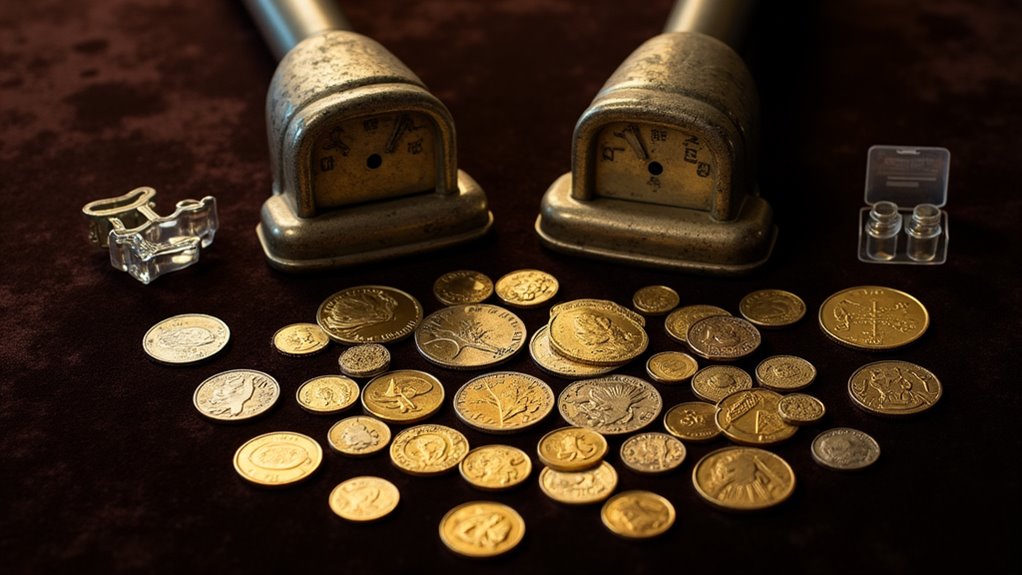
Identifying fake gold requires a multi-pronged attack strategy that’ll make counterfeiters squirm. Start with visual inspection – real gold has that unmistakeable warm yellow glow, while fakes look… off. The magnetic test reveals imposters quick (real gold couldn’t care less about magnets), and the density test separates the precious from the pretenders. Professional appraisal‘s the gold standard though – those XRF analyzers don’t mess around. But there’s more to this golden mystery than meets the eye.

Glinting in the light, that gorgeous piece of gold might be concealing a dirty little secret – it’s completely fake. For centuries, counterfeiters have perfected their craft, but science and simple tests can expose their deceptions. The stakes are high, and nobody wants to be the sucker who bought fool’s gold thinking it was the real deal.
The first line of defense starts with your eyeballs and a trusty magnifying glass. Real gold sports specific hallmarks – those tiny stamps declaring “18K” or “24K” that tell you exactly what you’re dealing with. Pure gold has this unmistakeable warm yellow hue that just hits different, while fake stuff often looks a bit… off. Watch for weird discolorations, especially around clasps and joints where cheaper metals love to show their true colors. Since 24k gold is rare in jewelry due to its softness, most authentic pieces contain other metals for durability. Proper authentication is crucial as unsafe materials in counterfeit pieces can pose serious health risks. Additionally, knowing how to check hallmarks can save you from a costly mistake. Many of these hallmarks are regulated by industry standards, making gold purity testing a vital part of the verification process. The purity of gold is often measured using millesimal fineness, which indicates the exact gold content in a piece. In fact, understanding scrap dental gold refining can further enhance your knowledge of gold’s value.
Your eyes and a magnifying glass are your first defense against fake gold – look for hallmarks and that signature warm glow.
Here’s where things get fun – grab yourself a heavy-duty neodymium magnet and let physics do the talking. Real gold basically gives magnets the cold shoulder (it’s non-magnetic, folks). If that supposedly solid gold chain jumps at the magnet like a desperate singles-bar regular, you’ve got yourself a fraud. But careful now – some legit gold pieces have magnetic clasps, so don’t go calling fraud too quick.

The density test is where we separate the pros from the pretenders. Gold’s seriously dense (19.3 g/mL, if you’re keeping score), and that means it sinks in water faster than a lead weight. Do some quick math with weight and volume, and you’ll know if you’re holding the real McCoy.
Speaking of testing, the acid test is basically the nuclear option – literally using acids to expose fakes. But maybe don’t try this at home unless you fancy yourself an amateur chemist with a death wish.
For those who prefer their testing methods less… destructive, the ceramic scratch test is beautifully simple. Drag that suspect piece across unglazed ceramic, and real gold leaves behind a golden streak that screams “authentic.” Fake stuff? Usually leaves a black mark darker than your ex’s heart.
The tech-savvy crowd might prefer electronic gold testers, which measure conductivity without leaving a scratch. They’re quick, accurate, and won’t destroy your precious pieces.

But for the ultimate verdict, nothing beats a professional appraisal. These experts pack serious equipment like XRF analyzers that’ll tell you exactly what’s what down to the molecular level.
Let’s be real – the gold market’s crawling with fakes slicker than a greased pig at a county fair. But armed with these testing methods, you’ve got better odds of spotting a fake than a casino has at taking your money.
Just remember: when it comes to gold, trust your gut, but verify with science. Because at the end of the day, all that glitters definitely ain’t gold – sometimes it’s just really shiny brass with delusions of grandeur.
Frequently Asked Questions
Can Counterfeit Gold Tarnish or Change Color Over Time?
Counterfeit gold absolutely shows its true colors – literally.
Unlike genuine high-karat gold, fake pieces tarnish rapidly and dramatically, often turning green, black, or bluish when exposed to everyday elements.

The fraudulent stuff can’t handle basic chemicals in sweat, perfumes, or cleaning products.
Most telling? That sketchy color-shifting happens way faster than with real gold, plus the surface might get rough n’ patchy.
Dead giveaway for the counterfeit crowd.
What Are the Legal Consequences of Unknowingly Selling Fake Gold?
Unknowingly selling counterfeit gold can land sellers in serious legal hot water.
Even without intent, penalties include fines up to $250k and potential prison time (yikes!).

There’s some wiggle room if sellers can prove they were also victims – think cooperation with authorities and solid documentation of authentication efforts.
But here’s the kicker: civil lawsuits from angry buyers can still wreck havoc, regardless of the seller’s knowledge status.
Are There Any Apps or Devices That Detect Fake Gold?
Several high-tech tools make gold authentication a breeze these days.
The Sigma Metalytics Verifier’s electrical resistivity testing is a game-changer, while smartphone apps like Gold Verifier offer quick visual checks.

XRF analyzers bring lab-grade accuracy to the table, and ultrasonic gauges catch those sneaky tungsten-filled fakes.
For the tech-savvy investor, the GoldAnalyser combines multiple testing methods in one sleek package – though none are 100% foolproof.
How Common Is Fake Gold in Antique or Estate Jewelry?
Fake gold is shockingly prevalent in antique and estate jewelry – experts estimate a whopping 50% of pieces on today’s market are counterfeit!
The problem’s exploded over the past 20 years, with sophisticated fakes fooling even prestigious auction houses.

Art Deco and Victorian reproductions dominate the fake scene, often incorporating genuine old-cut diamonds to boost authenticity.
Even pieces with “aged” patinas and hallmarks can be bogus, thanks to advanced manufacturing tech.
Does Fake Gold Affect Skin Differently Than Real Gold?
Fake gold wreaks absolute havoc on skin compared to the real deal.
While genuine gold sits pretty and inert, counterfeit pieces trigger a chemical party – leaving green or black marks from copper oxidation, and sometimes nasty allergic reactions thanks to nickel content.
Long-term exposure’s no joke either; fake pieces can leech toxic metals into skin, while pure gold just chills there, hypoallergenic as ever.
The skin tells no lies when it comes to spotting imposters!