

Silver-gold alloys boast a rich history dating back to ancient Egypt’s electrum, with modern naming conventions ranging from scientific (AgAu) to marketable (“Crown Gold”). These precious metal combos pack serious versatility – think everything from tarnish-resistant Argentium to that eye-catching green gold blend (75% Au, 25% Ag). Industry pros use specific ratio codes like AuAg20, while jewelry markets favor catchier terms that’ll make your wallet twitch. The rabbit hole of alloy applications goes deeper than you’d think.

Nomenclature in the precious metals world isn’t just a fancy game of word association – it’s a fascinating web of historical significance, chemical precision, and pure marketing genius. The story of silver-gold alloys spans millennia, from naturally occurring electrum that ancient Egyptians coveted to today’s precisely engineered combinations with trademarked names like AE Alloys™ and Argentium. This rich history includes 18k yellow gold alloy, which is a popular choice among jewelers for its balance of purity and durability.
These precious metal marriages aren’t just about looking pretty – they’re workhorses of the jewelry and industrial worlds. Take vermeil, for instance. It’s not just any old gold-plated silver; it’s gotta meet strict standards (at least 10 karat gold, thank you very much) to earn its fancy French name.
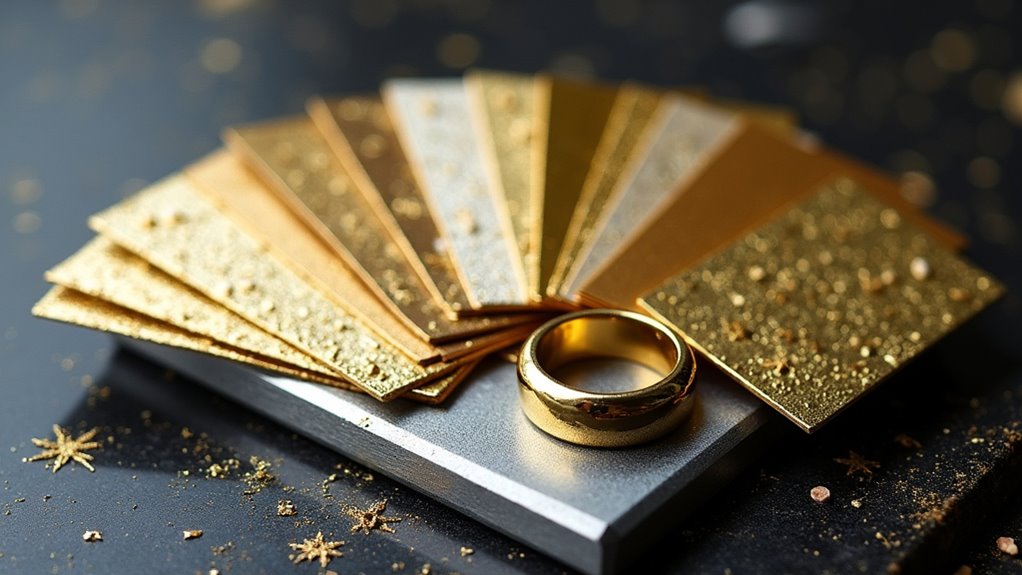
And let’s talk about green gold – 75% gold mixed with 25% silver creates this oddly appealing greenish-yellow hue that’s got jewelers drooling. The creation of distinct white gold alloy metals has also contributed to the allure of modern jewelry designs.

The chemical naming game gets even more interesting (sic). While scientists stick to their boring “gold; silver” IUPAC nomenclature, the industry’s got its own language. AgAu might sound like a caveman’s grunt, but it’s actually the shorthand that gets tossed around in labs and workshops. Some manufacturers get fancy with specific ratios like AuAg20, which tells you exactly what you’re dealing with – if you speak the lingo.
Scientists may talk IUPAC, but jewelers speak their own precious metal poetry – where AgAu means more than just atomic symbols.
Historical significance? Oh boy, does it run deep. Electrum wasn’t just some random mix-up Mother Nature created – it was the rockstar of ancient coinage. Those clever Egyptians figured out that this natural alloy was perfect for their bling game.
Meanwhile, Germans were busy naming their 10-karat creation “Hera Gold,” because apparently even alloys need mythological street cred.
The physical properties of these alloys are where things get really juicy. Mix silver and gold just right, and you’ve got yourself a material that laughs in the face of tarnish (looking at you, Argentium). The malleability makes jewelers weep with joy – in a good way – while density variations mean designers can play around with weight and feel like kids in a metallurgical candy store.

Modern branding has taken these ancient metals and given them a 21st-century makeover. Sure, “Crown Gold” sounds fancy and traditional, but contemporary names like “Precium” show how marketing departments earn their keep.
These aren’t just random labels slapped on precious metal combos – they’re carefully crafted identities that speak to specific applications, properties, and yes, price points. In the realm of jewelry, common gold alloys like white gold and rose gold are especially popular for their unique aesthetics and versatility.
What’s particularly fascinating is how these naming conventions reflect both technical precision and cultural preferences. While some markets go nuts for green gold’s unique aesthetic, others stick to traditional yellows and whites.
Frequently Asked Questions
How Do Silver and Gold Alloys React With Common Household Chemicals?
Silver-gold alloys get feisty with household chemicals!
While gold stays chill, silver throws a fit when exposed to bleach’s chlorides, forming AgCl.

Ammonia-based cleaners dissolve tarnish but might weaken the alloy overtime.
Baking soda? It’s actually silver’s friend, gently converting that nasty tarnish back to metallic silver.
But here’s the kicker – gold just sits there, totally unfazed by these chemical shenanigans.
Talk about playing hard to get!
Can Silver-Gold Alloys Be Used in Medical Implants?
Silver-gold alloys are absolute rockstars in medical implants! Their antimicrobial properties make them infection-fighting champions, while their corrosion resistance keeps em’ standing strong in the harsh bodily environment.
These alloys excel in everything from dental work to cardiac devices, thanks to their biocompatibility and conductivity.
Even better – they’re now being used in cutting-edge 3D-printed implants. Talk about precious metals doing some heavy liftin’ in healthcare!
What Is the Average Lifespan of Silver-Gold Alloy Jewelry?
Silver-gold alloy jewelry’s lifespan varies dramatically based on composition and care.
High-karat pieces can last 50+ years, while plated versions might fade within 2-4 years (yikes!).

Sterling silver pieces can become family heirlooms with proper maintenance, but they’re needy little things – requiring regular cleaning to prevent tarnishing.
The sweet spot? Well-maintained 14K or 18K gold alloys, which’ll stick around for decades without throwing tantrums about tarnish.
Are Silver-Gold Alloys Suitable for Industrial Electrical Connections?
Silver-gold alloys excel in industrial electrical connections due to their winning combination of properties.
These robust alloys deliver high conductivity from silver while gold prevents pesky oxidation issues. They’re particularly vital in medium-voltage switches, connectors, and relay systems where reliability is essential.

Though pricier than pure silver components, their enhanced durability and resistance to tarnishing make them worth every penny in demanding industrial environments.
Can Silver-Gold Alloys Be Recycled and Separated Back Into Pure Metals?
Silver-gold alloys can absolutely be recycled and separated – and quite effectively!
Through specialized processes like chemical parting and electrorefining, these precious metals can be pulled apart like divorcing celebrities. The Moebius process works wonders for smaller amounts, while electrolytic refining uses silver-copper nitrate solutions to isolate both metals at high purity.
The best part? These metals maintain their qualitys through multiple recycling cycles, making them true sustainability superstars.


