Modern gold testing devices pack serious punch without the hassle of toxic acids. The SuperbMelt XRF Analyzer leads the pack with its whopping ±0.05% accuracy and massive battery life, though it’ll make your wallet considerably lighter. Budget-conscious dealers might prefer the Kee Electronic Tester or Gemoro AGT3, which deliver solid results without breaking the bank. For those handling packaged pieces, SIGMASCOPE® GOLD Series tests through protective layers. The tech keeps evolving – and there’s more to uncover about each option.

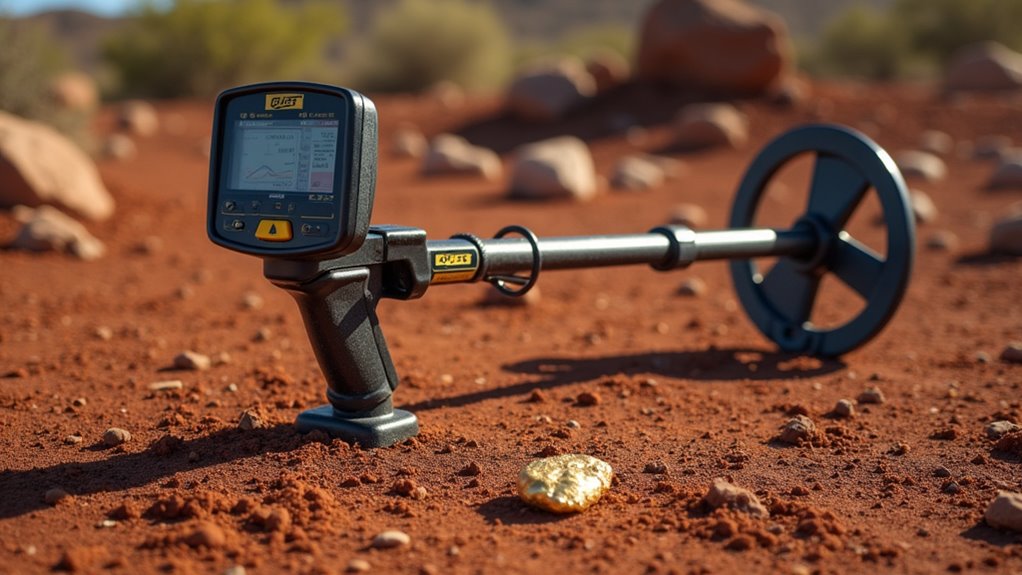
Leading the pack is the SuperbMelt XRF analyzer – the Rolls Royce of portable gold testing. This bad boy delivers accuracy up to ±0.05% (yeah, you read that right) and rocks a monster 27,000mAh battery that’ll keep going for three whole days in the field. It’s like having a tiny laboratory in your pocket, minus the bunsen burners and safety goggles. Open pit vs underground gold mining methods can significantly influence the gold’s purity found in different locations, adding an extra layer of consideration when testing. Additionally, the impact of sustainable practices in mining is crucial for ensuring that gold is sourced responsibly, which can affect its market value. Counterfeit gold coins pose a significant risk to collectors, making accurate testing even more essential.
Not everyone’s got deep pockets for the SuperbMelt though. Enter the Kee Electronic Tester – the reliable workhorse that won’t make your accountant cry. When properly calibrated, this little genius handles everything from that sketchy 10k chain your cousin’s trying to sell to grandma’s pristine 24k heirloom pieces. Its only downfall? Sometimes it gets a tad finicky with those micro-sized items.
Looking for reliable gold testing without breaking the bank? The Kee Electronic Tester delivers professional-grade results without the premium price tag.
The SIGMASCOPE® GOLD series (both B and C models) brings something special to the table – they can test through non-conductive layers. That means you can check authenticity without removing protective packaging. Talk about convenience! It’s perfect for those paranoid collectors who treat their gold bars like newborn babies.

For the budget-conscious dealer, there’s the Gemoro AGT3. Sure, it might struggle a bit with higher karat stuff, but it’s absolutely brilliant for testing lower karat jewelry. Plus, it’s got a test plate big enough to handle those gaudy 80s statement pieces that keep coming back into fashion (why, though?).
The real game-changer here is how these devices have ditched those nasty acid tests. No more toxic chemicals eating through your workspace or leaving permanent scars on perfectly good jewelry. These new-age testers deliver results in seconds, which means more time actually selling gold and less time playing amateur chemist.
But let’s keep it real – there’s no such thing as perfection. Even the fanciest XRF analyzers come with eye-watering price tags that’ll make you question your life choices. Some need regular calibration, and others occasionally throw a technological temper tantrum that only a factory reset can fix. Fire assay methods, for example, are still considered the most accurate for verifying gold content, although they aren’t as convenient as these mobile devices.
Despite these minor hiccups, mobile gold testing devices have become indispensable tools for everyone from corner pawn shops to high-end jewelry stores. They’ve transformed a once-tedious process into something almost foolproof – assuming you’ve got the budget and patience to master these digital truth-tellers.

Just remember: even the fanciest gadget can’t replace good old-fashioned market intuition… but it sure helps prevent those “oops, I bought fake gold” moments we’d rather forget.
Frequently Asked Questions
How Often Should Mobile Gold Testing Devices Be Recalibrated?
The calibration frequency for mobile gold testers varies dramatically by device type.
AGT models need it every single power-up (talk about high maintenance!), while KEE testers are more chill – just recalibrate when solution runs low.
XRF units? Those prima donnas require fancy supplier calibration, but way less often.

The real MVPs are frequent users who calibrate religiously with control samples.
Pro tip: clean those probe tips or face the wrath of wonky readings!
Can Mobile Gold Testing Devices Detect Gold Plating Thickness?
Modern mobile gold testing devices absolutely can detect plating thickness – and they’re getting scary-good at it!
Using XRF technology, these handheld warriors blast through layers to measure gold plating down to the micron level.

But here’s the catch: accuracy depends on proper calibration and surface cleanliness.
Premium devices nail it with laser-like precision, while budget models might stumble a bit.
Just don’t expect miracles if your sample’s got more dirt than a muddy prospector’s boots!
What Is the Minimum Gold Sample Size Needed for Accurate Testing?
For reliable gold testing, samples need at least 20 gold particles – anything less and accuracy takes a nosedive.
When particle counts drop below five, results become about as trustworthy as a casino dealer’s smile.

The pros typically recommend 3kg per meter for channel sampling, but hey, even that’s not gospel.
Screen fire assay’s where it’s at for those finicky fine grains.
Bottom line: bigger samples equal better sleep for geologists!
Are Mobile Gold Testing Devices Legal in All Countries?
No, mobile gold testing devices aren’t universally legal.
Some countries take a hard stance – Greece and Ethiopia flat-out ban them without special permits, while Germany and Hungary demand licenses.

It’s a wild regulatory landscape out there!
In places like Iceland, they’re completely forbidden (yep, totally off-limits).
The rules get even trickier when distinguishing between personal and commercial use.
Smart move to check local laws before whipping out that testing device!
Do Extreme Temperatures Affect the Accuracy of Mobile Gold Testing Results?
Yes, extreme temperatures considerably impact mobile gold testing accuracy.
Heat and cold can mess with device calibration and sensor performance, potentially throwing off results by several percentage points.
XRF analyzers are particularly sensitive to temperature swings, with their internal components struggling in non-ideal conditions.
Smart testers pack built-in temperature compensation, but they’re not foolproof.
For reliable results, testing should happen in controlled environments between 68-77°F (20-25°C).