Gold plated alloy definitely tarnishes – it’s just a matter of time and exposure. That gleaming outer layer of gold, typically just 0.5 to 2.5 microns thick, eventually surrenders to environmental factors like moisture, oils from skin contact, and urban air pollutants. Even with careful storage and maintenance, the base metals beneath will find their way to the surface, causing discoloration and dulling. The good news? Understanding the science behind tarnishing opens up a world of preservation possibilities.

When it comes to gold-plated alloy jewelry, tarnishing isn’t just possible – it’s practically inevitable. The delicate dance between the thin gold layer and environmental factors creates a perfect storm for discoloration and wear. The culprits? Everything from your morning shower to that fancy perfume you spritz on before heading out. Even the oils from your skin wage a silent war against that gleaming surface.
Let’s get real about what’s happening beneath that golden facade. The base metal – often copper or similar alloys – is basically sitting there like a ticking time bomb. When moisture sneaks through microscopic pores or worn spots in the gold plating, it’s party time for corrosion. And not the fun kind. We’re talking about a chemical free-for-all that turns your gorgeous piece into something that looks like it was dug up from your grandmother’s costume jewelry box. Many times, this base metal can be one of the common gold alloys, which can further influence how quickly tarnishing occurs.
The thickness of the gold plating plays a significant role in how long your piece will maintain its luxe look. Standard plating typically ranges from 0.5 to 2.5 microns – thinner than a strand of spider silk! Some manufacturers (oops, manufacturers) try to cut corners with ultra-thin plating, which is basically asking for trouble. It’s like trying to protect your phone with plastic wrap instead of a proper case. Solid gold, on the other hand, offers a more durable and tarnish-resistant option, especially when sourced through ethical gold mining practices.
If gold plating is the armor protecting your jewelry, ultra-thin plating is like wearing paper to a sword fight.

Urban living isn’t doing your jewelry any favors, either. The air in cities is basically a cocktail of sulfur and other pollutants that love nothing more than to attack your precious pieces. Add chlorinated pool water or a steamy shower to the mix, and you’re practically giving your jewelry a one-way ticket to Tarnish Town.
Even storing your pieces in the bathroom can lead to premature aging – kind of like leaving fine wine next to a radiator.
The good news? You can fight back against the inevitable. Smart storage solutions like anti-tarnish pouches and airtight containers are your best friends. Taking off your jewelry before swimming, showering, or spritzing on perfume isn’t just being paranoid – it’s being smart.
And when it comes to cleaning, gentle is the name of the game. No aggressive buffing or harsh chemicals; treat it like you would treat a delicate butterfly wing.

Signs of tarnishing usually start subtly – a slight dulling here, a patch of discoloration there. But once it starts, it’s like watching dominoes fall. The best defense is vigilance and proper care, though eventually, even the most pampered pieces might need replating. It’s just the nature of the beast when dealing with gold-plated alloys.
Additionally, understanding the gold plating thickness can help you make informed choices about your jewelry purchases.
But hey, at least now you know what you’re up against!
Frequently Asked Questions
How Long Does Gold Plating Typically Last Before Showing Signs of Wear?
Gold plating’s lifespan varies dramatically based on several factors.
Under typical conditions, most pieces start showing wear within 6 months to 2 years. Thicker plating (obviously) holds up better, but let’s be real – nothing lasts forever.

Daily-wear items like rings tend to fade faster, while occasional-use pieces might shine on for 3+ years.
Environmental factors and maintenance habits are total game-changers here. It’s basically a countdown from day one.
Can I Shower or Swim While Wearing Gold-Plated Alloy Jewelry?
Swimming and showering with gold-plated jewelry? Not the brightest idea.
Water exposure – especially chlorine and saltwater – launches a full-scale assault on that delicate plating.
Shower chemicals like shampoo and soap? They’re just as brutal.
The verdict’s clear: Take off those gold-plated pieces before hitting the pool or shower.
Even brief exposure wreaks havoc, causing tarnishing and peeling that’ll have your jewelry looking tragically dull in no time.
What Cleaning Products Are Safe to Use on Gold-Plated Alloy Items?
Safe cleaning products for gold-plated alloy include specialized jewelry cleaners like Weiman or Sparkling Alchemy’s Lavish Foam.
Mild dish soap mixed with warm water works brilliantly too – just don’t get carried away with harsh stuff!

Avoid acidic cleaners like lemon juice or vinegar – they’ll strip that precious plating faster than a Vegas quickie wedding.
Gentle microfiber cloths are your best friend for daily maintenance.
Keep it simple, folks!
Is It Possible to Replate Gold-Plated Alloy Jewelry After It Wears Off?
Yes, it’s totally doable to replate worn gold-plated jewelry!
The process involves electroplating a fresh layer of gold onto the base metal, fundamentally giving pieces a second life. Most jewelers offer this service, typically taking 3-4 days to complete.

The catch? Not every piece qualifies – materials like tungsten or certain gemstone-set items won’t work.
But for eligible pieces, replating can restore that gorgeous golden gleam. Just expect to repeat the process eventually!
How Can I Tell if My Jewelry Is Gold-Plated Alloy or Solid Gold?
Identifying genuine gold from plated pieces is all about those telltale signs.
Solid gold sports consistent coloring and feels weightier, while plated pieces often show wear on edges and uneven tones.
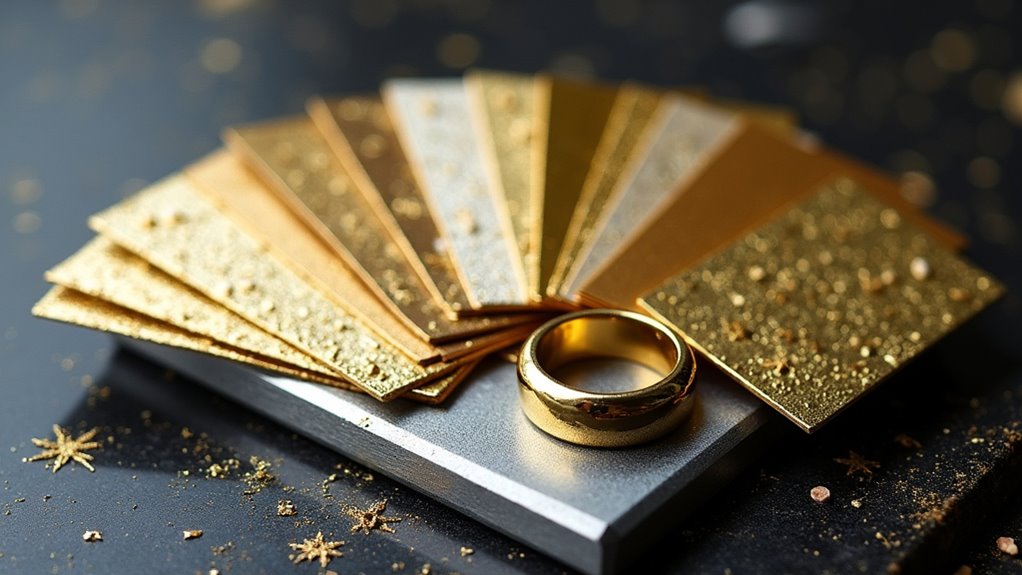
Check those hallmarks – real gold’s got clear “14K” or “18K” stamps, but plated stuff usually screams “GP” or “GEP.”
Still unsure? The magnetic test‘s a quick fix – solid gold won’t stick, but plated pieces might get clingy with their base metals.