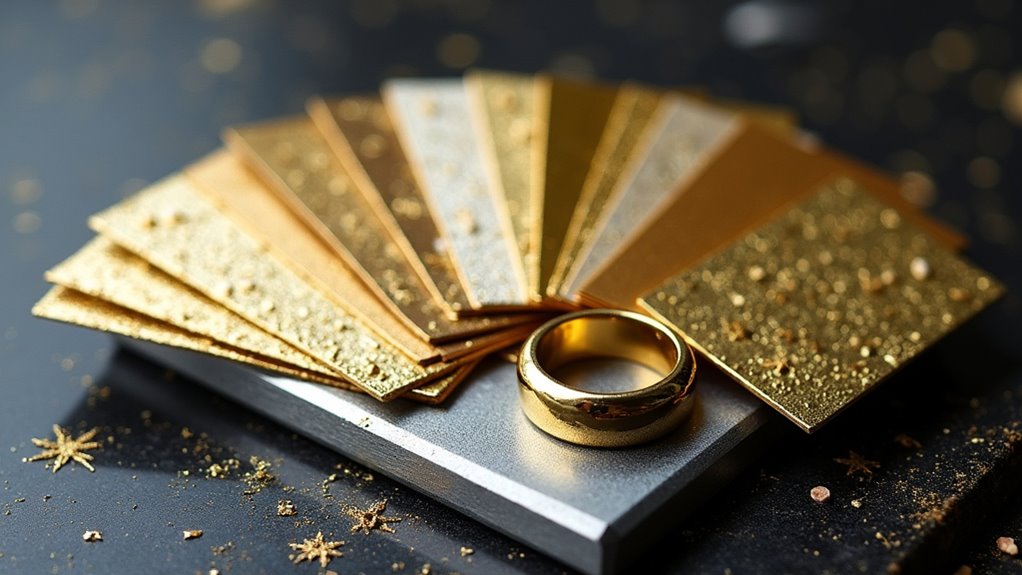
The karat system divides gold purity into 24 parts, with each karat representing 4.17% pure gold content. Pure 24K gold contains 99.9% gold but proves too soft for jewelry, while 18K (75% gold) strikes a luxe balance. 14K (58.3% gold) delivers durability for daily wear, and 10K (41.7% gold) offers entry-level affordability. These alloys mix with metals like copper and silver to enhance strength – and that’s just scratching the surface of gold’s fascinating composition.

Ah, the karat system – that finicky little number that makes gold bugs either swoon or sneer. It’s the ultimate measure of gold’s purity, dividing precious metal into 24 parts like some ancient mathematicians obsession. And boy, does it matter when you’re dropping serious cash on that special piece of jewelry or hoarding bars in your doomsday bunker.
The system traces its roots to carob seeds, those little natural weighing tools that ancient traders used to measure their precious cargo. Each karat equals 4.17% of pure gold content in the alloy. Today, it’s all about those numbers: 24K stands proud at the top of the heap with 99.9% purity (because nothing in life is truly 100%, right?). Then we’ve got 18K strutting around with 75% gold content, 14K playing it cool at 58.3%, and 10K bringing up the rear with 41.7% – barely making the cut in the US market. XRF testing is one of the methods used to verify the purity of gold, ensuring you’re getting what you pay for. Understanding the purity levels is crucial for making informed purchasing decisions.
From ancient carob seeds to modern percentages, gold purity standards remind us that even precious metals need a solid measuring stick.
But here’s the kicker – pure gold is actually pretty useless for jewelry. It’s softer than a politician’s promises and about as practical as a chocolate teapot. That’s why jewelers mix it up with other metals like silver, copper, and zinc to create alloys that can actually handle daily wear. These alloy buddies don’t just add strength; they’re responsible for those gorgeous variations in color that make gold jewelry so dang versatile. Pure 24K gold is too soft for everyday wear and can easily bend or scratch. The addition of alloy metals enhances the durability and aesthetic appeal of gold jewelry. Additionally, the millesimal fineness scale is often used alongside karats to provide a more precise measurement of gold purity.

Speaking of colors, we’re not just talking about your grandma’s yellow gold anymore. White gold swaggers in with its rhodium-plated brilliance, rose gold blushes pretty thanks to its copper content, and there’s even black gold for those who like their bling with a gothic twist. Each shade comes with its own personality and price tag, because nothing says “complicated” quite like the precious metals market.
When it comes to durability, there’s an inverse relationship that’ll make your head spin – the higher the karat, the softer the gold. That’s why you’ll rarely see 24K gold in engagement rings (unless you enjoy explaining dents to your fiancée). 14K hits the sweet spot for most jewelry, while 10K is practically indestructible but won’t win any purity contests.
The price game follows a more logical path – higher karat means bigger price tag, generally speaking. But here’s where it gets fun: different countries have different standards for what can legally be called gold. While the US draws the line at 10K, some European countries are cool with 9K. They keep everyone honest with hallmarks like .585 for 14K and .750 for 18K, because nothing kills the mood quite like fake gold.
Bottom line? Whether you’re going for pure investment grade or practical everyday wear, understanding karats is essential. Just remember – in the world of gold, purity isn’t always perfection, and sometimes less really is more. Unless you’re talking about price tags – then more is definitely more.
Frequently Asked Questions
Why Does Pure Gold Tarnish Less Than Lower Karat Gold Jewelry?
Pure 24K gold‘s stellar resistance to tarnishing comes down to its chemical composition – it’s literally too noble to react!
With 99.9% pure gold content, there’s virtually no copper or silver to cause trouble.

Lower karat gold? That’s where things get messy.
Those added metals like copper and silver are tarnish magnets, reacting with air and moisture to create that annoying discoloration.
It’s basically the difference between having zero reactive metals versus a bunch of troublemakers.
Can I Wear My Gold Jewelry While Swimming in Chlorinated Water?
Swimming with gold jewelry? Big mistake!
Chlorine’s a nasty piece of work that’ll attack those precious pieces, especially lower-karat items. The chemical reaction’s brutal – weakening prongs, dulling finishes, and causing structural damage that’s often permanent.
White gold’s particularly vulnerable here. And don’t even think about hot tubs – they’re worse!
Best play it safe and leave those golden beauties in the jewelry box before taking a dip.
How Do Jewelers Test the Authenticity of Different Karat Gold Items?
Jewelers employ multiple methods to authenticate gold’s karat content – each with its own swagger!
Visual inspection catches obvious red flags like funky colors or suspicious weight. The classic acid test? It’s messy but effective, leaving telltale reactions on different karats.

Electronic testers bring the quick-n-dirty convenience while XRF analysis? That’s the big guns – shooting X-rays to reveal exact compositions.
Each method’s got its place in a jeweler’s authenticity-checking arsenal!
Which Karat Gold Is Best for People With Sensitive Skin?
Higher karat gold reigns supreme for sensitive skin, with 18K and 24K leading the pack. Their increased purity means fewer irritating alloy metals in the mix.
18K hits that sweet spot – 75% pure gold while maintaining enough durability for daily wear.

Even better? Go for nickel-free varieties, especially in white gold where palladium replaces the sneaky nickel alloy.
Pro tip: Always patch test new pieces, cuz even pure gold can surprise ya!
Does Mixing Different Karat Gold Pieces Cause Any Chemical Reactions?
Mixing different karat gold pieces won’t trigger any chemical drama – it’s basically a non-event!
While these precious metals might look different (hello, color variations), they’re just chillin’ together without any funky reactions.

The only thing to watch for is varying wear patterns, since different karats have different hardness levels.
Even those solder joints between mixed karats stay rock-solid stable.