Today’s gold testing is light-years beyond those old acid-burning days. Advanced XRF technology now zaps pieces with X-rays, revealing gold content in seconds without leaving a scratch. Ultrasonic scanners and conductivity meters join the party, while portable devices like AuRACLE bring lab-grade analysis to your pocket. Even traditional density tests still pack a punch when paired with modern tech. The authentication game keeps evolving – and there’s plenty more beneath the surface.

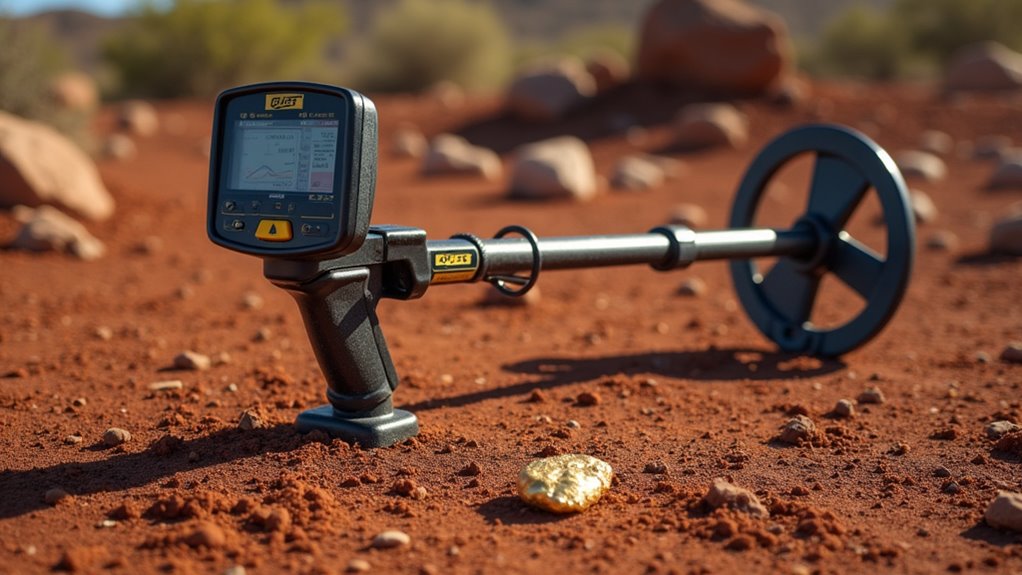
Several game-changing technologies are revolutionizing how we test and authenticate gold, making the old acid-test method look like something from the stone age. Advanced XRF technology leads the charge, using X-ray fluorescence to analyze gold purity and elemental composition without scratching a single surface. It’s like having Superman’s X-ray vision in your pocket, minus the cape and tights. The handheld devices can detect everything from pure gold to trace amounts of silver and platinum in seconds – pretty neat for something that doesn’t involve harmful chemicals or destroying your precious metal.
Modern gold testing has evolved beyond archaic methods, with XRF technology leading a new era of non-destructive authentication.
But wait, there’s more (and it’s actually exciting). The Orexplore system is literally changing the game for mining operations, detecting nuggety gold deposits in drill cores faster than you can say “eureka.” We’re talking about 20-minute analysis that used to take weeks or months in traditional labs. It’s like upgrading from a horse-drawn carriage to a Tesla, except this Tesla finds gold. This technology is a remarkable advancement in gold refining equipment that streamlines the extraction process and complements methods like open pit mining that focus on efficiency, which is essential for sustainable practices in mining.
The ultrasonic testing scene is equally impressive (yes, that typo was intentional). By sending sound waves through gold items, these devices can spot counterfeit pieces faster than a seasoned dealer can say “tungsten core.” It’s particularly handy for those tricky hollow pieces where traditional density testing might as well be reading tea leaves.

Pair this with conductivity measurement, and you’ve got a dynamic duo that would make Batman jealous. Gold’s unique electrical conductivity profile means fake stuff sticks out like a sore thumb.
Density testing might be the old guard, but it’s still hanging tough in the verification game. At 19.3 g/cm³, gold’s density is like its fingerprint – unique and telling. Sure, it’s got limitations (nobody wants their water-sensitive pieces taking a swim), but for coins and bars, it’s still solid gold… pun absolutely intended.
The AuRACLE device deserves a special mention – it’s basically the Swiss Army knife of gold testing. This portable genius can analyze purity levels faster than you can google “is my gold real?” It’s become the go-to gadget for jewelers who don’t have time for complicated testing procedures or extensive training sessions.
Let’s not forget about good old magnetic and visual inspection – sometimes the simplest methods pack the biggest punch. Gold’s non-magnetic nature means a simple magnet can be your first line of defense against fakes. Combined with a sharp eye for hallmarks and surface irregularities, these basic techniques still hold their own in the modern testing arsenal.

Additionally, methods like fire assay remain the gold standard for accuracy in verifying gold content, ensuring that even with these new technologies, traditional methods still play a crucial role in the testing process.
In this high-tech gold testing revolution, it’s not about replacing the old with the new – it’s about building an unbeatable combination of techniques that leave counterfeiters scratching their heads and genuine gold shining brighter than ever.
Frequently Asked Questions
How Accurate Are Non-Destructive Gold Tests Compared to Traditional Destructive Methods?
Non-destructive gold tests, while convenient and quick, can’t quite match the scary-accurate levels of traditional destructive methods.
XRF testing hits impressive 99.99% accuracy, but still falls short of fire assay’s parts-per-billion precision.

Think of it like comparing a sharp knife to a surgical scalpel – both cut, but one’s way more precise.
For everyday testing and quick authenticity checks, non-destructive methods rock the house, but legal certification? That’s still destructive-testing territory.
What Is the Minimum Gold Sample Size Needed for Reliable Testing?
For reliable gold testing, size matters – big time!
Traditional chemical assays demand at least 20 gold particles per sample to hit that sweet 95% confidence mark.
Fire assays? You’re looking at 2-3 grams minimum.
For refined or karated gold analysis, 5 grams does the trick.
Those trying to skimp with teeny samples (under 5 particles) are just asking for trouble – variability goes through the roof!
Trust us, bigger samples = better results.
Can These Technologies Detect Gold Plating Thickness on Jewelry Items?

Modern testing tech absolutely nails gold plating thickness measurements.
XRF devices can detect layers down to fractions of a micron, while ultrasonic pulse-echo systems map out coating depths with scary accuracy.
Helmut Fischer’s tactile probes are crushing it in the precision game, and electrochemical methods aren’t messing around either.
Even optical interference testing’s getting in on the action, measuring those super-thin layers through light patterns.

It’s wild how precise this stuff’s gotten!
How Long Does a Complete Non-Destructive Gold Analysis Typically Take?
A complete non-destructive gold analysis typically wraps up faster than your morning coffee run!
XRF testing zips through in 30 seconds to a few minutes, delivering spot-on purity readings with minimal fuss.
Add another 3-8 minutes for density testing, and you’re looking at roughly 10-15 minutes total for a thorough analysis.
That’s assuming everything’s prepped and ready to roll – no weird shapes or tricky pieces to slow things down!
What Are the Maintenance Costs for Modern Gold Testing Equipment?
Modern gold testing equipment costs are no joke! High-end machines demand annual maintenance ranging from £200-1000, depending on wear-and-tear.
Those fancy XRF analyzers? Less upkeep needed, thankfully. But watch out for those budget models – they’ll drain your wallet faster than a gold rush fever!
Regular servicing, consumables, and occasional part replacements add up.
Pro tip: investing in quality equipment upfront usually means fewer maintenance headaches down the road.