Platinum-gold alloys dominate high-stakes industrial and luxury applications. Their insane durability (100x tougher than stainless steel!) makes them perfect for heavy-duty equipment, while their bright white finish has luxury watchmakers drooling. These bad boys shine in electronics too, keeping your smartphone’s guts connected. Medical folks can’t get enough – from dental work to surgical tools. And aerospace? Yeah, these alloys laugh in the face of extreme conditions. There’s way more to this metal marriage than meets the eye.

While precious metals often steal headlines for their investment potential, platinum-gold alloys are quietly revolutionizing multiple industries with their remarkable durability. This extraordinary material, boasting wear resistance up to 100 times greater than stainless steel, has become a game-changer in industrial equipment and power generation systems, where component longevity is essential. The alloy’s exceptional stability under high-stress conditions has made it indispensable for reducing maintenance costs and extending equipment lifespan. Interestingly, gold in smartphones showcases another example of how valuable materials like platinum-gold alloys can enhance technology. Additionally, the ability to conduct electricity makes gold a critical component in high-tech devices, including semiconductor technology that relies on precise electrical connections to function effectively.
In the electronics sector, platinum-gold alloy’s proving its worth in creating longer-lasting electrical contacts and switches. Its superior corrosion resistance has made it a go-to choice for telecommunications equipment, while actually reducing the total volume of platinum group metals needed – a win-win for manufacturers and their bottom lines.
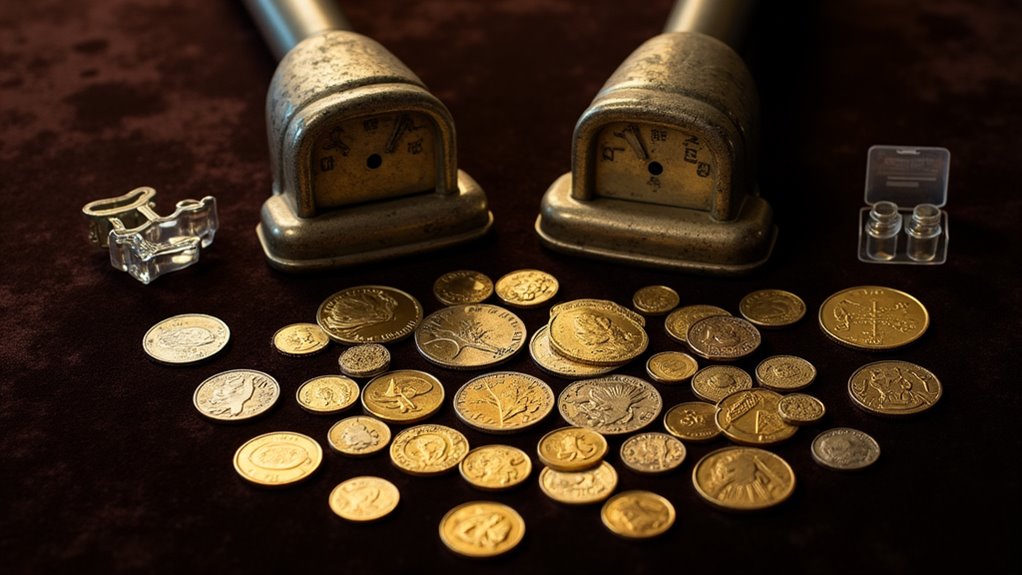
The luxury goods market has embraced this alloy with particular enthusiasm. High-end watchmakers and jewelry brands like Omega can’t get enough of its bright white color and workability for intricate detailing. Plus, its hypoallergenic properties make it a no-brainer for those with sensitive skin who still want their bling to last.

Medical and dental applications showcase the alloy’s versatility in perhaps its most vital role. From dental crowns and bridges to surgical implements, its biocompatibility and corrosion resistance make it ideal for these demanding applications. The material’s proven track record in high-precision medical instruments has helped drive innovation in biomedical engineering.
Aerospace and defense industries leverage platinum-gold alloy’s exceptional properties for components in jet engines and turbines. Its ability to withstand extreme conditions makes it invaluable in spacecraft components and advanced military systems, where failure simply isn’t an option. The reduced maintenance requirements are particularly attractive in these high-stakes applications.
The glassmaking industry has found an unlikely hero in platinum-gold alloy. Its resistance to corrosion makes it perfect for handling molten glass, while its durability extends the life of tools and vessels used in manufacturing. The alloy’s role in ensuring purity in optical fiber production has become increasingly important as telecommunications technology advances.
Research and development continues to push the boundaries of what’s possible with platinum-gold alloys. Scientists are exploring new applications at the nanometer scale and using it as a benchmark for developing even more advanced materials. The alloy’s unique microstructural properties continue to inspire innovations across multiple industries, proving that sometimes the most valuable applications of precious metals aren’t the ones that make headlines, but rather the ones that quietly keep our modern world running smoothly. Additionally, the role of gold in technology illustrates how essential materials like platinum-gold alloys can impact various sectors.
Frequently Asked Questions
What Is the Current Market Value of Platinum Gold Alloy?
The platinum-gold alloy market is seeing some wild swings! Current valuations range from $874.70 to $1,329 per ounce for platinum, while gold’s soaring between $2,550 and $3,947.

The alloy’s exact price? Well, it’s dancing to its own tune, depending on the mix ratio and market moods.
With platinum trading below gold (what a plot twist!), these precious metal cocktails are becoming seriously attractive for both industrial players and jewelry enthusiasts.
How Do Jewelers Test the Authenticity of Platinum Gold Alloy?
Jewelers employ multiple testing methods to verify platinum-gold alloy authenticity.
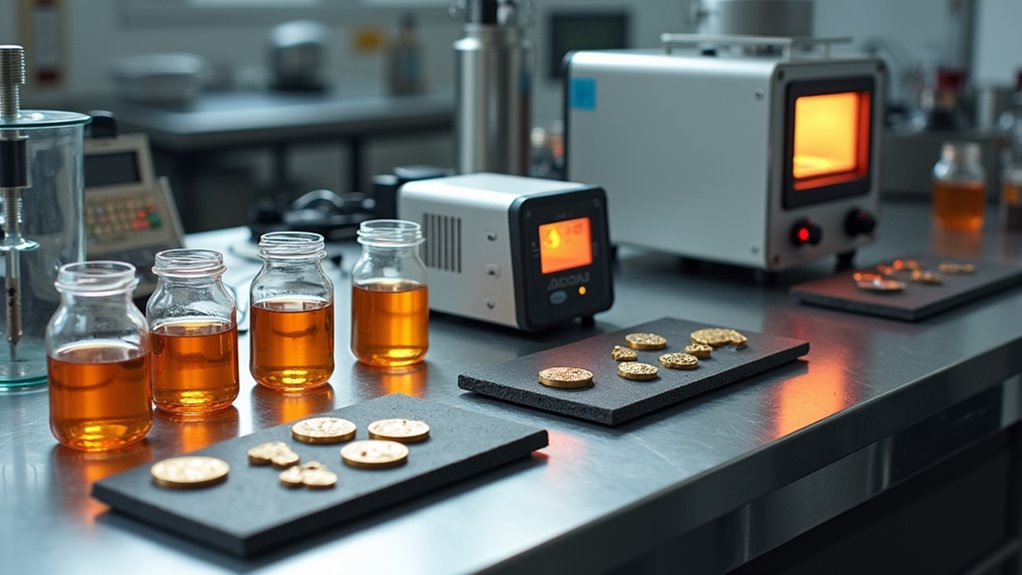
XRF testing leads the pack, offering precise elemental analysis through non-destructive X-rays. Traditional acid tests reveal corrosion resistance, while scratch tests on stones expose composition secrets.

Visual inspection for that signature silvery patina and magnet tests (platinum’s non-magnetic!) provide quick initial checks.
Smart dealers combine these methods – cause hey, nobody wants to get duped by fake bling!
Can Platinum Gold Alloy Cause Allergic Reactions?
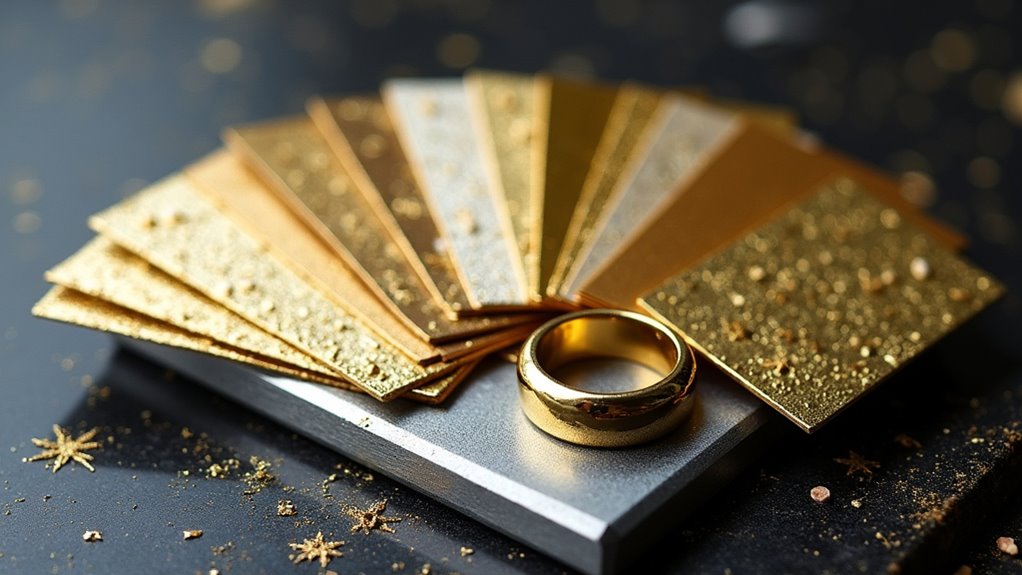
Yes, platinum-gold alloys can trigger allergic reactions, particularly in people with metal sensitivities.
While pure platinum and gold rarely cause issues, it’s the other metals mixed in – especially nickel – that are the real troublemakers.
Think rashes, itching, and inflammation where the metal touches skin.
Here’s the kicker: folks with existing skin conditions or metal allergies are particularly susceptible.
Time to get patch-tested before splurging on that gorgeous new piece!
Does Platinum Gold Alloy Tarnish or Change Color Over Time?
Platinum-gold alloys are like the superheroes of precious metals when it comes to stability. They simply don’t tarnish – period.

While platinum may develop a subtle patina (fancy word for a matte finish), it’s not discoloration but rather a surface texture that develops with wear n’ tear.
Unlike its finicky cousin white gold, these alloys maintain their original color without needing any fancy plating.
Even under intense conditions, the color stays true as steel. No yellowing, no drama!
Where Can I Sell My Platinum Gold Alloy Jewelry?
Sellers have several viable options for liquidating platinum-gold alloy jewelry.

Local jewelry stores often provide fair market evaluations, while specialized refiners like Precious Metals Refinery offer competitive rates backed by technical expertise.
Online platforms present wider reach but come with security risks.
Tech-savvy sellers might prefer app-based solutions offering quick payouts.
Pawn shops remain a convenient, albeit lower-paying option.
Pro tip: securing an appraisal first helps negotiate better deals anywhere.