Modern gold mining has ditched those old-school pickaxes for some seriously high-tech gear. AI and machine learning now guide exploration, while autonomous vehicles prowl mine sites like robotic bloodhounds. Drones buzz overhead mapping terrain, IoT sensors monitor everything 24/7, and bio-mining techniques are making traditional toxic chemicals obsolete. Even hyperspectral imaging from space helps pinpoint deposits – yeah, space! The industry’s digital revolution is just getting warmed up, and there’s way more beneath the surface.

How has gold mining evolved from the days of pickaxes and pan-handling? The transformation is nothing short of mind-blowing, with artificial intelligence and machine learning leading the charge in revolutionizing how we hunt for those precious yellow nuggets. Modern mining operations have ditched the old-school manual methods for a tech-heavy approach that’d make your grandfather’s head spin.
The real game-changer has been the integration of AI and big data analytics. These smart systems are crunching massive amounts of geological data faster than you can say “gold rush,” helping mining companies pinpoint promising deposits with scary accuracy. Drones buzz overhead, mapping terrain and creating 3D models while IoT sensors monitored everything from equipment health to environmental conditions. It’s like having thousands of digital prospectors working 24/7, except they don’t get tired or complain about the weather. With 81% of mine workers believing AI will transform their operations within the next decade, the industry is clearly embracing this digital revolution. The increasing demand for critical minerals has further accelerated the adoption of advanced technologies in mining operations, including smart technology that enhances operational efficiency. Additionally, sustainability practices in mining are becoming more integrated, focusing on reducing environmental impacts and promoting responsible resource management. The commitment to sustainable gold mining reflects a growing recognition of the industry’s role in preserving ecosystems while extracting valuable resources.
The extraction process itself has gotten a major upgrade too. Forget about mercury and cyanide – bio-mining is making waves by using microscopic organisms to extract gold from ore. How cool is that? Bacteria doing the heavy lifting! Meanwhile, in-situ leaching techniques are letting miners get to the good stuff without tearing up the landscape, and high-pressure grinding rolls are making the whole process more energy-efficient than ever.

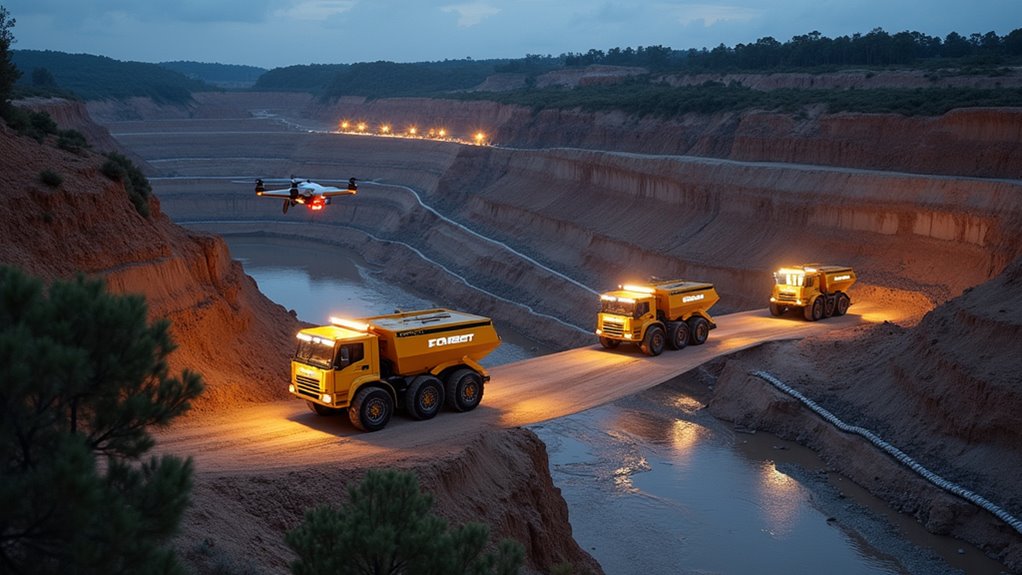
Autonomous vehicles are becoming the new normal at modern mining sites. These self-driving behemoths haul ore around the clock, guided by GPS and artificial intelligence, while robotic drilling systems work with laser-like precision. Some sites are even being managed remotely – operators sitting in air-conditioned offices miles away, controlling equipment through tele-remote systems. It’s like playing a really expensive video game, except the gold is real.
The exploration game has changed dramatically too. Hyperspectral imaging can spot mineral deposits from space (seriously!), while portable XRF analyzers give instant elemental analysis right there in the field. Seismic reflection techniques are mapping what’s underneath our feet with incredible detail, making the whole process of finding gold deposits more science than luck.
Data management has become essential in modern mining operations. Cloud-based systems let teams access real-time information from anywhere in the world, while 3D modeling software creates virtual replicas of ore bodies that you can practically reach out and touch.
And let’s not forget about sustainability – water recycling systems, renewable energy sources, and precision mining techniques are making gold extraction cleaner and greener than ever before.

The industry’s come a long way from the days of grizzled prospectors with pans in their hands. Today’s gold mining is a high-tech symphony of automation, artificial intelligence, and environmental consciousness. It’s enough to make you wonder what the next generation of mining technology will bring – maybe robots with built-in gold detectors? Hey, anything’s possible!
Frequently Asked Questions
How Does Environmental Regulation Impact the Adoption of New Mining Technologies?
Environmental regulations act as a double-edged sword in mining tech adoption.
While compliance costs initially bite into profits, they’re actually forcing miners to innovate – fast. Data shows a direct correlation: stricter rules = more clean tech patents.
Companies are scrambling to deploy AI-powered monitoring systems, water-saving equipment, and emission-reducing solutions.
Sure, it’s a pain in the wallet initially, but these regs are literally shoving the industry into a cleaner, more efficient future.
What Are the Training Requirements for Operators of Automated Mining Equipment?
Operators of automated mining equipment must complete specialized training beyond standard requirements.
The 40-hour baseline expands with an additional 24-80 hours of equipment-specific instruction, including VR simulation training. Certification demands hands-on practice, system diagnostics, and emergency response protocols.
Regular assessments and annual recertification guarantee operators maintain proficiency. Tech manufacturers often provide supplementary training modules focused on their specific automation systems and control interfaces.
How Does Weather Affect Modern Gold Mining Technology Performance?
Extreme weather conditions greatly impact modern mining tech’s performance.

Heavy rainfall disrupts automated systems and sensor networks, while intense heat causes equipment malfunctions and reduced efficiency.
Flooding risks damaging sophisticated machinery and electronics, particularly in automated operations.
Storm-related power outages can paralyze digital monitoring systems and AI-driven processes.
Temperature fluctuations affect precision instruments’ accuracy, forcing operators to frequently recalibrate equipment for peak performance.
What Is the Average Lifespan of Advanced Gold Mining Equipment?
Modern gold mining equipment typically lasts 10-20 years, but that’s just scratching the surface!

Wheel loaders tap out around 12,000 hours, while excavators call it quits near 9,800 hours.
The real kicker? Motor graders and scrapers are the marathon runners – 20% still crushing it at 20,000+ hours!
But here’s the tea: maintenance is everything. Treat these metal beasts right, and they’ll keep churning out gold way past their expiry date.
How Do Local Communities Benefit From Technological Advances in Gold Mining?
Local communities reap major benefits from mining tech advances.

Better equipment means more jobs requiring technical skills, pushing wages higher.
Safety improvements protect workers while automated systems create new roles in monitoring and maintenance.
Environmental tech reduces pollution impact on nearby towns.
Plus, mining companies often invest in digital infrastructure that communities can leverage – think high-speed internet and smart city innovations.
It’s a win-win situation.