Centrifugal concentrators are game-changing beasts in the gold recovery scene, spinning at mind-bending speeds up to 60 times gravity to snag those elusive fine gold particles. These mechanical marvels can process up to 60 tons per hour while nabbing gold bits as tiny as 0.04mm – with a whopping 99% recovery rate! The PU-lined plates and high-pressure pumps make these eco-friendly machines pay for themselves in months. There’s more to this gold-grabbing genius than meets the eye.

While gold miners have long chased the perfect recovery method, centrifugal concentrators have emerged as the rockstars of fine gold processing – and holy smokes, do they deliver! These mechanical marvels harness the raw power of centrifugal force, spinning at mind-bending speeds to create forces exceeding 60 times gravity. The result? A separation process that stacks heavy minerals (including that precious yellow stuff) against the inner plate groove while sending lighter materials packing.
The beauty of these bad boys lies in their versatility and efficiency. Whether you’re dealing with placer deposits, hard rock ore, or trying to squeeze value from old tailings, centrifugal concentrators are up for the challenge. They come in various flavors – from timed automatic discharge systems to mobile units perfect for prospectors on the move. And get this – they can process anywhere from a modest 0.5 to a whopping 60 tons per hour, depending on the model you’re running. The system’s PU lining plate ensures optimal mineral separation during operation. The DOVE Gold Concentrator provides a fully integrated closed circuit with a high-pressure pump for maintaining stable pressure throughout the process. Additionally, these machines can be effectively utilized in both open pit mining and underground mining operations depending on the site conditions, as they are designed to enhance mineral recovery rates. Moreover, these devices often come equipped with washing equipment that helps remove unwanted materials, further boosting gold recovery. These features contribute to the growing trend of sustainable mining practices, which aim to reduce environmental impact while maximizing resource extraction. The efficiency of centrifugal concentrators can significantly improve recovery rates in alluvial mining scenarios.
Here’s where things get really interesting: these machines can snag gold particles as tiny as 0.04 millimeters. That’s smaller than a grain of sand, folks! With recovery rates hitting up to 99% for fine gold and concentration ratios that can reach 1,000:1, it’s no wonder miners are falling head over heels for this technology. Plus, they’re eco-warriors in disguise – no nasty chemicals or mercury required, just good old-fashioned physics at work.
Mind-blowing efficiency meets eco-friendly innovation: these mechanical marvels capture gold particles smaller than sand while keeping Mother Nature happy.

The operational sweet spot involves running these beasts for 4-6 hours before cleanout, maintaining feed density between 20-50%. They’re particularly effective at handling material with high black sand content, and they play nice with other processing equipment like sluices and shaker tables. When it comes to comparing them with traditional methods, centrifugal concentrators absolutely smoke sluice boxes and spiral concentrators, especially when dealing with those frustratingly fine particles.
But here’s the real kicker – these machines typically pay for themselves in under six months. We’re talking about a serious return on investment that makes accountants weak in the knees. They’re especially adept at capturing those pesky flaky gold particles that other methods miss, and they’re not just limited to gold – platinum and silver don’t stand a chance either.
The technology relies on a clever combination of high-speed rotation and water injection to prevent compaction and aid concentration. It’s like watching a mechanical gold whisperer at work, coaxing those precious particles into submission through sheer centrifugal force.
For miners serious about maximizing recovery and minimizing environmental impact, centrifugal concentrators aren’t just another tool in the toolbox – they’re the whole dang hardware store wrapped up in one elegant package.
Frequently Asked Questions
How Often Should the Centrifugal Concentrator’s Wear Parts Be Replaced?
The replacement schedule for wear parts in centrifugal concentrators varies dramatically based on usage intensity.
Most manufacturers recommend thorough inspections every 6-12 months, but daily checks are essential. High-wear components like rotors and inner cylinders might need replacement every few months, while polyurethane parts can last years.

The real kicker? Material abrasiveness and operational speed can slash these timeframes in half. Smart operators watch for early warning signs like unusual noise or vibration.
What Percentage of Fine Gold Can Be Lost During Centrifugal Concentration?
While centrifugal concentrators boast impressive recovery rates up to 99%, losses of fine gold can still occur.
Typically, 1-3% of gold particles above 0.074mm are lost, while losses increase to 3-20% for particles below 0.04mm.
Ultra-fine gold (sub-10μm) faces the highest risk, with potential losses reaching 30-60%.

Factors like overloading, poor fluidization, or presence of slimes can push these loses even higher in real-world operations.
Can Centrifugal Concentrators Effectively Process Clay-Rich Ore Materials?
Centrifugal concentrators can effectively process clay-rich ores, though performance varies with clay type and content.
While bentonite proves more troublesome than kaolin, smart operational tweaks make processing viable. Ca2+ ion addition tackles bentonite’s effects, while adjusted fluidization water rates counter clay’s viscous properties.
The Knelson concentrator particularly shines here – it’ll handle magnetite separation even when clay’s in the mix. Just gotta keep that particle bed state in check!
What Are the Typical Power Requirements for Operating Centrifugal Gold Concentrators?
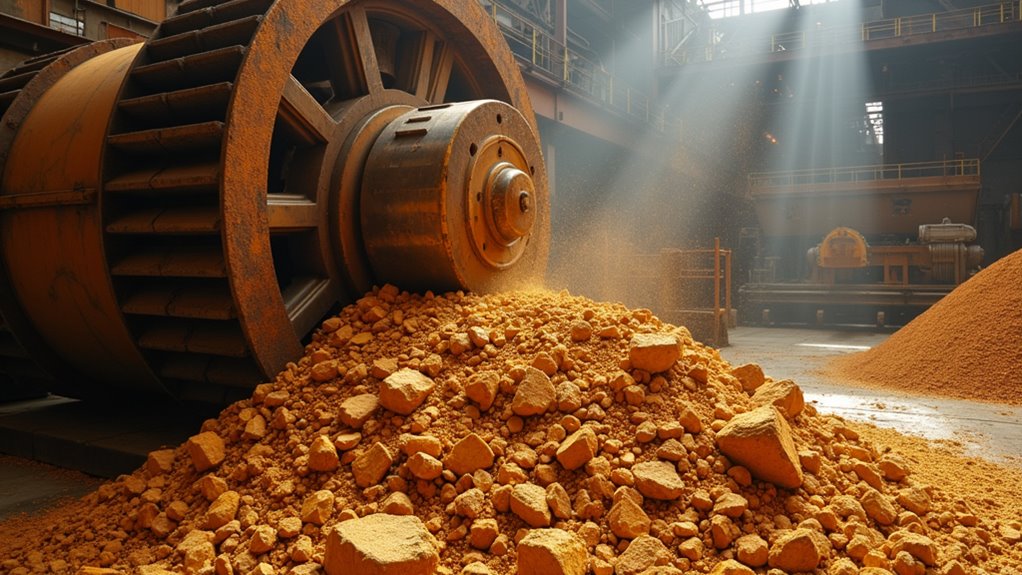
Power requirements for centrifugal gold concentrators vary dramatically based on throughput capacity.
Smaller units like the STLB20 need just 1.1 kW for processing up to 1 t/h, while larger models demand considerably more juice – the STLB100 requires a whopping 18.5 kW to handle 40-60 t/h!
Operating factors like feed density and rotation speed (360-800 RPM) affect consumption, but these machines generally maintain lower energy needs vs traditional methods.
Is Pre-Screening of Material Necessary Before Using Centrifugal Concentrators?
Pre-screening is absolutely critical for centrifugal concentrator success.
Without it, oversized particles can wreak havoc – we’re talking damaged equipment, clogged systems, and dismal recovery rates.

The sweet spot? Material sized between 0-6mm, though some specialized units handle ultrafines below 50 microns.
Get this right, and you’re looking at recovery rates up to 99%.
Skip it, and you’re basically throwing money down the drain… literally!