Gold mining dredges come in five main flavors, each with its own sweet spot. Bucket ladder beasts crush through hard-packed sediments, while suction dredges vacuum up the good stuff like underwater hoovers. Hydraulic systems blast deposits with high-pressure jets, and mechanical dredges grab, scoop, and dig their way to paydirt. For the tech-savvy prospector, specialized submersible and portable units tackle those tricky deep deposits. Stick around – there’s more golden tech where that came from.

Various dredging equipment types have revolutionized the gold mining game, turning what was once a pan-and-prayer operation into a full-blown industrial bonanza. At the forefront of this evolution stands the mighty bucket ladder dredge, a beast that doesn’t mess around with its continuous chain of buckets chomping through 50-300 tonnes per hour of material. These monsters excel at tackling hard-packed sediments and can dig deep – we’re talking up to 30 meters below the surface. Sluice boxes are often used in conjunction with these dredges to further improve recovery rates.
Modern dredging technology transformed gold mining from hopeful panning into industrial-scale operations, with mighty machines processing hundreds of tons hourly.
But wait till you hear about suction dredges, the vacuum cleaners of the underwater world. These bad boys literally suck up sediment and water like your grandma’s Hoover on steroids. They come in two flavors: trailing suction hoppers for open water work, and cutter suction dredges when you need to deal with tuffer stuff. They’ll happily dive down 20-30 meters, making them perfect for those just-out-of-reach deposits. Modern operations often utilize amphibious suction dredges for enhanced mobility in hard-to-reach areas.
Hydraulic dredges bring a whole different game to the table, using high-pressure water jets to blast sediment loose. Modern hydraulic submersible pumps can efficiently process materials with up to 70% solids. These machines are absolute beasts, pumping anywhere from 100 to a whopping 10,000 cubic meters per hour. They’re particularly fond of fine, loose sediments and often come equipped with gold recovery systems that’ll make any prospector’s heart skip a beat.

The old-school mechanical dredges still have their place in the game, though. Whether it’s grab dredges, backhoes, or dipper dredges, these tough customers handle compact soils and debris like nobodys business. They’re usually seen working alongside barges, tag-teaming the material transport situation up to depths of 20 meters or more.
For those really deep deposits that keep prospectors up at night, submersible dredges are the goto solution. These underwater warriors might be smaller, pushing 5-13 cubic meters per hour, but they can reach depths that make surface dredges look like kiddie pools.
And lets not forget about portable dredges – the rookies’ favorite. These lightweight champs, with their 2-8 inch suction nozzles, are perfect for small-scale operations and weekend warriors chasing their golden dreams.
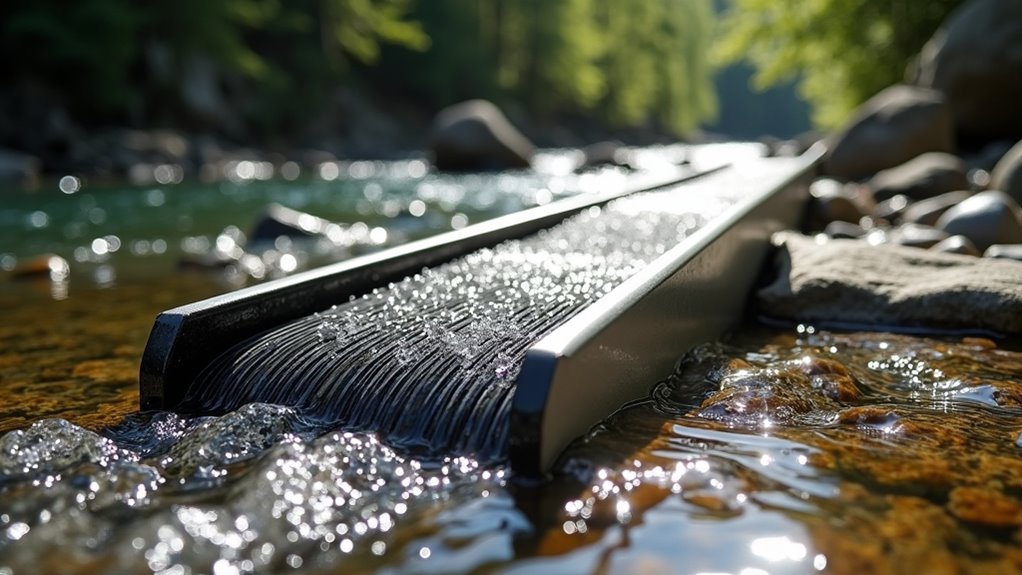
The real magic happens in the recovery systems, though. Modern operations are ditching the old mercury methods for more environmentally friendly solutions. We’re talking sluice boxes with riffles that catch gold particles like tiny gold traps, jigs and shaking tables that separate the precious stuff from the worthless, and centrifugal concentrators that’ll snag even the tiniest bits of gold.

Even those pesky black sands aren’t a problem anymore, thanks to magnetite removal systems that keep things running smooth as silk.
Frequently Asked Questions
How Much Does a Professional Gold Dredging Setup Typically Cost?
A professional gold dredging setup typically runs between $50,000 to $500,000+ – and that’s just the tip of the goldberg!
The real kicker? Those sneaky additional costs like permits ($5k-$100k), transportation logistics ($30k-$300k), and environmental assessments ($20k-$200k).
Then there’s insurance and bonding requirements that’ll set you back another $5k-$100k.

Not exactly chump change for weekend prospectors, eh?
What Permits Are Required for Gold Dredging in Different States?
Permit requirements for gold dredging vary dramatically by state – and boy, are they getting stricter!
California’s got a total ban going, while Alaska keeps things interesting with their NPDES permits (limited to 6-inch nozzles, folks).
Washington’s running with their pamphlet system, and Georgia insists you sweet-talk the landowner first.
Most states demand water quality permits, and you’ll need Uncle Sam’s blessing through NPDES if you’re hitting federal waters.
It’s a regulatory jungle out there!
How Long Does It Take to Learn Proper Dredging Techniques?
Learning proper dredging techniques is a journey that unfolds in distinct stages.
Basic fundamentals take 1-2 weeks, covering essentials like panning and safety protocols.

Intermediate skills require 1-3 months to master, including underwater terrain reading and material processing.
True expertise? That’s a 1-2 year commitment, folks!
Even then, seasoned dredgers never stop learning – technology evolves, regulations shift, and there’s always room for improvement.
What Safety Precautions Should Be Taken When Operating Dredging Equipment?
Operating dredging equipment demands strict adherence to safety protocols.
Workers must wear life jackets, hard hats, and steel-toed boots without exception.

Regular equipment inspections and maintenance are vital, while environmental monitoring helps prevent accidents.
Clear communication between team members is essential, and emergency procedures must be practiced regularly.
The “buddy system” is non-negotiable for underwater operations, and proper equipment securing during downtime prevents costly mishaps.
What Are the Best Seasonal Conditions for Gold Dredging Operations?
Late summer and early fall offer prime conditions for gold dredging. Low water levels expose previously hidden areas, while comfortable temperatures keep equipment running smoothly.
Winter dredging’s possible but tricky – ice platforms can work, but equipment freezing’s a pain.
Spring’s a mixed bag with high water flows revealing fresh deposits but making operations challenging.
Summer’s scorching heat demands extra safety measures, yet longer days boost productivity.