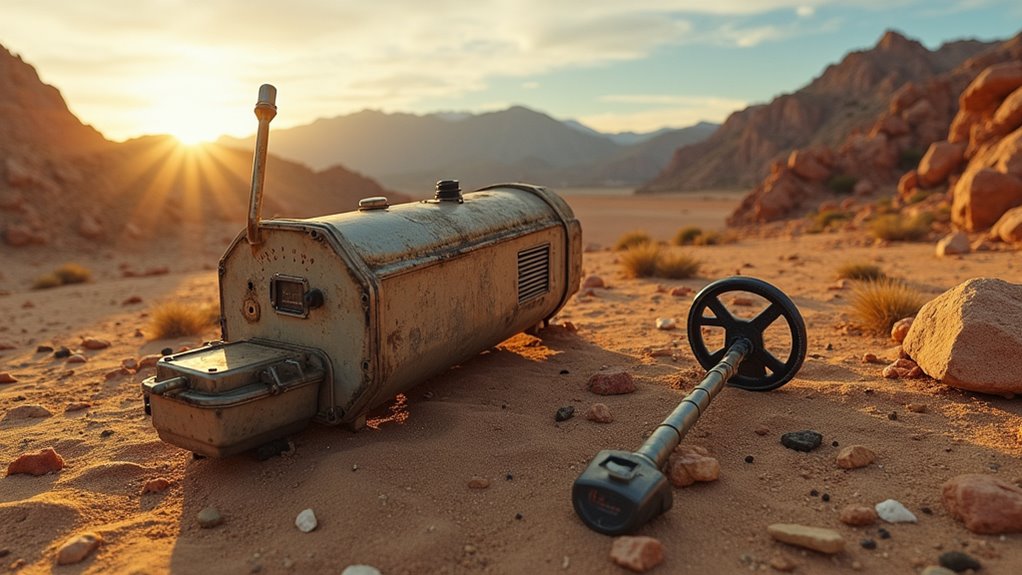
Gold trommels are game-changers for serious miners who want predictable results.
These rotating sieves process anywhere from 8 yards to a whopping 5,000 cubic metres per hour, achieving up to 98% recovery rates when set up properly. Modern units come equipped with fancy features like spray bars and polyurethane panels for durability. But here’s the kicker – you’d better know your stuff about screen selection and water flow, or you’ll be watching your profits wash away.
There’s more to this science than meets the eye.

Gold trommels revolutionise the mining game by turning a gruelling process into a predictable science. These rotating powerhouses aren’t just fancy spinning tubes – they’re the backbone of modern mining operations, processing anywhere from a modest 8 yards to a whopping 5,000 cubic metres per hour. That’s not just impressive; it’s bloody essential for any serious mining outfit.

Much like Archimedes’ Law demonstrates how objects float, trommels use similar principles of separation to process materials effectively.
Let’s get real about what makes these beauties tick. At their core, trommels are basically glorified rotating sieves with some serious attitude. They’ve got motors, reducers, and a frame that’d make a bodybuilder jealous. Chuck in some spray bars and agitators, and you’ve got yourself a machine that’ll separate gold-bearing material faster than your ex splitting up assets in a divorce. The cast polyurethane panels used in larger trommels over 2.5 meters provide exceptional durability and performance. These panels are essential for maintaining gold recovery efficiency and prolonging the lifespan of the trommel.
The beauty of these machines lies in their versatility. Whether you’re a lone prospector with a small mobile unit or running a massive operation with a 2-metre diameter beast, there’s a trommel for every situation.
The screens come in more sizes than a discount clothing store, ranging from tiny apertures to openings big enough to let a footy through. And yeah, they’re customisable – because one size definitely doesn’t fit all in this game.

Here’s where it gets interesting: these machines aren’t just good; they’re ridiculously efficient. We’re talking up to 98% recovery rates when properly setup. That’s not just good – that’s game-changing stuff. They’ll process desert placers, handle wet material, and keep churning through ore like there’s no tomorrow. Plus, with modern monitoring systems like Hawkeye™, you can track wear and performance without getting your hands dirty.
The integration possibilities are where things really get spicy. Stick ’em at the end of grinding mills, feed ’em with sluice boxes, or make them part of your water recycling system. It’s like LEGO for grown-ups, except these blocks make you money. The modular design means maintenance isn’t the nightmare it used to be, especially on smaller units. And with Finite Element Analysis in the design phase, these machines are built to take a beating.
But let’s not sugar-coat it – you’ve got to know what you’re doing. The wrong setup can turn your efficient mining operation into an expensive hobby real quick.
Screen selection matters, feed rates matter, and water flow matters. Get it right, though, and you’ve got yourself a reliable workhorse that’ll keep producing long after your competitors have packed up and gone home.

In the end, it’s not about having the biggest trommel on the block – it’s about having the right one for your operation and knowing how to use it properly.
Frequently Asked Questions
How Much Does a Quality Gold Trommel Typically Cost?
Quality gold trommels ain’t cheap, mate. Basic models start around $3,000, but proper commercial units’ll set you back $13,000 to $100k.
The Gold Cube’s a bargain at $750, but it’s more of a toy really. Serious miners fork out for beasts like the Heckler 159 ($13,879-$28,870) or the Savona ST series ($142,564+).
Pricing depends on size, power source, and features – ya get whatcha pay for.
Can a Gold Trommel Be Used in All Weather Conditions?
Gold trommels are tough-as-nails machines built to handle pretty much any weather Mother Nature throws at ’em.

They’ll crush it in scorching deserts, slog through tropical downpours, and keep running in freezing temps.
Sure, you might need some tweaks – like winterization for the cold or dust suppression in dry spots – but these beasts are specifically engineered for harsh environments.
Just maintain ’em properly and they’ll keep churning through ore like nobody’s business.
What Permits Are Required for Using a Trommel in Different States?
Permits for trommel use vary wildly between states – it’s a bureaucratic nightmare.

Most states require basic mining permits, but here’s the kicker: mechanised equipment like trommels often need additional authorisations.
Idaho demands their Small Scale Mining permit, California’s basically banned everything fun, and Alaska’s got their own NPDES system.
The real gotcha? Federal permits are required regardless of state rules when operating on public lands.
How Often Should the Screens and Components Be Replaced?
Let’s cut straight to it – screen replacement isn’t a one-size-fits-all deal.
Heavy users should swap screens every 3-6 months, while weekend warriors might stretch it to annual replacements.
Don’t be a cheapskate waiting for catastrophic failure.
Weekly inspections are non-negotiable – spot a hole, replace it pronto.
Smart operators rotate screen sections and keep those spray bars working.
Play it smart, or watch your profits literally slip through the holes.
What Is the Average Gold Recovery Rate Using a Trommel?
Let’s cut through the marketing hype – properly operated trommels typically achieve 85-95% gold recovery rates.
Here’s the truth: anything above 90% takes obsessive attention to detail and ideal conditions. Most operators hover around 85-87% in real-world conditions.
Particle size is essential – recovery drops dramatically below 100 microns.
Feed rates, water flow, and cleanout frequency make or break your success.
No fancy machine compensates for sloppy operation.