Gold smelting ain’t your grandma’s jewelry melting operation. This brutal process cranks temperatures past 1,947°F, using industrial furnaces and nasty chemicals like mercury and cyanide to rip precious metal from worthless rock. Modern smelters achieve 90% purity through basic methods, while advanced techniques like the Miller process push it to near-perfect levels. Between the toxic chemicals and molten metal, it’s a dangerous game that separates the pros from the pretenders. Stick around to reveal the secrets of this ancient alchemy.

Gold smelting isn’t just some fancy way of melting shiny metal – it’s an intense, high-stakes process that literally separates the precious from the worthless. Let’s get real: we’re talking about temperatures hot enough to make Hell jealous, soaring past 1,064°C (1,947°F). This ain’t your backyard BBQ – it’s a complex dance of chemistry, heat, and precision that transforms raw ore or scrap into something actually worth bragging about.
When it comes to gold smelting, forget your cute little campfire – we’re talking Satan’s own kitchen cranked up to extreme.
The big players in this game don’t mess around. They’ve got industrial-grade furnaces that could probably melt your car without breaking a sweat, plus these specialized crucibles that look like they belong in some medieval alchemist’s workshop. And those fluxes they use? It’s basically a witch’s brew of borax, silica, and sodium nitrate that helps kick those pesky impurities to the curb. The process requires potassium cyanide and mercury to effectively separate gold from other metals, while also contributing to metal recovery in the refining process.
The whole process is pretty wild when you break it down. First, they pulverize the ore until it’s basically dust (yeah, they literally beat the gold into submission). Then comes the fun part – throwing it into furnaces hot enough to make a volcano blush. The flux goes in, doing its chemical magic, turning worthless rock into slag while the gold just chills there, getting purer by the minute. Every year, recycled gold makes up about a quarter of the total market supply.
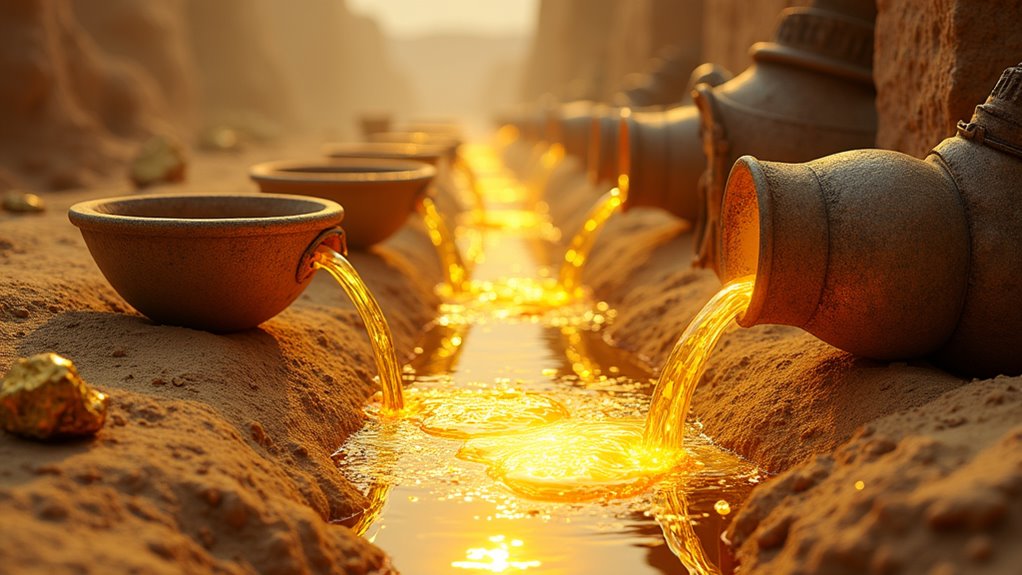
Its like watching the world’s most expensive divorce – separating the gold from everything it doesn’t want to be associated with anymore.
But here’s where things get really interesting. The basic smelt only gets you to about 90% purity. Want the really good stuff? You’ve gotta go hardcore with processes like Miller (which uses chlorine gas, because why not make it more dangerous?) or Wohlwill (basically gold electrocution). These bad boys can push purity up to 99.999% – thats some serious perfectionist territory right their.
The environmental impact? Let’s just say Mother Nature isn’t exactly sending thank-you cards. The process spews out greenhouse gases like a teenager with attitude, and the chemicals involved could probably dissolve your smartphone. Plus, there’s always the risk of someone getting cooked extra crispy if they’re not careful with all that molten metal flying around.
Modern smelters use this tech for everything from melting down your grandma’s old jewelry to processing ore straight outta the ground. The end products go everywhere – investment bullion, high-tech components, even those fancy gold-plated toilets some billionaires apparently need.
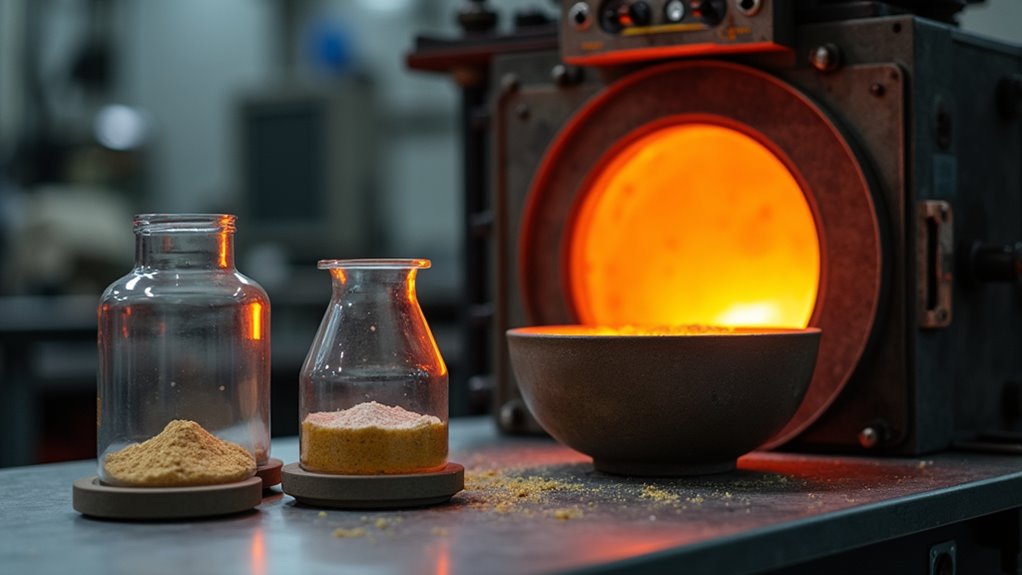
It’s a dirty, dangerous, energy-intensive process that’s somehow both primitive and cutting-edge at the same time. But hey, as long as humans keep being obsessed with shiny yellow metal, these smelters’ll keep firing up their furnaces and turning rocks into riches.
Frequently Asked Questions
What Safety Certifications Do Professional Gold Smelters Need to Operate Legally?
Professional gold smelters need serious safety creds to operate – no cutting corners here.
They gotta have ISO 45001 for workplace safety and ISO 14001 for environmental management.
Can’t forget OSHA certifications and hazmat handling permits either.

Most places require operator training certificates and PPE compliance documentation too.
And yeah, those AML and conflict mineral certifications? Non-negotiable.
Break these rules and you’re toast – literally and legally.
How Much Does It Cost to Set up a Small-Scale Gold Smelting Facility?
Setting up a small gold smelting facility ain’t cheap – we’re talking serious cash here.
The bare minimum runs around $750,000, but realistically? You’re looking at $1.5-2 million to do it right.

Land acquisition, construction, and equipment eat up most costs.
Then there’s permits, environmental assessments, and safety systems that’ll make your wallet cry.
And don’t forget operating expenses – they’ll keep bleeding you dry year after year.
Can Gold Be Smelted Without Using Mercury or Other Toxic Chemicals?
Yes, gold can absolutely be smelted without mercury – and it’s about time miners ditched that toxic nightmare.
Borax-based smelting is the real deal, achieving 95% recovery rates (better than mercury’s 88%). The process is dead simple: crush ore, concentrate gold through panning, add borax, and smelt.

It’s cheaper, safer, and better for everyone. Philippine miners have been rocking this method for years.
Mercury’s days are numbered – good riddance.
What Happens to the Impurities Removed During the Gold Smelting Process?
During smelting, those pesky impurities don’t just vanish into thin air.
Most form a slag layer that floats to the top – like scum on pond water. Some turn into gases and get released (yep, right into our atmosphere).
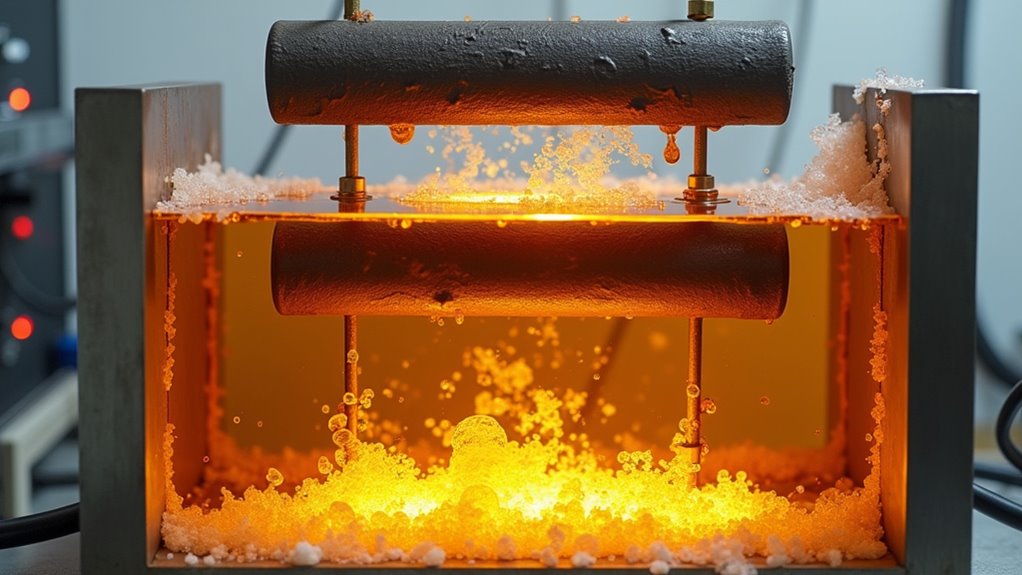
The rest? They end up in a nasty chemical cocktail that settles at the bottom of refining tanks.
Bottom line: these unwanted materials gotta go somewhere, and it ain’t always pretty for the environment.
How Long Does Professional Gold Smelting Training Typically Take to Complete?
Professional gold smelting training isn’t a quick weekend course – it’s a serious commitment.
Basic certification takes 1-2 months, but real expertise? That’s looking at 6-12 months minimum. Most pros spend years perfecting their craft through apprenticeships and hands-on experience.
Sure, anyone can watch YouTube videos on melting gold, but proper training involves mastering complex chemistry, safety protocols, and specialized equipment.
No shortcuts in this game.