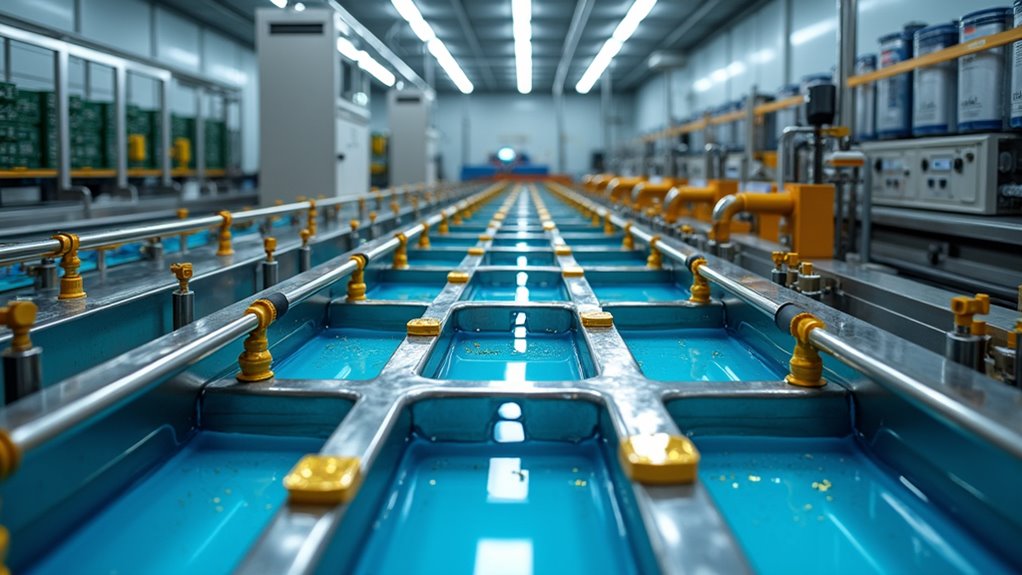
Refining scrap gold isn’t for weekend warriors or basement chemists. The process demands precise steps: sort and test genuine pieces, clean thoroughly, perform inquartation with silver, treat with acids, and recover pure gold through precipitation. While potentially profitable, this ain’t child’s play – one wrong move with those toxic chemicals could land someone in the hospital or worse. Smart refiners know there’s way more to this dangerous dance than meets the eye.

Transforming a pile of old jewelry into pure, gleaming gold isn’t just for medieval alchemists anymore. Modern refiners have turned this ancient art into a precise science, though it still requires the kind of careful attention that would make those old-timers proud. Let’s be real – there’s serious money in this game if you know what you’re doing.
The process starts with getting your hands dirty, literally. You’ll need to sort through that mess of tangled chains and broken rings, testing each piece to determine its karat content. Everything that isn’t gold needs to go – stones, clasps, even that stubborn crud stuck in the crevices. Much like the Egyptian refiners who pioneered these techniques thousands of years ago, achieving 99.95% purity levels or higher is the ultimate goal in professional gold refining.
Sorting through old jewelry isn’t glamorous, but knowing what’s real gold makes the difference between profit and worthless scrap.
Then comes the fun part: burning off oils and other gunk that’s accumulated over the years. Every bit gets weighed and recorded, cause this ain’t amateur hour. Proper safety precautions are crucial at this stage to avoid any accidents while handling potentially hazardous materials.
Here’s where chemistry kicks in, and it’s not for the faint of heart. The gold needs to be mixed with silver in a process called inquartation – basically diluting it until it’s weak enough to attack with acid. You’ll need about three times more silver than gold, melted together and rolled into thin strips. It’s like making a metallic sandwich that’s about to get dissolved.
The real magic happens with nitric acid, which eats away at everything that isn’t gold. Mix it with distilled water, heat it up to 140°F, and watch the show. The solution bubbles and fumes while dissolving base metals, leaving behind precious particles. But that’s just round one.
Round two brings out the big guns – aqua regia, a nasty cocktail of hydrochloric and nitric acids that’ll dissolve even pure gold. This stuff means business, turning solid metal into a solution while releasing toxic red-brown fumes. Once the reaction’s done, you’re left with liquid gold – literally.
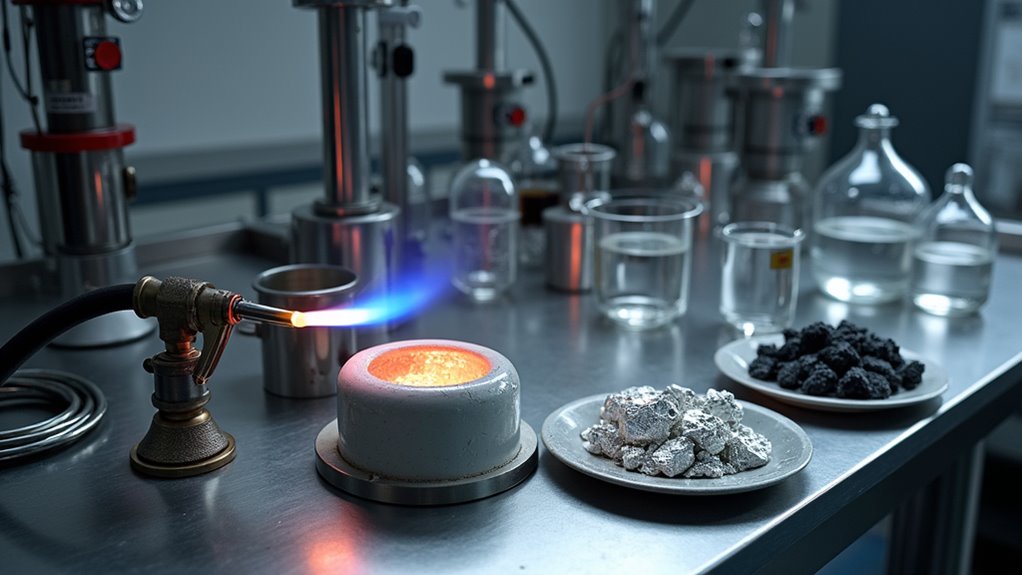
Getting the gold back into solid form requires sodium metabisulfite, which forces it to precipitate out as a brown powder. After filtering and drying, that powder gets melted in a graphite crucible at a whopping 1947°F. Add some borax to clean up any remaining crud, and pour that liquid sunshine into a mold.
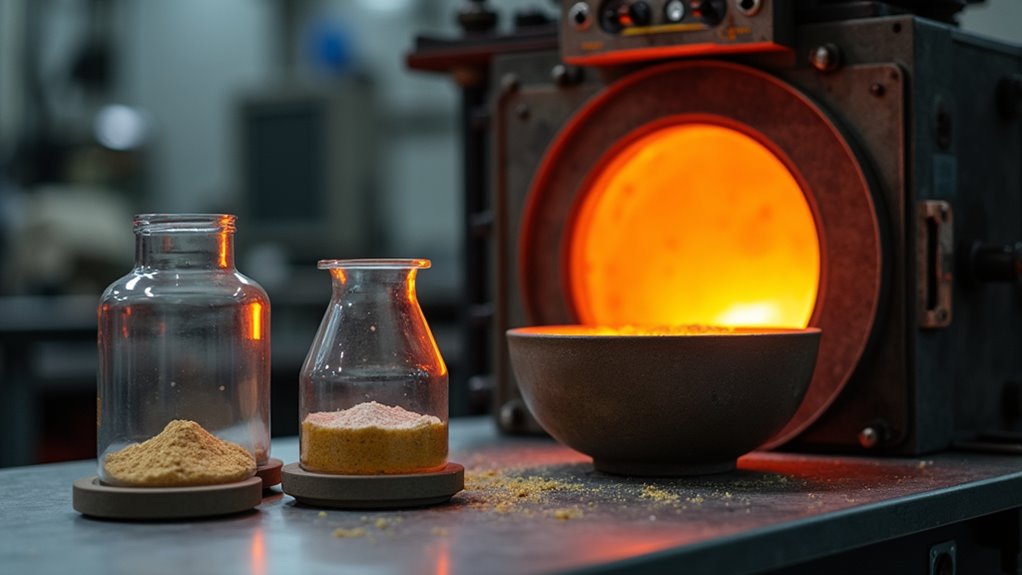
The whole process is definitely not for kitchen chemists or weekend warriors. You need proper safety gear, ventilation that’d make OSHA proud, and a healthy respect for the hazardous materials involved. One wrong move with these chemicals could ruin more than just your day.
Plus, there’s all those environmental regulations to follow – cause nobody wants to explain to the EPA why their backyard looks like a superfund site.
But for those who do it right? The payoff is pure gold – literally and figuratively. Just remember: this ain’t a get-rich-quick scheme. It’s a serious industrial process that demands respect, knowledge, and more than a little patience.
Frequently Asked Questions
What Permits or Licenses Do I Need to Legally Refine Gold?
Legally refining gold ain’t for the faint-hearted.
You’ll need a stack of paperwork: federal precious metals dealer license, FinCEN registration, and IRS Form 8300 for those fat cash deals.

State-level? Grab dealer permits and environmental clearances.
Local stuff gets messy – business licenses, fire permits, and air quality control.
Don’t forget industry creds like LBMA accreditation if ya wanna play with the big boys.
Skip these, and you’re asking for trouble.
How Much Does Professional Gold Refining Equipment Typically Cost?

The price range for gold refining equipment is all over the map.
Entry-level setups start around $1,500, while mid-range commercial systems run $15,000-$65,000.
But here’s the kicker – large industrial rigs can hit $1 million+.
Want the bare minimum? DIY kits go for a few hundred bucks.

Tho remember – cheap equipment usually means cheap results.
Plus, don’t forget installation costs typically add another 10-20% to the final bill.
Can I Refine Gold-Plated Items Using the Same Process?
Nope – gold-plated stuff needs totally different treatment.
Regular acid refining just won’t cut it with those microscopic gold layers (we’re talking 0.25 to 2.5 microns thin!).
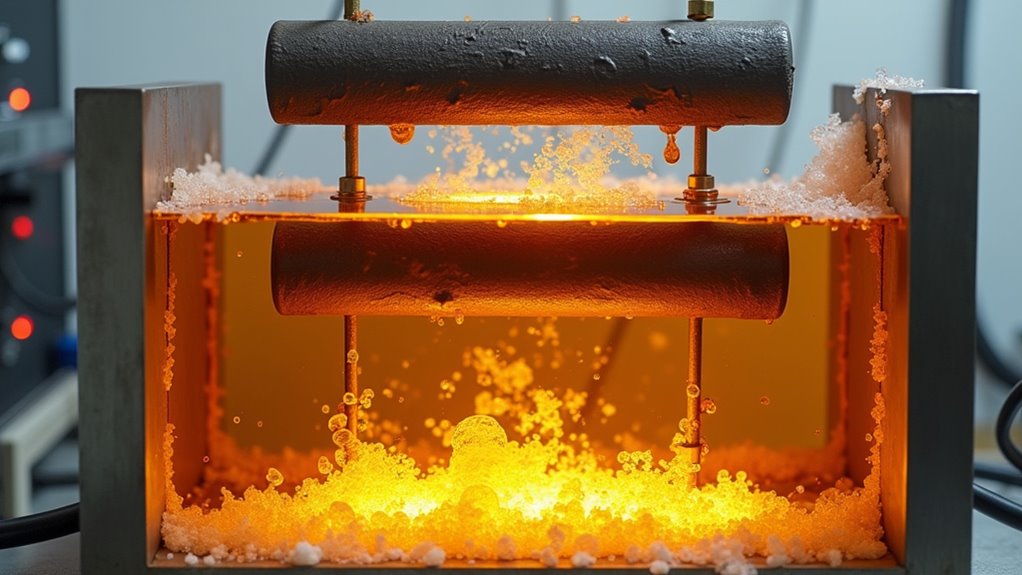
You’ll need specialized methods like reverse electroplating or chemical stripping to make it worthwhile.
And here’s the kicker – it’s usually less than 1% actual gold by weight.
The standard process would just destroy that tiny amount.
Brutal truth: it’s a whole different ballgame.
What’s the Minimum Amount of Scrap Gold Needed to Start Refining?
bigger batches (5+ oz) make way more sense.
Anything less is just playing around.
How Do I Properly Dispose of Chemical Waste From Gold Refining?
Chemical waste disposal isn’t a DIY project. It requires coordinating with licensed hazardous waste companies who know their stuff.
First step: Neutralize acids with sodium hydroxide til pH hits 7. Filter out metal precipitates – never dump this junk down drains!
Documentation’s key – track everything. Local regulations matter and breaking em means serious trouble.
Bottom line: Do it right or don’t do it at all. Environmental damage ain’t worth saving a few bucks.