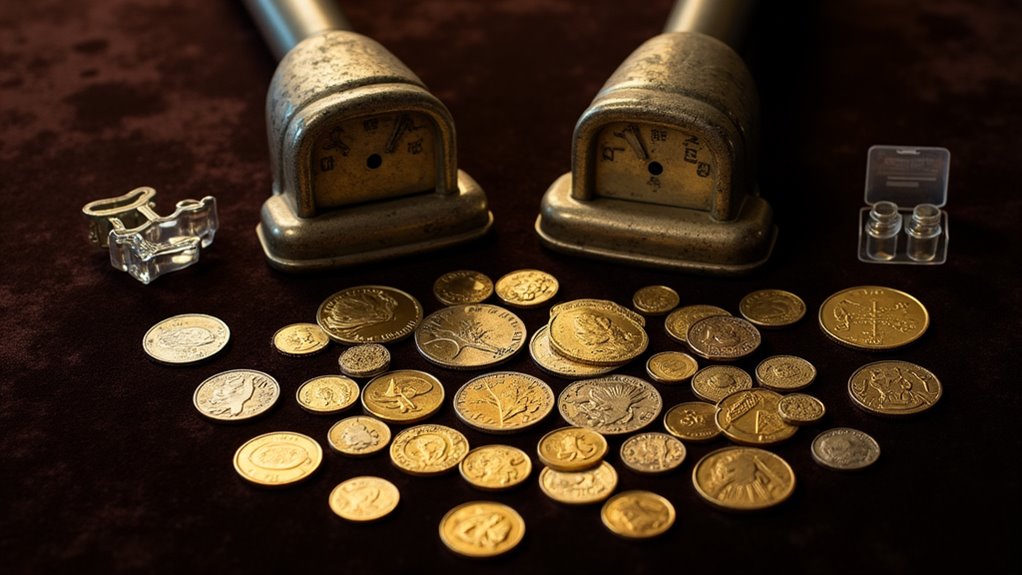
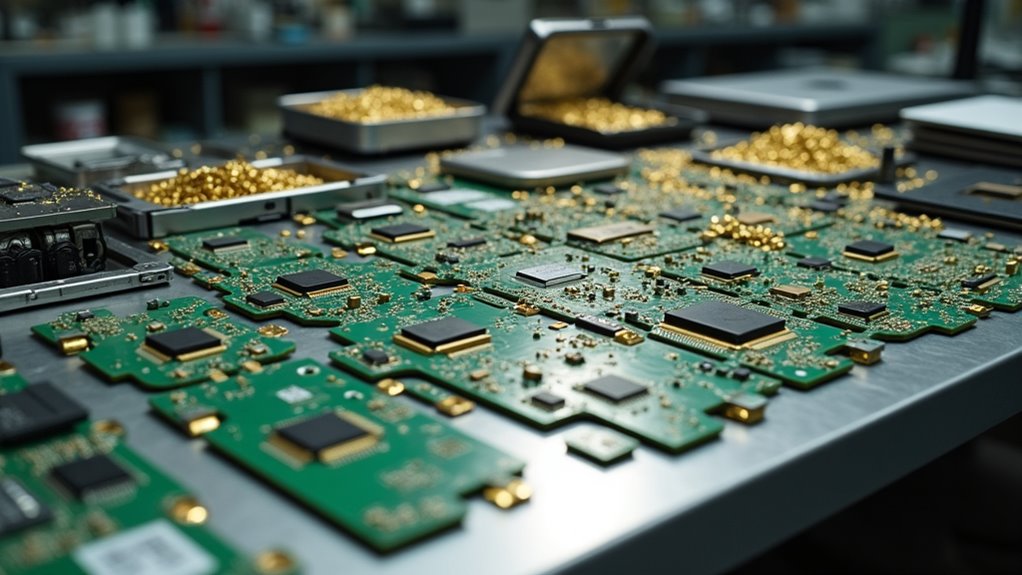
Global recycling powerhouses Umicore and Core Scientific lead the charge in transforming e-waste into gleaming bullion. These mega-facilities, scattered across strategic hubs, are literally turning trash into gold treasure – and making a killing doing it! Advanced smelting operations at the Canadian Mint and Rand Refinery showcase cutting-edge tech that’s revolutionizing the industry. But wait – there’s way more to this urban gold rush than meets the eye.

Glittering mountains of discarded jewelry and electronic waste hold the key to a booming industry that’s reshaping how we source precious metals. The global gold recycling landscape is dominated by powerhouse facilities that transform yesterday’s bling into tomorrow’s bullion, with companies like Umicore leading the charge from their state-of-the-art facilities scattered across continents.
These recycling titans aren’t just playing with grandma’s old necklaces (though there’s plenty of that). They’re tackling everything from dental fillings to defunct smartphones, with high-value recycling accounting for a whopping 90% of the recycled gold market. Core Scientific, the North American heavyweight, has perfected the art of extracting gold from complex electronic waste streams, while Tanaka dominates the Asian market with their cutting-edge refining techniques. During economic downturns, facilities see increased consumer selling as people look to liquidate their gold assets. The impressive efficiency of these operations is highlighted by the fact that over 90% of gold ever mined throughout history remains in circulation today, showcasing the challenges in gold recycling that the industry is working to address.
Modern gold recycling goes way beyond old jewelry – it’s a high-tech industry mining everything from phones to fillings for precious metals.
The process isn’t exactly your kitchen-sink operation. These facilities employ sophisticated methods like the aqua regia process, where powerful acids dissolve precious metals, and the Wohlwill process, which produces gold so pure it’ll make your average jeweler weep. The Canadian Mint and Rand Refinery have turned this into a science, processing tons of material daily through their advanced smelting operations.

Let’s talk numbers – recycled gold makes up about 30% of the total gold supply, and that figure dances like a drunk trader whenever gold prices spike. The industry’s definitely got its groove on, with urban mining becoming the new gold rush. These facilities are basically treasure hunters in lab coats, sifting through our electronic graveyards for those precious yellow flakes.
Environmental impact? It’s like comparing a Prius to a monster truck. Recycling gold produces way less environmental damage than traditional mining, especially when dealing with high-value scrap. The industry’s getting greener by the day, with companies implementing AI-driven sorting systems and developing more efficient chemical separation methods that would make your high school chemistry teacher proud.
The regulatory landscape is getting interesting too, with governments worldwide implementing e-waste recycling laws faster than you can say “responsible sourcing.” The Responsible Jewelry Council‘s Chain of Custody certification has become the industry’s gold standard (pun absolutely intended), while cross-border regulations keep everyone honest-ish.
These facilities are constantly pushing the envelope, integrating artificial intelligence and developing new processes that squeeze every last gram of gold from increasingly complex waste streams. The competition’s fierce, though, and some regions are facing overcapacity issues – turns out everyone wants a piece of this glittering pie.

But with technological advancements continuing at breakneck speed and demand for sustainable sourcing growing stronger, these recycling hubs aren’t just processing facilities – they’re the future of the gold industry, one melted-down wedding ring at a time.
Frequently Asked Questions
How Long Does the Gold Recycling Process Typically Take?
The gold recycling process typically takes 24-48 hours for standard operations, though timing varies based on material type and facility capabilities.
Basic scrap can be processed in 1-2 days, while complex electronic waste might need up to a week.
The journey includes sorting (1-2 hrs), smelting (2-4 hrs), chemical or electrolytic refining (12-32 hrs), and quality testing (2-4 hrs).

Modern tech improvements have slashed processing times by up to 30%.
What Certifications Should Legitimate Gold Recycling Facilities Possess?
Legitimate gold recycling facilities should rock multiple certifications to prove they’re not messing around.
ISO 14001 and 9001 are absolute must-haves, showing they’ve got environmental and quality management on lock.
Fairmined Certification’s essential if they’re handling artisanal gold – no sketchy sourcing allowed!

UL 2799 Zero Waste validation demonstrates serious commitment to sustainability.
These certs aren’t just fancy wall decorations; they’re proof the facility means business.
Can Individuals Sell Small Amounts of Gold Directly to Recycling Facilities?
Yes, individuals can absolutely sell small gold amounts to recycling facilities, though minimum quantities typically start at 1-10 grams.
Most refineries offer walk-in services, requiring ID and proof of ownership. While processing fees tend to be higher for smaller quantities (ouch!), same-day payments are common.
The catch? You’ll likely get a lower percentage of spot price than bulk sellers – that’s just how the game rolls, folks.
*And yeah, some refineres might have spelling mistakes just like that one!*
Are There Environmental Regulations Specific to Gold Recycling Operations?
Gold recycling faces surprisingly lighter environmental regulations than mining, but don’t get too excited – there’s still plenty of red tape!
While exempt from full hazardous waste rules, facilities must maintain EPA IDs, proper storage, and meticulous records.

They’re required to recycle 75% of accumulated material yearly and follow Clean Air/Water Act standards.
The kicker? International standards vary wildly, with developed nations typically enforcing stricter controls than emerging markets.
What Security Measures Do Gold Recycling Facilities Implement to Protect Assets?
Gold recycling facilities employ multi-layered security systems that’d make Fort Knox jealous!
They’re rockin’ 24/7 surveillance, biometric access controls, and armed guards watching every gram. Digital security’s tight too – RFID tracking keeps tabs on inventory while cybersecurity protocols protect against hackers.
Staff undergo rigorous background checks and security training. The whole operation’s wrapped in perimeter fencing with intrusion detection that’ll catch anyone trying to pull a fast one!