Modern gold mining’s embracing circular economy principles like its life depends on it (spoiler: it kinda does). The Royal Mint’s crushing it with 4,000 tonnes of e-waste recycling annually, while urban mining‘s becoming gold’s new BFF. Smart tech and closed-loop systems are transforming traditional “take-make-dispose” into something actually sustainable. Companies are getting creative, turning waste rock into valuable products and old mines into renewable energy sites. The future of gold mining’s got more twists than a spy thriller.

Sustainability’s golden child – circular economy – is revolutionizing how the mining industry approaches its age-old extraction game. The traditional “take-make-dispose” model is getting a serious makeover, with mining companies scrambling to implement closed-loop systems that squeeze every ounce of value from their operations. And boy, do they need it – with mounting pressure to reduce environmental footprints while meeting skyrocketing demand for precious metals.
The Royal Mint‘s making waves (and probably some executives nervous) by showing how it’s done, processing a whopping 4,000 tonnes of e-waste annually to extract gold. That’s right – they’re literally mining your old smartphones and laptops. Urban mining isn’t just a fancy buzzword anymore; it’s becoming a legit alternative to traditional extraction methods. Who knew your drawer full of defunct electronics could be a gold mine? Recycled gold jewelry is a prime example of how recycled materials can contribute to a more sustainable fashion industry. Additionally, conflict-free sourcing is gaining traction in the industry, ensuring that ethical standards are upheld during the extraction process. The integration of smart technology in mining operations is also enhancing efficiency and reducing waste.
Water management’s getting a major glow-up too. Mining operations are implementing closed-loop systems that treat water like the precious resource it is – recycling, reusing, and generally being less wasteful. It’s about time, considering how much H2O these operations typically gulp down. Some companies are even powering their sites with solar energy, which is pretty rad when you think about how energy-intensive gold extraction usually is.

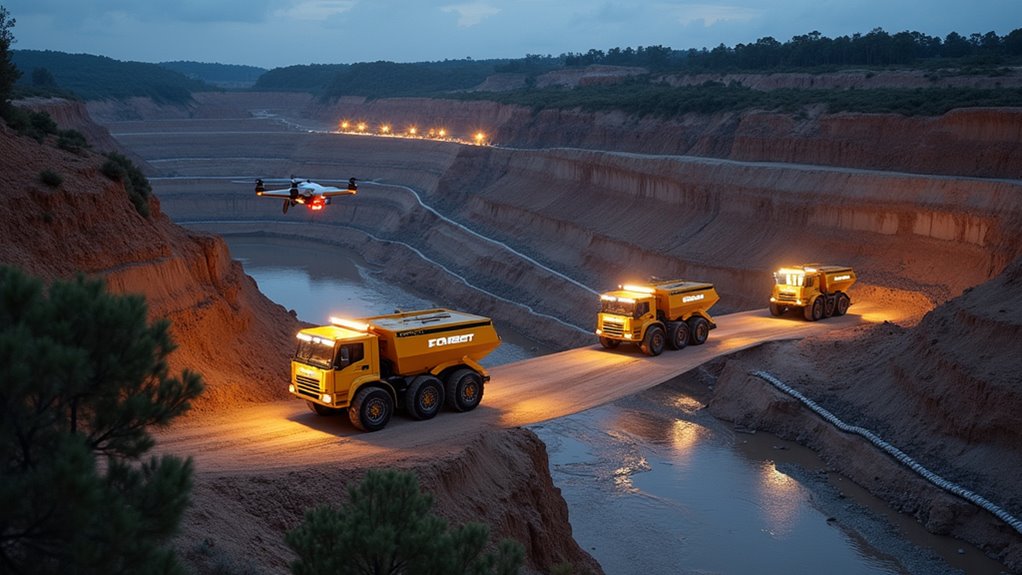
But here’s where it gets really interesting – waste rock and tailings aren’t just being dumped anymore. These “leftovers” are finding new life as value-added products. Talk about turning trash into treasure!
And while we’re on the subject of transformation, closed mine sites are getting makeovers that’d make any HGTV host jealous, being repurposed for renewable energy projects or community spaces.
The recycling game is leveling up, with companies recovering metals from end-of-life products like electric vehicles and wind turbines. Sure, some of these recycling technologies are still in their awkward teenage years, but they’re maturing fast. Industry collaboration is strengthening recycling ecosystems, though someone should probably tell them that “ecosystem” doesn’t actually mean planting trees (though they’re doing that too).
Chemical recovery methods are making e-waste processing more efficient, which is essential considering the mountains of obsolete electronics we produce. The circular approach could potentially reduce reliance on newly mined resources by up to 40% by mid-century – not too shabby for an industry that’s traditionally been about digging holes in the ground. Sustainable practices in gold mining are crucial to achieving these ambitious goals.

The future of gold mining isn’t just about finding new deposits anymore; it’s about getting smarter with what we’ve already got. Between urban mining, closed-loop systems, and waste repurposing, the industry’s finally catching up to the 21st century. Now if only they could figure out how to turn lead into gold – oh wait, wrong century!
Frequently Asked Questions
How Do Local Communities Benefit From Circular Economy Practices in Gold Mining?
Local communities reap massive rewards from circular mining practices!
They snag long-term jobs through tailings reprocessing and recycling facilities, while shared infrastructure like roads and power grids delivers double benefits.
Water recycling tackles scarcity issues, and renewable energy projects clean up local air quality.
Plus, these communities get primo access to recovered materials and training programs.
Its a win-win that keeps on giving long after mines close shop.
What Are the Initial Costs of Implementing Circular Mining Technologies?
Implementing circular mining tech isn’t for the faint of wallet!
Initial costs hit companies with some serious sticker shock – we’re talking $5-15 million just for those fancy recycling systems.

Advanced ore sorting? That’ll set you back $100+ million in R&D.
Even the basic stuff like employee training runs $500-1000 per worker annually.
And don’t forget those shiny new geo-metallurgy toys that’ll cost ya tens of millions upfront. Yikes!
Can Circular Mining Methods Be Applied to Small-Scale and Artisanal Operations?
Absolutely – circular mining methods are making waves in small-scale operations!

While artisanal miners face hurdles like limited tech access and tight budgets, they’re adapting surprisingly well.
Simple solutions like mercury-free recovery tables and water recycling systems are game-changers.
The real kicker? These methods actually boost profits while cutting environmental damage.
Even basic circular techniques like tailings reprocessing are proving their worth in mom-and-pop mining setups.
How Does Weather Affect Circular Economy Processes in Gold Mining?
Extreme weather wreaks absolute havoc on gold’s circular economy processes!

Heavy rains flood mining sites and disrupt essential recycling efforts, while scorching heat forces cooling systems into overdrive – eating up energy like nobody’s business.
Drought’s a real pain too, limiting water for processing.
But here’s the kicker: those nasty tailings dams? One big storm and *poof* – there goes your recoverable materials!
Mother Nature sure knows how to throw a wrench in the works.
What Certification Standards Exist for Circular Economy Gold Mining Practices?
Three major certification frameworks dominate circular gold mining:
The Consolidated Mining Standards Initiative (CMSI) leads the pack, integrating multiple standards under one roof.
The World Gold Council’s Responsible Gold Mining Principles (RGMPs) sets the bar for environmental practices, while Canada’s Towards Sustainable Mining (TSM) brings rigorous protocols for waste management and resource recovery.
Each requires third-party verification and regular audits to maintain certification – no cutting corners allowed!