Recycled gold jewelry packs a serious environmental punch, slashing CO2 emissions by 90% compared to traditional mining. The shift has luxury brands scrambling to adopt these eco-friendly alternatives – and for good reason. Not only does recycled gold maintain identical quality and value, but it’s reshaping how consumers view sustainable fashion. With 30% of U.S. gold demand now coming from recycled sources, this glistening revolution is more than just a trendy facade. The real story lies beneath the surface.

While traditional gold mining continues to wreak havoc on ecosystems worldwide, recycled gold jewelry has emerged as fashion’s new rebel child – bringing both environmental street cred and ethical swagger to the sustainable luxury scene.
The numbers don’t lie – recycled gold slashes CO2 emissions by a whopping 90% compared to its freshly-mined cousin. That’s not just a win; it’s a knockout punch for Mother Earth. When you factor in the reduced soil contamination, water pollution, and deforestation, recycled gold starts looking less like a trend and more like a revolution in sustainable fashion. Nearly thirty percent of demand in the United States now comes from recycled gold sources, highlighting the growing acceptance and popularity of sustainable luxury jewelry.
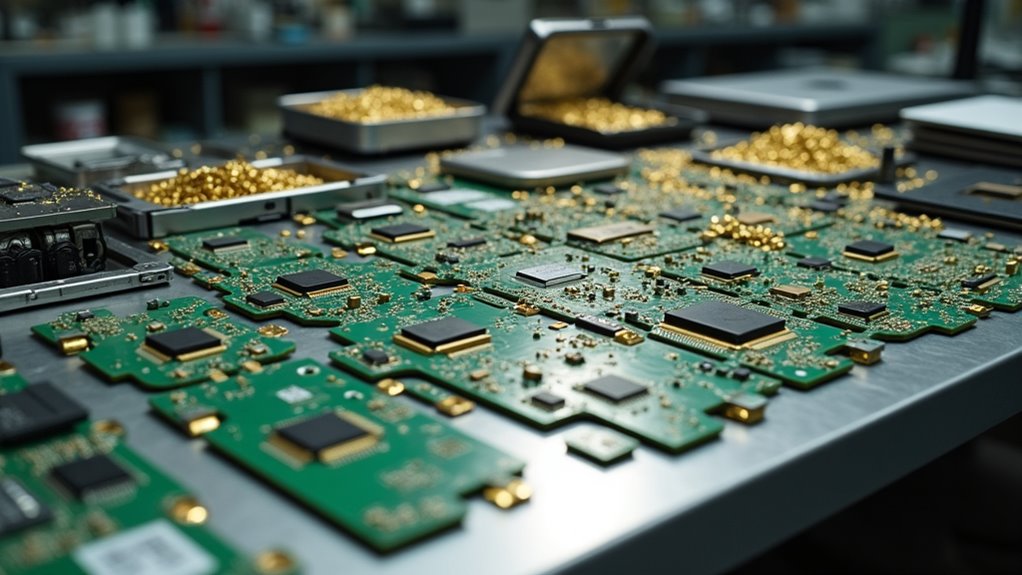
But here’s where things get juicy: recycled gold isn’t some watered-down substitute. It’s literally identical to newly mined gold regarding quality and purity. The process involves melting down existing gold from old jewelry, electronics, and industrial waste – basically giving precious metal a second shot at glory. The quality never diminishes during the recycling transformation process. And get this: it maintains the same value over time, making it just as viable for investment as traditional gold (though we’re definitely not giving financial advice here, folks).

The fashion industry’s been watching, and boy, have they noticed. Luxury brands are scrambling to jump on the recycled gold bandwagon, and who can blame them? Consumers are demanding transparency and ethical sourcing like never before. Through certified chains of custody, brands can now trace their gold’s journey from old trinket to new treasure, ensuring every piece tells a story of sustainability rather than exploitation.
Critics might grumble that recycled gold doesn’t address mining’s root problems – fair point. But while they’re busy pointing fingers, the sustainable fashion movement‘s busy making waves. The shift towards recycled gold represents a broader transformation in how we think about luxury. It’s no longer enough for jewelry to be beautiful; it needs to be responsible too.
The real kicker? This isn’t just some feel-good marketing ploy. Recycled gold is driving genuine change in consumer behavior and industry practices. As more shoppers wake up to the environmental and social impacts of traditional mining, the demand for recycled alternatives keeps soaring.
Sure, there’s still work to be done – awareness could be better, and regulations could be tighter – but the momentum’s undeniable.

What we’re witnessing is nothing short of a paradigm shift in sustainable fashion. Recycled gold jewelry proves that luxury and responsibility aren’t mutually exclusive. It’s creating a new standard where ethical sourcing isn’t just an option – it’s an expectation.
And while some might dismiss it as just another trend, the numbers, certifications, and growing consumer demand suggest otherwise. This isn’t fashion’s latest fling; it’s a serious commitment to a more sustainable future.
Frequently Asked Questions
How Long Does Recycled Gold Jewelry Typically Last Compared to New Gold?
Recycled gold jewelry lasts exactly as long as new gold – we’re talking identical durability here!
Both types can easily survive 50+ years with proper care, since recycled gold maintains the same chemical composition after refining.

Whether it’s been melted down 10 times or fresh outta the ground, gold’s atomic structure stays intact.
The only real factor affecting longevity? How well ya treat it.
Regular cleaning n’ maintenance are key for both varieties.
Can Recycled Gold Jewelry Cause Skin Allergies or Reactions?
Recycled gold can absolutely trigger skin allergies, just like new gold.

The culprit? Those sneaky alloy metals mixed in – especially nickel, which affects up to 17% of women.
Higher karat recycled gold (14k+) typically causes fewer reactions, but there’s no guarantee.
The real kicker: recycled gold’s composition can be unpredictable, since it’s remixed from various sources.
Pro tip: anyone with sensitive skin should double-check the metal content before taking the plunge.
What Documentation Proves My Jewelry Is Made From Recycled Gold?
Legitimate recycled gold jewelry comes with a paper trail that proves its origins.
Key documentation includes third-party certifications from organizations like SCS Global Services and RJC, detailed chain-of-custody records tracking the metal’s journey from collection to final piece, and supplier verification paperwork.
Look for hallmarks indicating purity (like 585 for 14k) alongside recycled content claims, plus manufacturer’s marks that trace back to certified recyclers – it’s basically the jewelry’s birth certificate!
Does Recycled Gold Jewelry Have the Same Resale Value?
Recycled gold packs the same resale punch as freshly-mined metal – no ifs, ands, or bullion about it!
The market doesn’t discriminate between the two since they’re chemically identical. Scrap buyers typically offer 60-80% of spot price, regardless of origin.

What really drives resale value? The usual suspects: purity, weight, and those pesky market fluctuations.
Funny enough, some buyers even prefer recycled gold‘s eco-street cred, though it doesn’t affect the bottom line.
Can Recycled Gold Be Mixed With Newly Mined Gold During Manufacturing?
Yes, recycled gold can absolutely be mixed with newly-mined gold during manufacturing – it’s actually standard industry practice!
The two are chemically identical, so they blend seamlessly in the alloying process. Jewelers routinely mix sources to achieve specific karats while maintaining quality.
Here’s the kicker: once mixed, you can’t tell which bits came from where. It’s like mixing water from two different streams – completely indistinguishable in the final product.