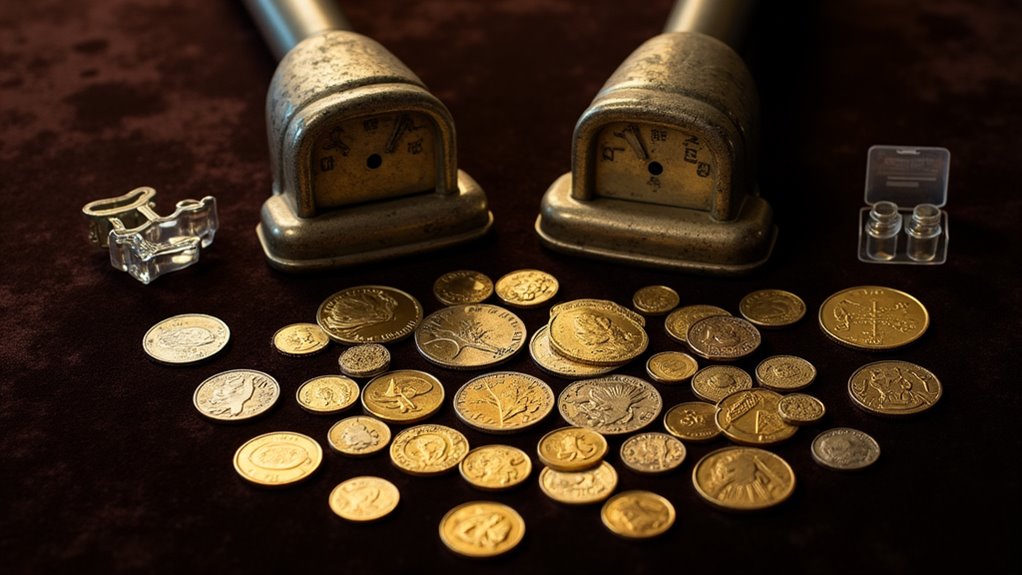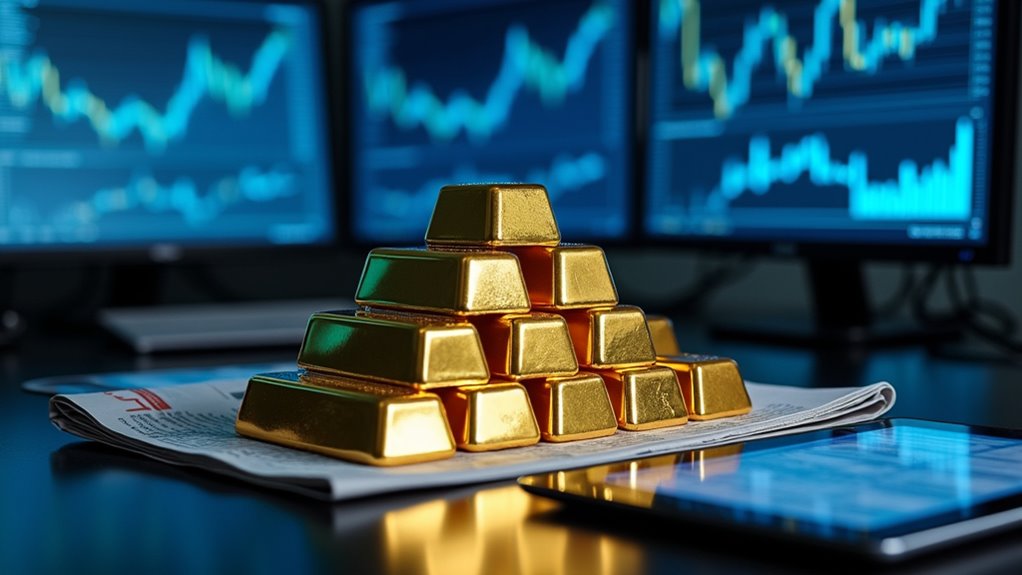
Recycled 14K gold packs the same 58.5% pure gold punch as its freshly-mined cousin, but with a planet-friendly twist. This sustainable superstar slashes carbon emissions by 99% while dodging the whole toxic-chemicals-in-groundwater mess. It’s mostly sourced from forgotten jewelry stashes and electronic waste, then rigorously tested to match traditional gold standards. The price tag? Often lower than new gold – yet it maintains that luxe feel and value. There’s a whole lot more to this eco-conscious bling than meets the eye.

While conventional gold mining continues to ravage landscapes and drain resources, recycled 14K gold is staging an epic comeback that’s got the jewelry world absolutely buzzing. This sustainable alternative, composed of 58.5% pure gold and 41.5% other metals, is revolutionizing how we think about precious metals. The process involves melting down and refining gold from discarded jewelry and electronics, creating a product that’s literally indistinguishable from its newly-mined counterpart. The refined metal can be melted repeatedly without losing its valuable properties.
The environmental benefits are staggering – we’re talking about a 99% reduction in carbon emissions compared to traditional mining. No more toxic chemicals seeping into groundwater, no more destroyed habitats, and considerably less energy consumption. It’s like giving Mother Earth a high-five while still getting your bling on. Each mined gram produces 36kg of carbon emissions, contributing to the industry’s overall carbon footprint.
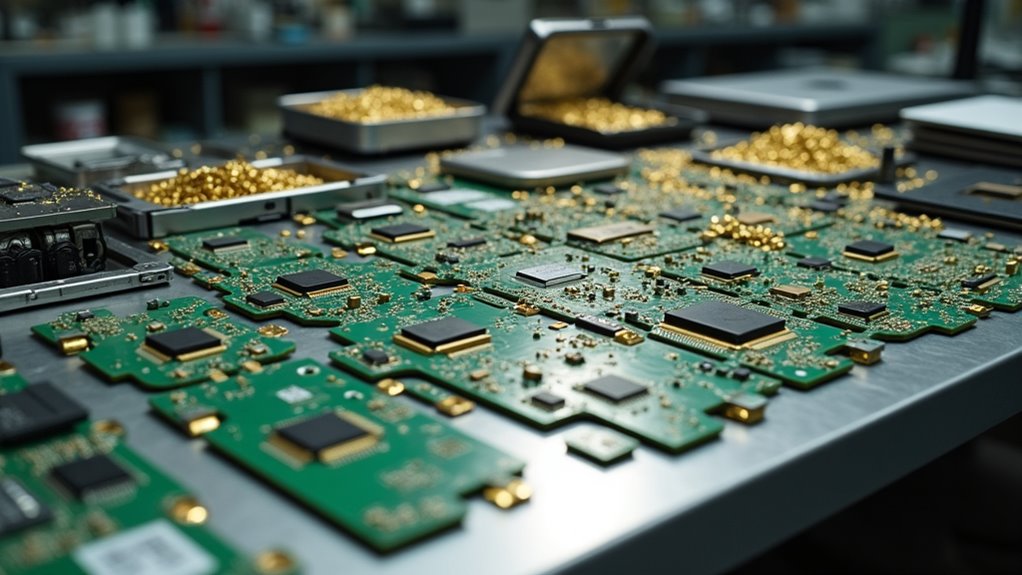
The sourcing story is fascinating – about 90% comes from old jewelry that people forgot in their drawers or inherited from Great-Aunt Mildred, while the remaining 10% is salvaged from electronic waste. Each piece undergoes rigorous testing using acid tests or X-ray fluorescence to verify it meets the same exacting standards as newly-mined gold.

And lets be honest, the fact that it maintains identical properties to conventional gold is pretty mind-blowing.
When it comes to durability, recycled 14K gold isn’t messing around. With a hardness rating between 100-165 HV, it’s tough enough for daily wear while still maintaining that luxurious feel. Sure, it’s slightly softer than platinum, but it’ll handle your clumsy moments with grace and still look fabulous.
The economics make serious sense too. Recycled gold often costs less than newly-mined gold, and here’s the kicker – it retains its value just as well. It’s like getting a designer bag at outlet prices, except this one actually helps save the planet. Plus, many jewelers now offer trade-in programs, turning your old pieces into credit for new treasures.
The ethical implications are where things get really interesting. By choosing recycled gold, consumers effectively give the middle finger to unethical mining practices, child labor, and conflict zones. It’s becoming a powerful tool for conscious consumers who want their jewelry to reflect their values without sacrificing quality or style.

The industry’s response has been remarkable, with an increasing number of brands jumping on the recycled gold bandwagon. As of 2020, recycled gold accounted for 28% of the global gold supply – that’s a serious chunk of change.
This shift isn’t just a trend; it’s becoming the new standard in sustainable jewelry production, pushing innovation and challenging traditional manufacturing processes. The future of gold is looking less about digging holes in the ground and more about digging through our drawers for forgotten treasures.
Frequently Asked Questions
How Does Recycled 14K Gold Affect the Environment Compared to Newly Mined Gold?
Recycled 14k gold dramatically outperforms newly mined gold environmentally.
It slashes energy usage by 90%, while pumping out just 3% of the carbon emissions compared to traditional mining. The numbers are staggering – recycling 1kg prevents 37 tons of CO2!

Plus, it’s a water-saving champion, using 65% less H2O than conventional mining.
No deforestation, no toxic chemicals, no habitat destruction – just pure, guilt-free bling that keeps ecosystems intact.
Can Recycled 14K Gold Be Mixed With Other Types of Recycled Metals?
Recycled 14K gold can be mixed with other recycled metals, but it’s a tricky business that demands expertise.
The process requires careful attention to alloy compositions and melting points. While mixing different karats is possible, it often results in non-standard alloys that might affect the final product’s properties.

Many jewelers prefer keeping different types separate to maintain quality control.
The safest approach? Stick to mixing metals within the same karat and color family.
Does Recycled 14K Gold Tarnish Faster Than Traditional 14K Gold?
No, recycled 14K gold doesn’t tarnish faster than traditional 14K gold.
Since both types have identical chemical compositions (58.3% pure gold and 41.7% other metals), they react the same way to environmental factors.
The recycling process doesn’t alter gold’s fundamental properties or tarnish resistance.
Both varieties maintain equal durability against discoloration and oxidation.
Environmental factors like chemicals, sweat, and air pollution affect both types identically.
What Documentation Proves That Jewelry Is Made From Recycled 14K Gold?
Several key documents verify recycled 14k gold jewelry.

Third-party certifications from SCS Global Services or RJC provide independent verification through rigorous audits.
Chain of Custody documentation tracks materials from collection thru manufacturing.
Hallmarks indicate purity (585 for 14k) and manufacturer marks link to certified recyclers.
XRF analysis results and fire assay testing prove metal composition and purity.
Spectrographic analysis confirms contaminant removal.
Is Recycled 14K Gold Less Expensive Than Newly Mined 14K Gold?
Recycled 14k gold typically costs about 20% more than newly mined gold.
While recycling uses 90% less energy, other factors drive up costs – like Fairtrade premiums (5%), supply house markups (9-14%), and those pesky certification fees.
But here’s the kicker: recycled gold prices stay more stable, while mining costs bounce around like a cat on coffee due to fuel, labor, and geopolitical drama.
The final pricetag? Usually higher for the eco-friendly stuff.