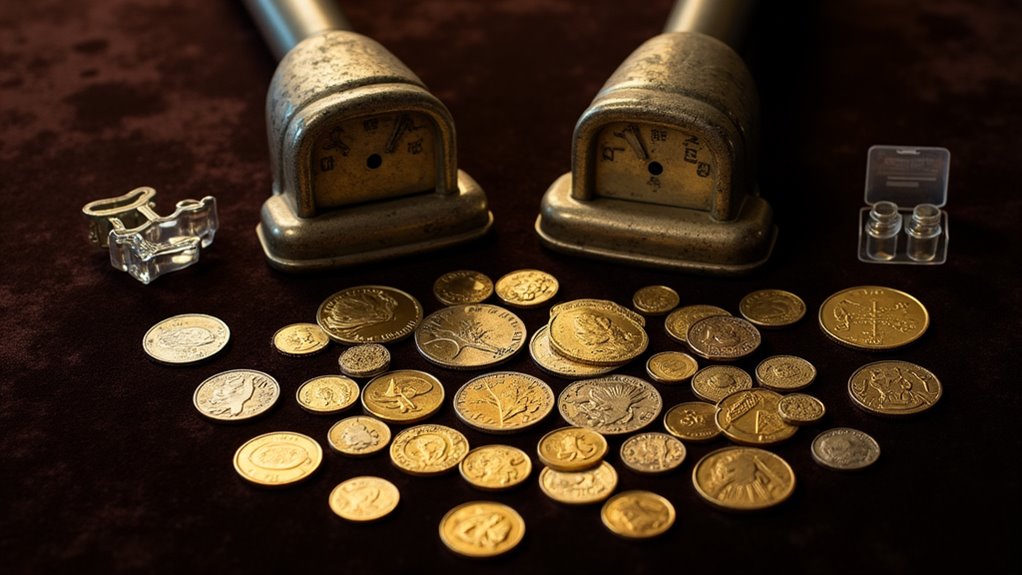
Alloyed gold isn’t just your grandma’s wedding ring anymore – it’s a game-changer in modern metallurgy. By mixing pure gold with metals like copper, silver, and palladium, we’ve created tougher, more versatile materials that dominate everything from jewelry to spacecraft. While 24k gold might look pretty, it’s too soft for practical use. Alloyed versions (18k and 14k) sacrifice a bit of purity for serious durability and practical applications. The real magic happens when you understand what’s beneath that golden surface.

While pure gold might sparkle with pristine perfection, it’s actually kinda useless on its own – enter alloyed gold, the beefed-up, street-smart cousin that actually gets things done. Pure 24-karat gold is basically the couch potato of precious metals: too soft, too malleable, and way too prone to scratches and dents. That’s precisely why humans got clever and started mixing it up with other metals, creating something that could actually handle life’s rough and tumble.
Think of alloyed gold as gold that hit the gym and got some serious upgrades. By throwing in metals like silver, copper, zinc, or palladium, we’ve turned this precious snowflake into a legitimate contender for everything from jewelry to space tech. The math is pretty straightforward – 18k gold means you’re looking at 75% pure gold, while 14k drops to 58.3%. But here’s the kicker – that “dilution” isn’t just about cutting costs (though let’s be real, it definitely helps). The resulting 14k white gold alloy is especially popular for its durability and affordability. In fact, many jewelers prefer using 18k yellow gold alloy for its balance of durability and beauty. Modern applications also leverage the properties of alloyed gold for semiconductor technology, showcasing its importance beyond mere aesthetics.
Alloying gold isn’t just watering down the good stuff – it’s giving pure gold the backup dancers it needs to steal the show.
The real magic happens when these metals start playing together. Yellow gold? That’s your classic mix of gold, silver, and copper with a dash of zinc for good measure. White gold? Now we’re talking palladium and nickel in the mix, usually topped off with a rhodium coating that makes it shine like nobody’s business. And don’t even get us started on rose gold – that gorgeous pink hue comes from cranking up the copper content, creating what’s basically the instagram influencer of precious metals.

But alloyed gold isn’t just about looking pretty. This stuff is literally in our computers, our satellites, and yeah, even our teeth. The electronics industry can’t get enough of it because it conducts electricity like a boss while giving corrosion the middle finger. Space programs slather their satellites with it because nothing handles cosmic radiation quite like it. And dentists? They’ve been using gold alloys since forever because apparently, nobody wants their fillings to wear out. In fact, common gold alloys like white gold and rose gold are among the most sought after in both jewelry and industry applications.
The historical significance of alloyed gold is pretty wild too. Ancient civilizations weren’t just mixing metals for kicks – they were literally creating new forms of currency and art. Some of these old-school metallurgists were basically the original materials scientists, figuring out how different combinations could create distinct colors and properties.
Today, we’re still riding that wave of innovation, pushing the boundaries of what gold can do when it teams up with other metals. And let’s be honest – in a world where pure gold would basically be useless for anything practical, alloyed gold is the real MVP, making this precious metal actually worth its weight in, well, gold.
Frequently Asked Questions
Can Alloyed Gold Trigger Skin Allergies or Reactions?
Yes, alloyed gold can absolutely trigger skin reactions – it’s not the pure gold causing trouble, but those sneaky metals mixed in!
When manufacturers blend nickel, copper, and zinc with gold to make it stronger, they’re basically creating an allergy cocktail for sensitive skin.

Lower-karat pieces (lookin’ at you, 10k!) pack more of these irritating metals, leading to itching, redness, and that oh-so-annoying rash.
Pure 24k gold? No prob. Everything else? Buyer beware!
How Do I Test if My Alloyed Gold Jewelry Is Authentic?
Testing alloyed gold’s authenticity requires multiple methods for reliable results.
Hallmark inspection comes first – look for those essential purity stamps like 14K or 750.

The acid test‘s a game-changer but handle those chemicals carefully!
For DIY enthusiasts, there’s the trusty magnet test (real gold won’t stick) and ceramic plate scratch test.
Weight and density tests work too – genuine gold’s heavier than most imposters and sinks like a stone in water.
Does Alloyed Gold Tarnish Over Time?
Yes, alloyed gold does tarnish – it’s just one of those inconvenient truths about mixing pure gold with other metals.
While 24k gold stays pristine like a diva, lower karats can’t escape the inevitable oxidation dance. The culprit? Those pesky base metals mixed in for durability.
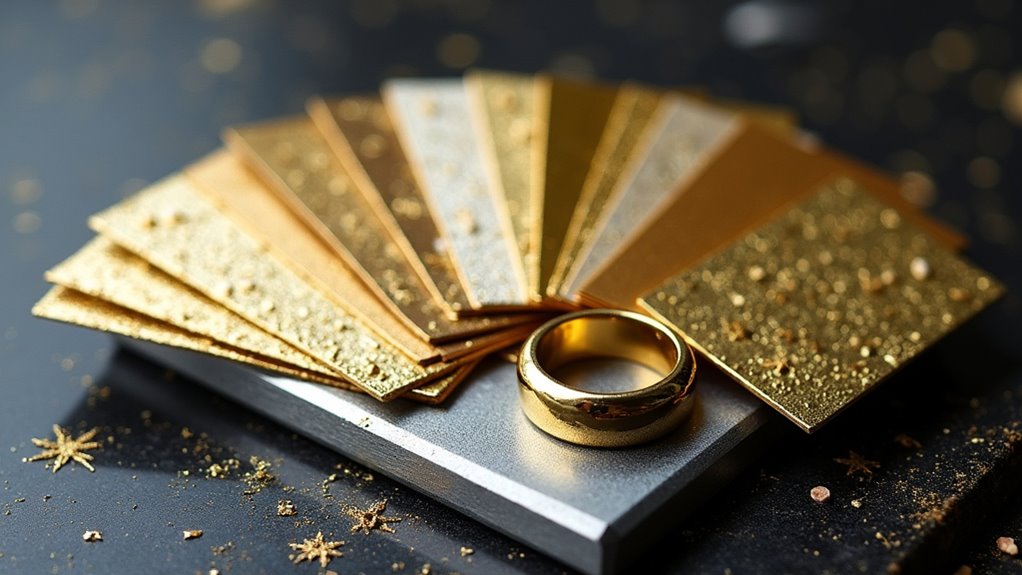
Think copper and silver getting cozy with oxygen and sulfur compounds. Environmental factors like humidity and chemicals accelerate the party, but proper storage and maintenance can keep that tarnish at bay.
Can Alloyed Gold Be Recycled Like Pure Gold?
Yes, alloyed gold can be recycled, but it’s not quite the smooth sailing you get with pure gold.
The process demands more sophisticated techniques – think chemical baths and precise temperature control – to separate those pesky alloying metals.
While pure gold recycling is basically a one-and-done deal, alloyed gold needs extra steps that can make refiners pull their hair out.

Still, it’s totally doable and happens everyday in the industry, just with more drama and expense.
Which Alloy Combinations Are Best for Engagement Rings?
For engagement rings, white gold alloyed with palladium stands out as a top performer – it’s both durable and hypoallergenic.
Platinum-gold combos rock the durability game, making them perfect for securing those precious stones.
18k yellow gold mixed with copper delivers that classic look while maintaining strength.

For the style-savvy, rose gold with nickel-free white gold accents creates stunning two-tone pieces that’ll turn heads (and last forever’ish).