Electronic gold testers have flipped the script on precious metal authentication. From basic KEE testers to fancy Thermo Fisher XRF analyzers, these gadgets deliver quick, non-destructive results that’ll make old-school acid testing blush. The KEE’s simple touch-probe nails accuracy within 1 carat, while high-end XRF spectroscopy reveals a metal’s entire composition in seconds. Sure, they’re pricey – but beats melting down grandma’s heirloom bracelet. There’s more to this testing revolution than meets the probe.

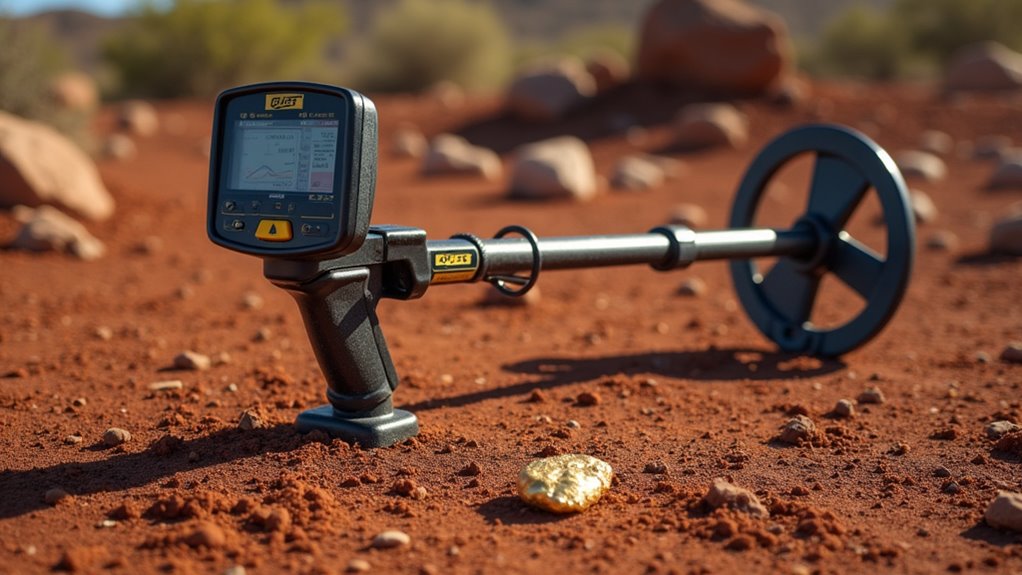
Diving into the glittering world of precious metal authentication, electronic gold testers have revolutionized how dealers and collectors verify their treasures. These devices have evolved from simple analog meters to sophisticated spectroscopy-based analyzers, each offering unique advantages for different testing scenarios. The KEE Gold Tester has emerged as a reliable workhorse for everyday testing, particularly excelling in the lower-carat range. Its accuracy within 1 carat makes it a go-to choice for jewelry shops and pawnbrokers who frequently deal with 8ct to 24ct pieces. The device’s simple touch-probe design and quick 2-3 second readout means less time fiddling and more time dealing – though you’d better remember to switch it off, or those AA batteries will die faster than your hopes during a market crash! Additionally, this tester is often utilized in conjunction with electrolytic gold refining processes to ensure high purity levels, which are critical for achieving optimal results in gold refining. Lab scale methods can also benefit from accurate testing to validate results before moving to larger operations.
Moving up the sophistication ladder, the AuRACLE AGT1 PLUS DELUXE (quite the mouthful, innit?) shows its strength in the 9ct to 12ct range, but gets a bit wobbly with higher-carat gold. Its discontinued status in the UK due to electrical standards has left some dealers scrambling for alternatives, though probe replacements are still floating around like gold dust in a prospector’s pan.
For those with deep pockets and serious verification needs, the Thermo Fisher XRF Spectrometer stands as the crown jewel of testing equipment. This beast doesn’t just test gold – it’ll analyze precious metals faster than a trader can say “market volatility.” Its non-destructive testing approach makes it particularly valuable for high-end dealers and bullion traders who can’t afford to scratch their merchandise. Additionally, these electronic testers often provide results that can be cross-verified with fire assay methods to ensure comprehensive accuracy.

The advent of these electronic testers has largely relegated traditional acid testing to the history books. While old-school methods still have their place, who wants to risk damaging a piece when you can get results in seconds? That said, these modern marvels aren’t without their quirks – proper calibration is essential, and some models demand more expertise than others. The KEE requires an 18ct sample for accurate testing up to 20ct, and if you’re venturing into higher-carat territory, you’ll need a 22ct reference piece.
The market has responded enthusiastically to these innovations, particularly favoring devices that balance accuracy with usability. While the Thermo Fisher sits at the premium end of the spectrum (costing more than some small cars!), the KEE offers an affordable entry point for serious testing capability. Its analog design might seem old-school, but sometimes simplicity equals reliability – just ask anyone who’s dealt with finicky digital readouts during a busy trading day.
Despite their differences, all these testers share one common thread – they’ve transformed gold authentication from an art into a science, though maybe not quite as exact as we’d like to pretend. After all, even the best tester is only as good as its operator, and let’s be honest, we’ve all had those days when everything tests like copper!
Frequently Asked Questions
How Often Should I Calibrate My Electronic Gold Tester?
Electronic gold testers demand frequent calibration – like, seriously frequent. Smart dealers calibrate every single time they power up that bad boy.

For marathon testing sessions? Recalibrate periodically to keep those readings legit.
Pros know the drill: daily calibration’s non-negotiable, especially when handling high-value pieces.
And hey, whenever you swap out that testing probe, you better believe it needs a fresh calibration.
No excuses – accuracy’s everything in this game!
Can Electronic Testers Detect Gold-Plated Items Accurately?
Electronic testers struggle with gold-plated items – it’s kinda their Achilles’ heel!

While these gadgets can detect surface conductivity like champs, they’re often fooled by that sneaky thin layer of gold coating.
The underlying base metal plays peek-a-boo with the readings, making accuracy… well, complicated.
For reliable results, pros typically need backup methods like acid testing or XRF analysis.
It’s not exactly a slam-dunk detection method for plated pieces!
What Types of Batteries Work Best for Electronic Gold Testers?
Lithium batteries reign supreme for electronic gold testers, delivering knockout performance that’s hard to beat.
While alkaline batteries work fine for basic testing, they’re like bringing a knife to a gunfight when accuracy matters.
Pro-grade testers thrive on lithium power – these bad boys handle temperature swings like a champ and last forever (well, almost).
Sure, they’re pricier than cheap alkalines, but when you’re testing precious metals, why skimp on juice?
Are Electronic Gold Testers Safe to Use on Antique Jewelry?
Electronic gold testers are incredibly safe for antique jewelry – talk about a game-changer!

These non-destructive devices use conductivity or XRF technology to check purity without leaving a scratch. No nasty chemicals or filing required, unlike those brutal acid tests.
Sure, they’ve got limitations with heavily tarnished pieces, but they’re basically the guardian angels of precious heirlooms.
Just remember to wear gloves when using conductive gels, and you’re golden (pun totally intended!).
Why Do Test Results Sometimes Vary Between Different Electronic Testers?
Test results often vary between electronic gold testers due to a perfect storm of tech differences.

Each device rocks its own testing method – XRF, conductivity, or ultrasonic – with varying accuracy levels.
Environmental factors like humidity mess with readings, while operator skill (or lack thereof!) plays a huge role.
Plus, those pesky calibration issues and sensor degradation keep everyone guessin’.
Even surface contamination on jewelry pieces can throw off results!