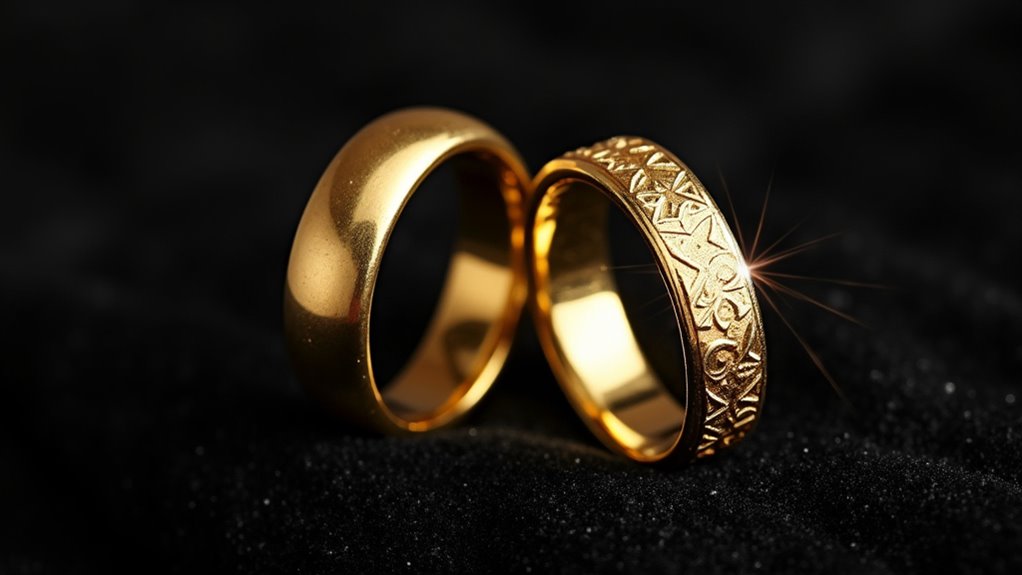
White gold’s alluring shine comes from a precise dance of metals – pure gold mixed with nickel, palladium, silver, or zinc. The mix varies by karat: 10k (41.7% gold), 14k (58.3%), or 18k (75%). Modern jewelers dodge nickel for hypoallergenic options, while rhodium plating gives that signature brilliant finish. Unlike its yellow cousin, white gold needs yearly maintenance to keep its swagger – but that extra effort pays off in durability and sophistication. There’s more to this rebellious metal than meets the eye.

While pure gold may catch everyone’s eye, white gold has carved out its own niche as the sophisticated rebel of precious metals. This alloy combines pure 24k gold with a mix of other metals like nickel, palladium, silver, or zinc to create something truly extraordinary. The result? A metal that’s not just pretty to look at, but tough enough to handle daily wear and tear.
White gold stands as precious metal’s elegant maverick, blending pure gold with companion metals to create beauty that endures.
Let’s get real about what’s actually in this stuff. White gold comes in different purities – 10k (41.7% gold), 14k (58.3% gold), and 18k (75% gold). The rest? That’s where things get interesting. Nickel used to be the go-to strengthening agent, but it’s fallen out of favor because some people’s skin throws a fit when it touches it. As a result, many jewelers now prefer alloys that include hypoallergenic metals to ensure comfort for all wearers. This shift has led to a rise in the use of alternative alloying metals that enhance the quality and safety of white gold, with some jewelers opting for 18k yellow gold alloy for its balance of durability and elegance.
These days, palladium is the new darling of the white gold world – it’s hypoallergenic and gives the alloy that coveted white color without the drama. Interestingly, this composition of 14k gold emphasizes that it contains a substantial amount of gold, contributing to the overall quality of its alloys.

Here’s where things get juicy – that brilliant white shine everyone associates with white gold? It’s actually a clever disguise. Without its rhodium plating, white gold is more of a wallflower, sporting a grayish or slightly yellow tone. That rhodium coating needs to be refreshed every year or so, like a celebrity getting their roots touched up. But hey, maintenance is the price of beauty, right?
The strength of white gold is no joke. When compared to its pure gold cousin, it’s like comparing a heavyweight boxer to a ballet dancer. The added metals create a durability that makes it perfect for those engagement rings and wedding bands that need to survive decades of love taps against doorframes.
Palladium-based alloys are particularly impressive – they resist tarnishing like a champ and won’t make your finger break out in hives.
When it comes to pricing, white gold sits in that sweet spot between “I’m treating myself” and “I’m not selling a kidney.” It gives platinum a run for its money in the looks department while being considerably more affordable.

Sure, it’s pricier than silver, but it won’t turn your finger green or dent if you look at it wrong. And unlike yellow gold, it provides that modern, neutral aesthetic that makes diamonds and colored gems pop like fireworks.
The popularity of white gold isn’t just about looks or durability – it’s about versatility. It’s the chameleon of precious metals, equally at home in a classic solitaire setting or an avant-garde artistic piece.
While it might need occasional maintenance to keep its sparkle, its ability to balance luxury with practicality makes it a standout choice for those who want their jewelry to make a statement without screaming for attention.
Frequently Asked Questions
Can White Gold Tarnish or Change Color Over Time?
White gold absolutely changes color – it’s just part of the deal!
The rhodium plating that gives it that gorgeous silvery shine wears down over time, exposing the yellower alloy underneath.

Environmental factors like chemicals, moisture, and even your daily perfume spritz speed up this process.
While it’s not technically “tarnishing,” the color shift is real and typically needs a fresh rhodium coat every year’ish to keep that platinum-like gleam.
Is White Gold Hypoallergenic for People With Sensitive Skin?
White gold isn’t automatically hypoallergenic – here’s the real deal.
Most white gold contains nickel, which can make sensitive skin throw a fit. Sure, that rhodium plating acts like a safety blanket, but it wears off faster than last season’s trends.
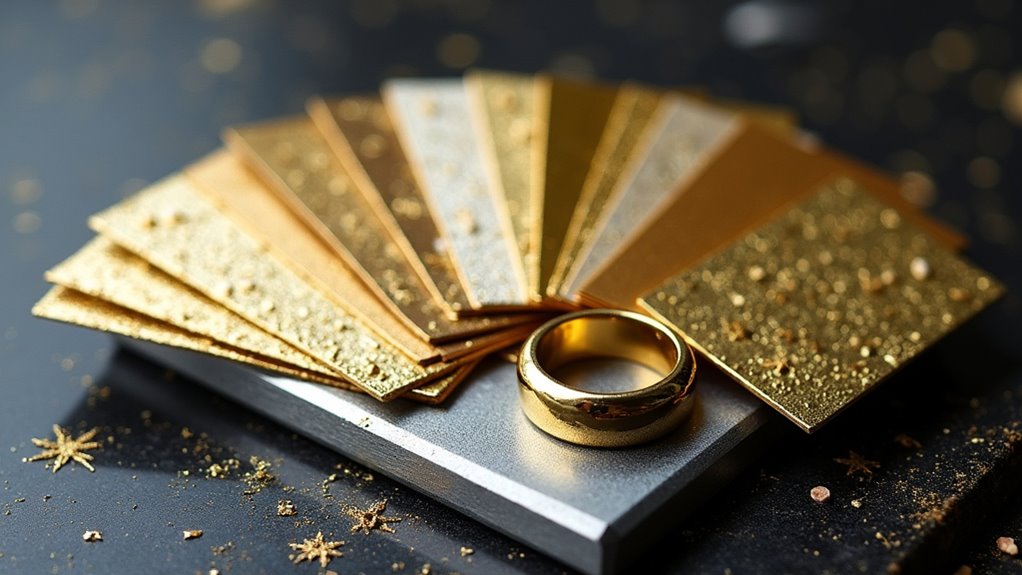
The smart money’s on nickel-free varieties or palladium-based white gold for the sensitive folks.
Still, even those aren’t bulletproof – some people’s skin just can’t handle any metal drama.
How Often Should White Gold Jewelry Be Professionally Cleaned?
White gold jewelry needs professional cleaning once a year – that’s the golden rule!
For pieces getting daily wear-and-tear action, bump that up to every six months.

These pros aren’t just giving your bling a bath – they’re breaking out ultrasonic cleaners, steam treatments, and that all-important rhodium plating refresh.
Plus, they’ll catch any sneaky loose stones or structural issues before they become real problems.
Think of it as a spa day for your precious metals!
Does White Gold Need to Be Rhodium Plated?
Does white gold need rhodium plating? Well, technically no – but here’s the deal.
Without it, white gold shows its true colors (literally), sporting a slightly yellowish tint that’s not exactly the ice-queen look most buyers are after. Rhodium plating delivers that platinum-esque shine everyone’s obsessed with.

Plus, it acts like armor against scratches and allergic reactions. Skip it if you’re cool with a warmer tone, but most jewlers won’t let you leave without it!
Which Is More Durable: White Gold or Platinum?
When it comes to durability, platinum takes the crown regarding density and ability to hold its shape over time.
However, white gold actually resists surface scratches better thanks to its harder alloy metals.
Here’s the twist – platinum’s dents can be reshaped, while white gold loses material when scratched.
So while platinum’s more durable overall, white gold’s tougher surface makes it more scratch-resistant.
Each metal’s got its own survival skillz!