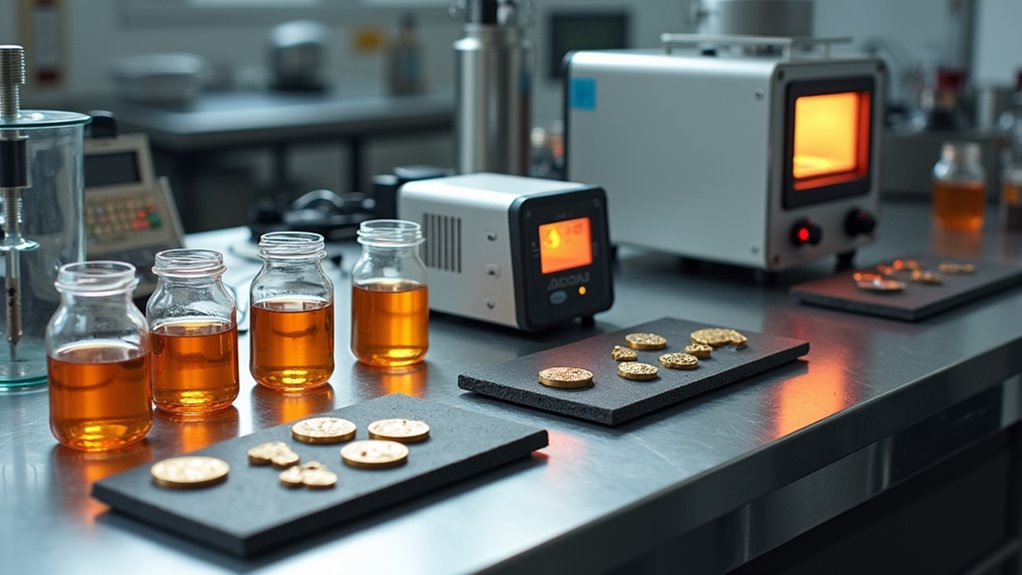

Modern gold testing runs the gamut from quick-but-risky acid tests to non-destructive XRF analysis and the nuclear option: fire assay. Acid testing’s cheap but can scar metals, while XRF analyzers deliver instant results for complex alloys – think smartphone-sleek convenience. Fire assay melts everything down for ultimate accuracy (bye-bye sample!). Electronic testers offer fast-food-style results, and traditionalists still swear by touchstones. The deeper you go, the more these methods reveal their true colors.

A whopping seven distinct methods exist for testing gold’s authenticity, each with its own peculiar quirks and capabilities.
The tried-and-true acid test, despite its risky nature, remains a quick-and-dirty favorite among dealers who don’t mind potentially scarring their precious metal with nitric acid. Sure, it’s cheap and fast, but you’re literally attacking your gold with corrosive chemicals – talk about a relationship with trust issues! Common acids used today show low accuracy when testing modern metal compositions, making it essential to understand chemical composition for reliable results.
Testing gold with acid is like taking a chainsaw to verify a tree – effective but maybe not the gentlest approach.
The sexy newcomer to the scene, X-Ray Fluorescence (XRF), struts around with its non-destructive swagger and instant results. These handheld devices are like the smartphones of gold testing – sleek, portable, and impressively accurate. The technology can analyze up to 20 elements simultaneously, making it a comprehensive solution for complex alloys. But let’s be real: surface conditions can throw these high-tech prima donnas off their game, making them occasionally less reliable than their reputation suggests.

Fire assay stands as the undisputed heavyweight champion of gold testing methods. It’s the nuclear option that literally melts down your gold to determine its purity. While it’s incredibly accurate, it’s also incredibly destructive – basically the “burn it all down to know the truth” approach. Not exactly ideal for that vintage Cartier piece you’re eyeing.
Electronic gold testers bring the convenience factor to the table, measuring electrical conductivity faster than you can say “karat.” These devices are like the fast food of gold testing – quick, convenient, but not always giving you the whole story. Surface contamination can throw these readings off faster than a hedge fund manager ditching gold futures during a market panic.
The specific gravity test feels like something out of a high school physics class, using water displacement to determine purity. It’s non-destructive and clever, but trying to get precise measurements can be about as fun as watching paint dry. Plus, hollow pieces throw this method completely off its game – talk about a wet disappointment.
Then there’s the touchstone method, the granddaddy of gold testing. It’s like comparing paint swatches at a hardware store, except you’re using acid and precious metals. Old-school dealers swear by it, but its accuracy with modern complex alloys is about as reliable as a weather forecast.

Ultrasonic testing rounds out the magnificent seven, using sound waves to peek inside your gold like some sort of metal psychology session. While it’s fantastic for spotting inconsistencies in gold bars, it’s about as common in the jewelry industry as an honest crypto prediction. The equipment costs more than your average dealer’s willing to spend, making it more of a specialty tool than a daily driver.
Frequently Asked Questions
How Much Does Professional Gold Testing Typically Cost?
Professional gold testing costs vary dramatically based on the chosen method.
Acid tests run $10-50, offering a budget-friendly option for basic verification.
XRF analysis commands $50-150, delivering quick results with fancy tech.

Fire assay, the gold standard (pun intended!), demands $100-300 but provides unmatched accuracy.
Additional fees lurk around every corner – certification might add another $20-50, while bulk testing could snag you a sweet discount.
Can Testing Damage or Devalue My Gold Jewelry?
Yes, some testing methods can definitely damage gold jewelry. Acid testing leaves visible scratches and can weaken metal over time – definitely hurting resale value.
But there’s good news! Modern techniques like XRF are totally non-destructive and won’t leave a mark. Electronic testing’s pretty safe too, though it might need a tiny scratch to get past surface plating.
Fire assay? That’s a hard no for finished pieces – it completely destroys the jewelry!
Which Gold Testing Method Is Most Accurate for Antique Pieces?
XRF testing stands out as the gold standard for antique pieces – no pun intended!
While fire assay delivers ultimate accuracy, it’s basically jewelry murder.
XRF technology hits that sweet spot: precise readings without laying a finger on grandma’s heirloom brooch.

Sure, it might not peek past thick plating, but that’s a small price to pay for keeping vintage pieces intact.
Plus, when paired with expert visual inspection, it’s practically unbeatable.
How Long Does It Take to Get Results From Different Testing Methods?
Testing times vary dramatically across methods.
Acid tests deliver near-instant results in seconds, while XRF analyzers need just 10-60 seconds per sample.

Fire assay? Now we’re talking 24-48 hours for the whole shebang.
But here’s the kicker – traditional lab analysis is the real waiting game, stretching anywhere from 1-3 weeks!
(Rush services exist for the impatient, cutting that down to 3-5 business days).
Should I Test Gold Before Buying From Private Sellers?
Testing gold before buying from private sellers is absolutely essential – no exceptions.
The market’s crawling with sophisticated fakes that could fool even seasoned buyers. While a seller might get defensive (red flag alert!), legitimate dealers welcome testing.
Think of it as cheap insurance against getting burned on a bogus deal. Pro tip: combine multiple testing methods for maximum confidence, and don’t skip professional verification for big purchases.
The extra time and expense beats getting scamd!