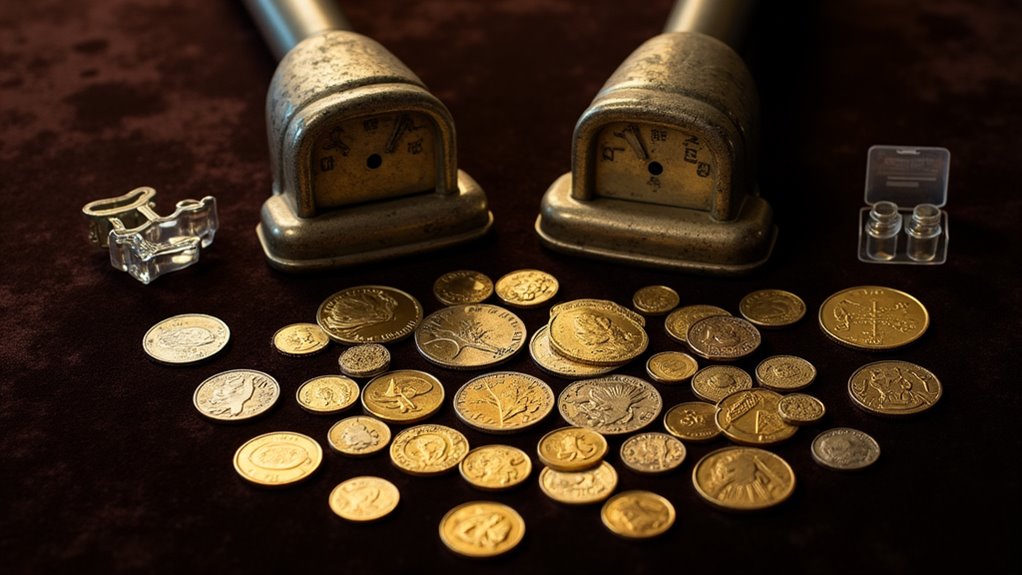
Touchstone and acid testing remains a surprisingly reliable method for separating real gold from fool’s gold, despite its ancient origins. The process involves dragging suspicious metal across a special black stone (usually slate), creating parallel streaks with known-karat samples, then applying specific acid solutions to reveal purity levels. While not as precise as modern electronic testing, this affordable technique delivers quick results that’ve kept gold traders happy for centuries. There’s more to this fascinating process than meets the eye.

Every serious gold enthusiast needs a reliable way to separate the genuine article from fool’s gold – enter the time-tested duo of touchstone and acid testing. This centuries-old method remains a go-to choice for jewelers and dealers worldwide, combining simplicity with surprising accuracy. The process hinges on two vital elements: a special black stone (typically slate or basalt) and a set of acid solutions that make gold spill its secrets like a nervous witness. In fact, this method is one of the more affordable purity testing methods available to gold traders. Additionally, understanding what is alloyed gold can help in identifying the presence of other metals when testing. The process is also enhanced by the knowledge of gold ore processing techniques, which can provide insight into the original source of the gold.
Touchstone and acid testing: the ancient art of catching fake gold red-handed, using nothing more than stone and solution.
The real magic happens when you drag that suspicious piece across the touchstone, leaving behind a telltale streak that’s about to face intense scrutiny. But here’s where it gets interesting – you’re not just testing blind. Smart testers create parallel streaks using known-karat samples, setting up a face-off between the mystery metal and verified standards. It’s like a metallurgical lineup where the truth can’t hide.
Speaking of truth serums, the acids used in this testing dance are no joke. Pure 24K gold stands its ground against most acids like a champion, while those lower-karat pretenders crack under pressure. Each acid solution is specifically formulated for different karat ranges – think of them as truth detectives specializing in different cases. The 10K to 18K range is where these acids really shine, though they get a bit tongue-tied when dealing with high-roller 22K and 23K pieces.

The testing kit itself is invigoratingly basic – a touchstone, test needles (aka known samples), acid solutions in dropper bottles, and safety gear because, let’s face it, acids aren’t exactly friendly. The procedure is straightforward enough: scratch, compare, apply acid, watch the show. The reactions tell the tale – lower-karat gold streaks vanish faster than a dealer’s smile at a low-ball offer, while higher-karat marks stick around to brag about their purity.
This method’s popularity isn’t just about tradition – it’s about practicality. It’s quick, relatively cheap, and doesn’t require a PhD in metallurgy to master. Plus, it works for other precious metals too, making it a versatile tool in any dealer’s arsenal. However, like that friend who can’t keep a secret, it does leave marks on tested items, and it’s not exactly precision engineering when it comes to those upper-karat ranges.
The real beauty of touchstone and acid testing lies in its accessibility and reliability for everyday gold assessment. While it might not match the precision of fancy electronic equipment, it’s got something better – street cred built over centuries of use. For anyone serious about gold trading or collecting, mastering this technique is like learning the secret handshake of the precious metals club – essential, practical, and just a little bit old school. Moreover, using acid solutions during testing can reveal various qualities of gold that other methods may overlook.
Frequently Asked Questions
How Long Does a Touchstone Last Before It Needs Replacement?
A properly maintained touchstone can last 3-5 years with regular use, though heavy testers might need replacement sooner.
Its lifespan depends on testing frequency, maintenance habits, and exposure to acids. Some pros squeeze 7+ years from their stones – impressive!

But here’s the kicker: once smooth spots appear or scratch marks get inconsistent, it’s replacement time.
No point risking accuracy with a worn-out stone.
Can Acid Testing Damage Genuine Gold Jewelry?
Yes, acid testing can damage genuine gold jewelry – even high-purity pieces aren’t immune.
While pure gold resists nitric acid like a champ, those fancy alloys in your favorite pieces? Not so lucky. The testing process leaves scratches, potential discoloration, and might even eat away at lower-karat pieces.

Plus, one wrong move with that nasty acid could wreck delicate details or antique finishes.
XRF testing’s the safer bet – no chemicals, no scratches, no sweat!
What Safety Equipment Is Required for Acid Testing at Home?
Acid testing gold at home isn’t child’s play – it demands serious safety gear.
The non-negotiables? Chemical-resistant gloves (the thick kind), protective goggles (not your regular sunglasses), and a proper acid-resistant apron or lab coat.
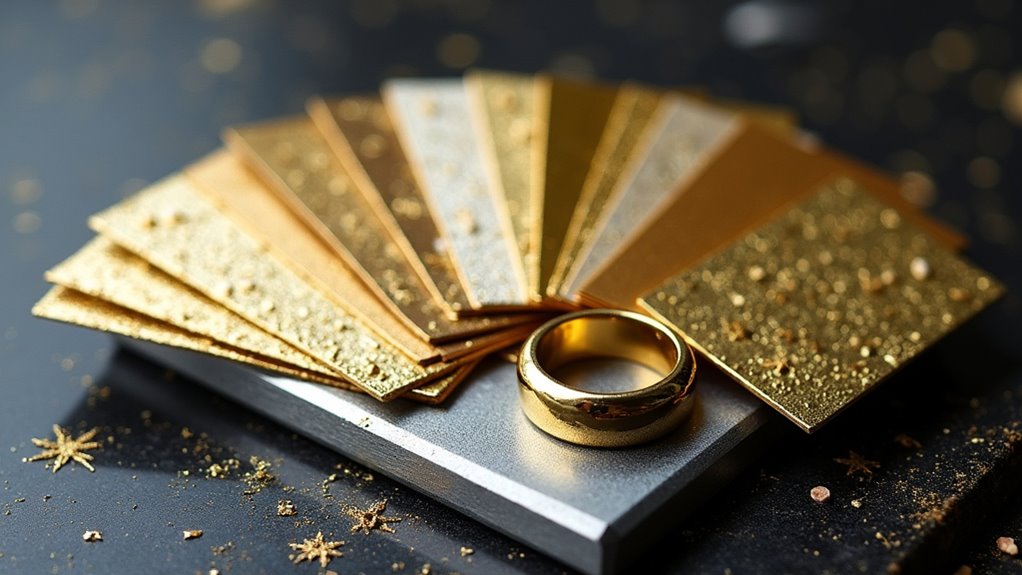
Ventilation is essential – a fume hood’s ideal, but at minimum, you’ll need open windows and fans.
And don’t forget proper acid storage containers!
Skip the basic dust mask – it won’t cut it against those nasty fumes.
Are Electronic Gold Testers More Accurate Than Traditional Acid Testing?
Electronic testers generally offer superior accuracy compared to acid testing, delivering instant quantitative results with precision down to 0.1 karat.
However, it’s not a slam-dunk victory. Electronic devices can get thrown off by alloy compositions and temperature, while acid testing – though more subjective – remains reliable for high-karat gold and excels with white metals like platinum.

Each method has its sweet spot, making them complementary rather than competitive.
How Much Does Professional Gold Testing Typically Cost per Item?
Professional gold testing fees pack quite the punch to your wallet!
Basic testing at jewelers typically runs $10-50 per piece, but don’t get too comfortable – those prices skyrocket for fancy methods.
XRF analysis? That’ll set you back $50-100.

Want the gold standard fire assay? We’re talking $75-150 per item.
Sure, some pawnshops offer “free” testing, but c’mon – they’re just itching to buy your gold for pennies on the doller.