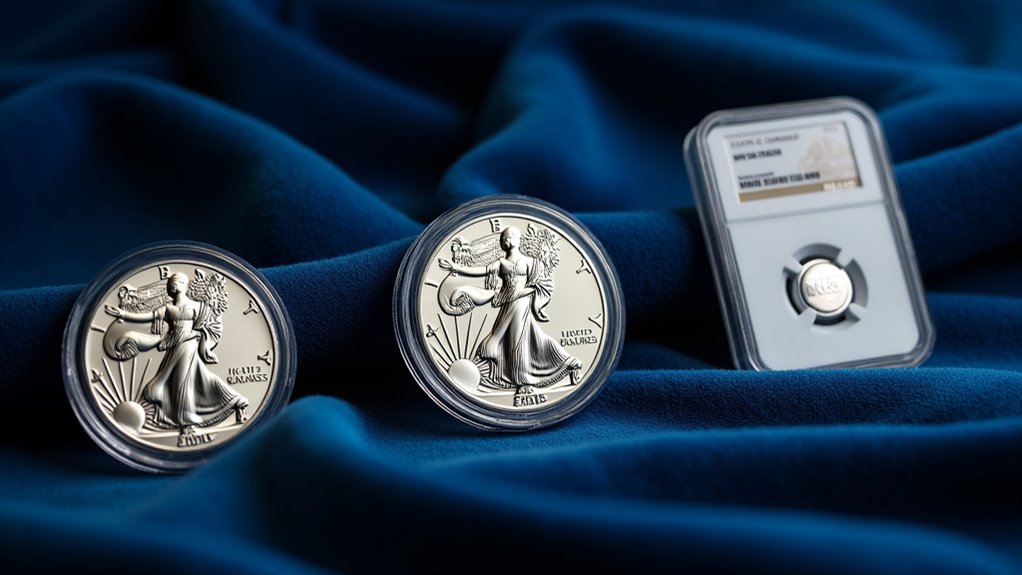
Becoming a certified numismatist demands serious dedication and expertise. The path requires completion of specialized courses through organizations like ANA or RCNA, covering everything from coin grading to authentication. Professionals must ace a 200-question exam, maintain memberships in key associations, and rack up practical experience through museums or auction houses. Benefits? Access to exclusive libraries, networking goldmines, and career opportunities at prestigious institutions. The deeper you venture into this glittering world, the more treasures await.

Countless aspiring numismatists commence on the journey to professional certification each year, facing a rigorous path that demands both academic dedication and hands-on experience. The road to becoming a certified numismatist ain’t for the faint of heart – it requires completing specialized courses from recognized organizations like the American Numismatic Association (ANA) or Royal Canadian Numismatic Association (RCNA), where students dive deep into the nitty-gritty of coin grading, authentication, and valuation.
These certification programs are no walk in the park! Students must tackle approximately six specialized courses and crush a thorough final exam with 200 questions that’ll make your head spin. But here’s the kicker – some European universities actually offer full-blown degrees in numismatics, blending archaeology, economics, and history into one fascinating cocktail of coin expertise. In addition to this, many programs also emphasize the importance of understanding numismatic tokens, which can be crucial for both collectors and dealers. Additionally, many programs highlight the relevance of historical significance in coin collecting, as it provides context to the items being studied. Furthermore, knowledge of ethical gold mining practices can enhance a numismatist’s understanding of the sourcing of precious metals used in coin production.
The ANA’s “Numismatic Diploma Program” is like the holy grail for aspiring coin experts, bestowing the coveted “Numismatic Scholar” title upon completion. But don’t think you can just coast through – mastering coin grading is absolutely vital for anyone hoping to make it in this field. We’re talking about developing an eagle eye for spotting counterfeits and understanding historical contexts that would make Indiana Jones jealous.

Professional association membership isn’t just some fancy add-on – it’s practically essential for survival in the numismatic jungle. Organizations like the ANA hook members up with killer resources, mentorship opportunities, and networking connections that could make or break a career. Plus, these memberships often include sweet perks like access to specialty libraries and discounts on publications that’ll make any coin nerd’s heart flutter.
Getting your hands dirty with real-world experience is where the rubber meets the road. Third-party grading services (TPGs) typically want years of hobby experience or professional involvement before they’ll even look at your resume. Smart cookies volunteer at museums or auction houses to get that precious exposure to rare coins while building street cred in the numismatic community.
The path to certification requires a delicate balance of theoretical knowledge and practical skills. Photography skills? You better believe they’re important. Estate planning knowledge? Absolutely vital. And don’t forget about staying current with market trends and auction results – this field moves faster than a Morgan dollar at a coin show! Additionally, understanding how to spot fake coins can be crucial for a successful career in numismatics.
Whether working at facilities like the U.S. Mint or striking out as an independent dealer, certified numismatists must maintain their edge through continuous learning and engagement with the collecting community.
Frequently Asked Questions
How Much Do Certified Numismatists Typically Earn per Year?
Certified numismatists’ earnings span quite the range, typically pulling in between $30,000 and $125,000 annually.

Entry-level coin experts start around $53,863, while the big shots in senior grading positions can rake in six-figure salaries.
Location plays a huge role – urban numismatists generally earn more than their rural counterparts.
Those fancy certifications and specialized expertise in rare coins? They’re basically money in the bank for boosting those paychecks.
Can I Specialize in Coins From Specific Historical Periods or Regions?
Numismatists can dive deep into specific historical periods or regions, making themselves experts in niches like Ancient Roman coinage or Renaissance-era European pieces.
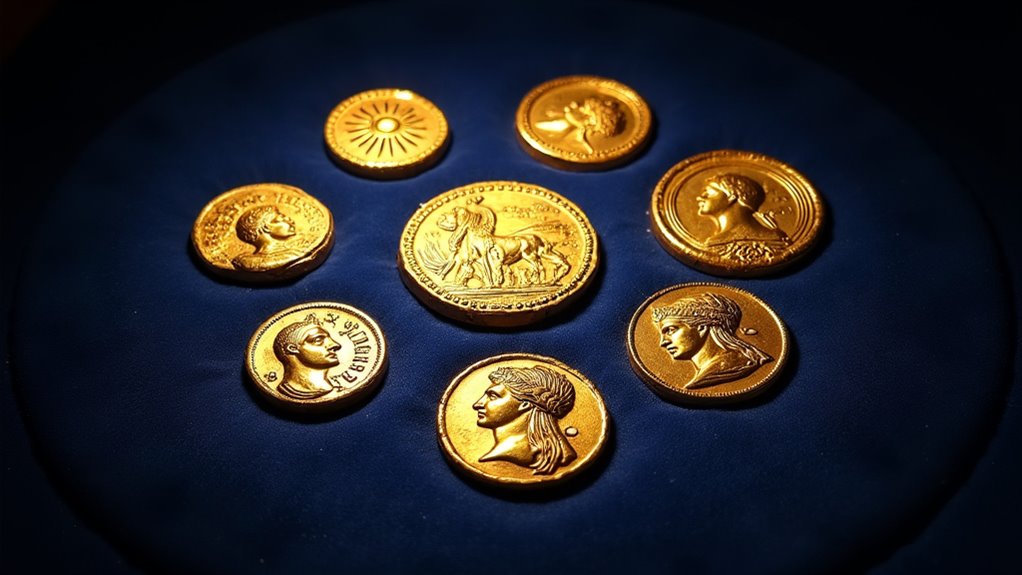
It’s a thrilling specialization that requires serious dedication – we’re talking years of study and hands-on experience.
The field’s packed with opportunities, from analyzing Greek drachmas to decoding Chinese cash coins.
But here’s the kicker: the more specific the focus, the more valuable that expertise becomes.
Are There Job Opportunities for Numismatists at Auction Houses?
Auction houses are absolute gold mines for numismatists looking to make their mark!

Major players like Heritage Auctions and Leu Numismatik regularly hunt for skilled coin experts to handle cataloging, research, and client relations.
The gigs typically involve evaluating ancient treasures, writing detailed descriptions, and schmoozing with collectors.
Plus, these positions offer sweet perks – think international travel to coin fairs and access to jaw-dropping collections that’d make any coin nerd swoon!
What Insurance Considerations Should Certified Numismatists Have for Their Collections?
Certified numismatists need specialized insurance beyond basic homeowners policies – those basic plans just don’t cut it for serious collectors!

They should snag extensive coverage protecting against theft, mysterious disappearance, and market fluctuations (because coins aren’t getting any cheaper, folks).
Transit coverage is essential – those precious pieces gotta move sometimes!
Smart collectors document everything with photos and keep regular appraisals.
Bank vaults? Yeah, insurers love that kinda security!
How Often Do Numismatists Need to Renew Their Certification?
Certified numismatists typically need to renew their credentials annually – no exceptions!

Most organizations, like the ANA, demand yearly renewals to keep those precious certifications active. It’s not just paperwork either – pros gotta complete continuing education credits and sometimes tackle those nerve-wracking exams.
The renewal deadlines hit different months dependin’ on when they initially got certified. Miss the deadline? That’s a whole mess nobody wants!