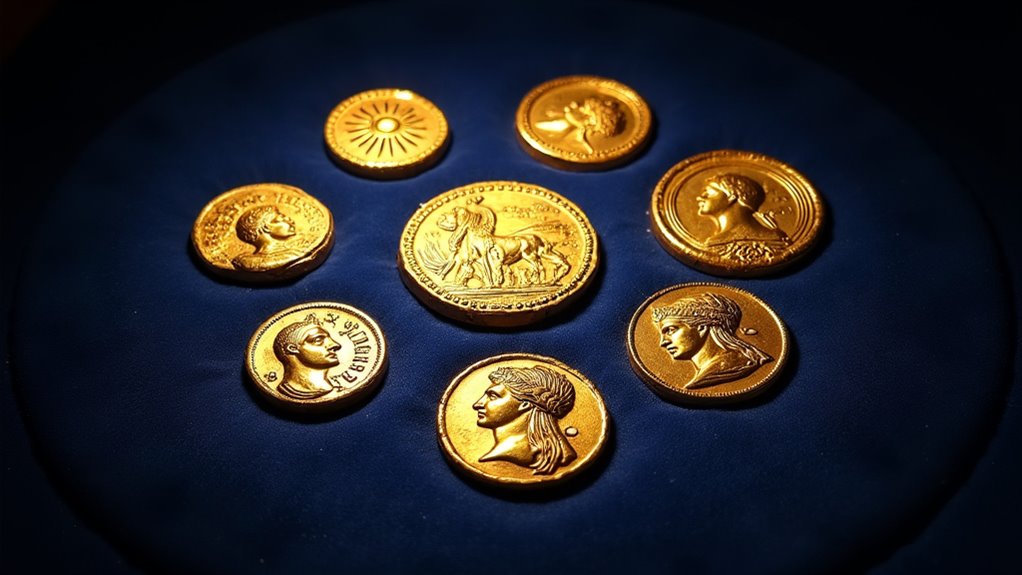
Proper gold coin storage demands military-grade attention to detail – no shortcuts! Store these beauts in a climate-controlled environment (45-75°F) using PVC-free holders and those nifty silica gel packs to fight moisture. Always rock those cotton gloves when handling, and grip coins by their edges like they’re made of dynamite. Bank vaults or home safes bolted tighter than Fort Knox provide essential security. But hey, there’s way more to protecting your precious metal prizes than meets the eye.

While collecting gold coins might give investors a shiny rush of excitement, storing them properly is what separates the amateurs from the pros who sleep soundly at night. The key to preserving these precious assets lies in creating ideal environmental conditions that shield them from potential damage. Smart collectors know that keeping coins in a dry, temperature-controlled setting, away from the wild swings of attic heat or basement dampness, is absolutely vital for maintaining their luster and value. Sustainable gold mining practices help ensure that the materials used in coin production are harvested with minimal ecological damage. Additionally, choosing coins made from solid gold can enhance their durability and overall value. Buying gold bullion and coins from reputable dealers is crucial to ensure you obtain high-quality pieces.
Store your gold coins like a pro: controlled environment, steady temperature, and dry conditions preserve both beauty and investment value.
Speaking of environmental control (oops, spelled that wrong), those pesky UV rays and moisture are absolute coin-killers. Serious collectors deploy silica gel packs and dehumidifiers like tiny soldiers in their war against humidity. And don’t even think about exposing those beauties to cigarette smoke or household chemicals – they’ll tarnish faster than a politician’s promises during election season.
Storage security isn’t just about keeping coins pretty – it’s about keeping them present and accounted for. Bank safe deposit boxes remain the gold standard (pun absolutely intended) for security, while home safes better be fireproof and bolted down tighter than a submarine hatch. For the ultra-paranoid – er, prudent – third-party bullion depositories offer professional storage with insurance that’ll make your local bank blush.

Handling these precious pieces requires the delicacy of a brain surgeon with OCD tendencies. Always don gloves before touching coins, and grab them by their edges like they’re tiny gold frisbees. Those fancy coin holders and tubes aren’t just for show – they’re your first line of defense against scratches, nicks, and the dreaded “oops-I-dropped-it” scenario that keeps collectors up at night.
Insurance isn’t just for cars and houses anymore, folks. Smart collectors make sure their golden babies are covered with policies specifically designed for precious metals. Keep those purchase receipts filed away like they’re winning lottery tickets – because when things go sideways, documentation is your best friend.
The legal stuff might be boring, but it’s essential as a vault door. Know your local disclosure requirements, tax obligations, and storage regulations like the back of your hand. Nobody wants the taxman or regulators breathing down their neck because they forgot to dot an ‘i’ or cross a ‘t’.
When it comes to specific storage solutions, think “protection first.” PVC-free containers, individual capsules, and clearly labeled storage systems aren’t just organizational porn – they’re essential tools in the preservation arsenal. Proper storage methods can significantly enhance the longevity of your coins.

And remember, the first rule of gold coin storage is you don’t talk about gold coin storage. Keep that information locked down tighter than your coins themselves, because loose lips sink ships – and empty safes.
Frequently Asked Questions
How Often Should I Have My Gold Coins Professionally Appraised?
Gold enthusiasts should get their coins professionally appraised every 6-12 months, depending on their collection’s value.
Market volatility and precious metal price swings can seriously shake up valuations – like that wild rollercoaster ride gold took last quarter!
High-value or rare pieces might need more frequent check-ups, while basic bullion can probably slide with annual assessments.
Pro tip: Keep those appraisal fees under 5% of the collection’s total value, or you’re just throwing money away!
Can Gold Coins Be Damaged by Prolonged Exposure to Artificial Lighting?
While pure gold coins are pretty resistant to light damage (thank goodness!), artificial lighting isn’t totally harmless.
UV rays from fluorescent bulbs can gradually fade specially-finished or toned pieces, and that’s definitely not great for their value. Heat from lights can mess with storage conditions too – hello, humidity problems!
But here’s the real deal: modern LEDs are way safer, and protective cases w/UV filters are your BFF for displaying those golden beauties.
Should I Insure My Gold Coins Separately From My Regular Home Insurance?

Let’s cut to the chase – standard homeowners policies are basically useless for serious gold collectors.
With laughably low coverage limits (sometimes just $250? seriously?), it’s like trying to protect a Ferrari with bicycle insurance.
Separate coverage isn’t just smart – it’s essential for anyone who’s got more than pocket change in precious metals.
The premium? Usually 0.5-2% annually. Not cheap, but way better than discovering your $50k collection has a $1.5k coverage cap!
What Cleaning Products Are Safe to Use on Tarnished Gold Coins?

Several safe cleaning methods exist for those pesky tarnished gold coins.
Mild soap and warm water’s always a solid bet – just don’t go scrubbing like it’s your kitchen floor!
Olive oil’s another surprisingly effective option (who knew?).
For seriously stubborn tarnish, a gentle baking soda paste works wonders.

Commercial jewelry cleaners? Sure, but test em’ first!
Whatever you choose, remember: gentle is the name of the game. No harsh chemicals allowed on these babies!
How Can I Test if My Gold Coins Are Authentic Without Damaging Them?
Want the dirt on gold testing without trashing your coins? Smart move.
Non-destructive methods like XRF spectrometry and ultrasound are your best friends here – they’ll spill the metallic tea without leaving a scratch.
For a quick DIY approach, magnetic and density tests work too, tho they’re not foolproof.
The real MVP? AlpVision’s smartphone tech, which scans surface patterns faster than you can say “counterfiet.”
Just don’t go poking or scratching – that’s rookie stuff.