The Eureka Rebellion erupted in 1854 when Victorian goldfield miners, fed up with exorbitant license fees and corrupt officials, clashed with colonial forces at the hastily-built Eureka Stockade. The bloody confrontation left 27 dead but sparked major reforms – miners gained voting rights and cheaper licenses. Led by Peter Lalor, the uprising became a symbol of Australian democracy and resistance against oppression. The Southern Cross flag still waves as a reminder of what happens when authority pushes too far.

Several bloody clashes have shaped Australia’s path to democracy, but none quite like the Eureka Rebellion of 1854 – a powder keg of miner frustration that finally exploded on the Victorian goldfields.
The spark that lit this revolutionary fire wasn’t just about gold – it was about dignity. When the colonial government slapped hefty mining license fees on diggers while turning a blind eye to corruption, they basically begged for trouble. The murder of miner James Scobie and the subsequent government inaction? That was just the match that lit the already-soaked powder trail.
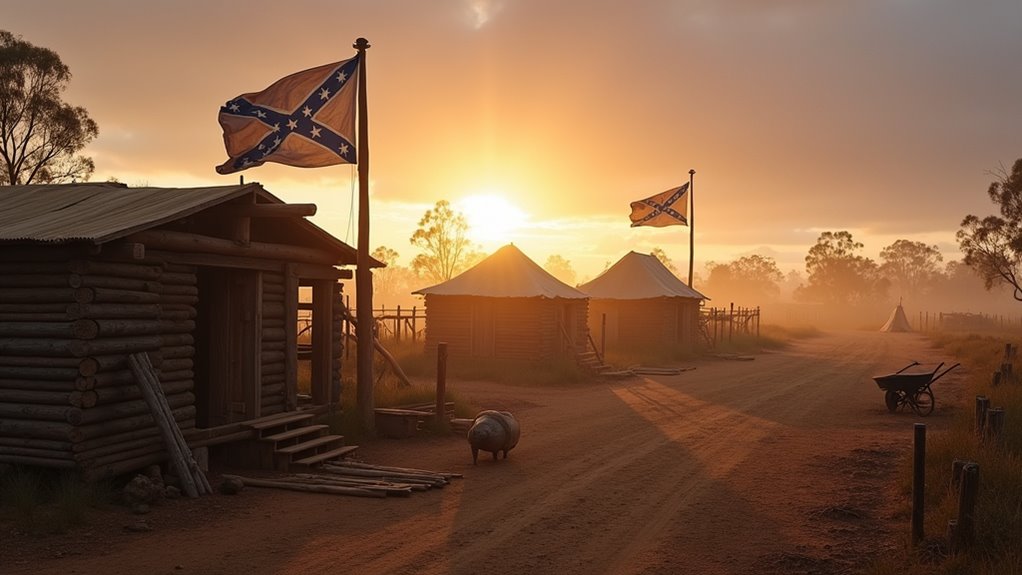
By November 1854, tensions reached boiling point. Miners gathered at Bakery Hill, their blood boiling hotter than their morning tea, and raised the now-iconic Southern Cross flag. These weren’t just angry diggers – they were men ready to die for their rights (yes, that typo’s staying). Peter Lalor, who’d later swap his pickaxe for a parliamentary seat, emerged as their leader.

The hastily-constructed Eureka Stockade became ground zero for what happened next. On December 3rd, 1854, at dawn when most miners were probably nursing hangovers or hadn’t returned from night shifts, government troops struck. The numbers tell the brutal story: 300 soldiers and police versus roughly 150 miners. It wasn’t even close. At least 22 miners and 5 soldiers died in the bloodbath that followed, with government troops going full bererk, destroying tents and bayoneting the wounded.
But here’s where it gets interesting – sometimes you win by losing. The government nabbed 13 miners and charged them with high treason (talk about overkill). But public sympathy had shifted faster than a prospector spotting a gold nugget. All 13 were acquitted in what became Australia’s first and only treason trials. Governor Hotham probably wished he’d listened to those initial complaints about license fees right about then.
The rebellion’s aftermath proved more valuable than any gold seam. By 1855, the hated annual license transformed into an affordable monthly Miner’s Right. Miners got the vote, representation in parliament, and suddenly found themselves with actual political clout. The whole mess exposed the colonial government’s flaws like a prospector’s pan reveals gold. Furthermore, the events of the rebellion laid the groundwork for sustainability practices in the mining industry, influencing later regulations and reforms, including environmental impact assessments that sought to protect Australia’s natural resources. In fact, the rebellion played a significant role in shaping global economies by demonstrating how collective action could lead to significant political changes, much like how central banks hold gold as a safeguard against economic instability.
Today, the Eureka Rebellion stands as Australia’s democracy birthplace – though it came with a hefty price tag in blood. It pushed the envelope on everything from civil rights to taxation without representation, sparking reforms that reached way beyond the goldfields. The Southern Cross flag still waves as a middle finger to oppression and a reminder that sometimes, you gotta fight for your rights to party (or in this case, mine gold without getting gouged).
Frequently Asked Questions
What Happened to the Miners’ Families During the Eureka Rebellion?
Miners’ families faced brutal disruption during the Eureka chaos.

Women and kids fled their homes near the stockade, desperately seeking safety from military raids. Many lost their breadwinners, plunging into poverty faster than a gold price crash.
But here’s the kicker – communities rallied together, sharing food and shelter like modern-day goldbugs sharing tips.
The aftermath brought some relief through license abolition, though the emotional scars ran deeper than gold veins.
How Did International Miners Influence Australian Culture After the Gold Rush?
International miners transformed Australian culture profoundly after the gold rush.

Chinese immigrants introduced their festivals, cuisine, and traditional medicine, while European settlers brought diverse farming techniques and crafts.
The multicultural mix birthed uniquely Aussie customs like mateship and the “fair go” mentality.
Even today, places like Bendigo celebrate this heritage through Chinese temples and festivals, while European influences live on in Australia’s wine regions and architectural styles.
What Role Did Women Play in the Eureka Rebellion?
Women played vital roles in the Eureka Rebellion, going way beyond traditional support roles. They joined massive protest rallies, making up about 25% of Ballarat’s population at the time.

Some even risked their lives inside the stockade – including pregnant women like Anastasia Hayes. They raised funds, sewed flags, and spoke out against unfair mining fees.
One woman died defending her husband during the attack, proving women were right in the thick of the action.
Did Any Indigenous People Participate in Mining During the Goldfields Era?
Indigenous Australians absolutely crushed it in the goldfields era! They weren’t just passive observers – they actively mined gold, often outperforming European diggers thanks to their deep knowledge of the land.
Many Aboriginal miners struck it rich, discovering major nuggets near places like Amherst and Talbot in the 1860s. They also served as vital guides, helping settlers locate gold deposits and essential resources.

Despite their success, their contributions were often overlooked by colonial authorities.
How Did the Rebellion Affect Australia’s Relationship With British Colonial Authorities?
The rebellion dealt a serious blow to British colonial authority in Australia. It exposed major flaws in colonial governance and triggered widespread public backlash.
While the Brits tried maintaining control through military force, their credibility took a massive hit. The aftermath saw them backing down – scrapping unfair licenses, dismissing corrupt officials, and grudgingly accepting reforms.
Talk about a power shift! This shake-up marked the beginning of Australia’s long march toward independence from British rule.