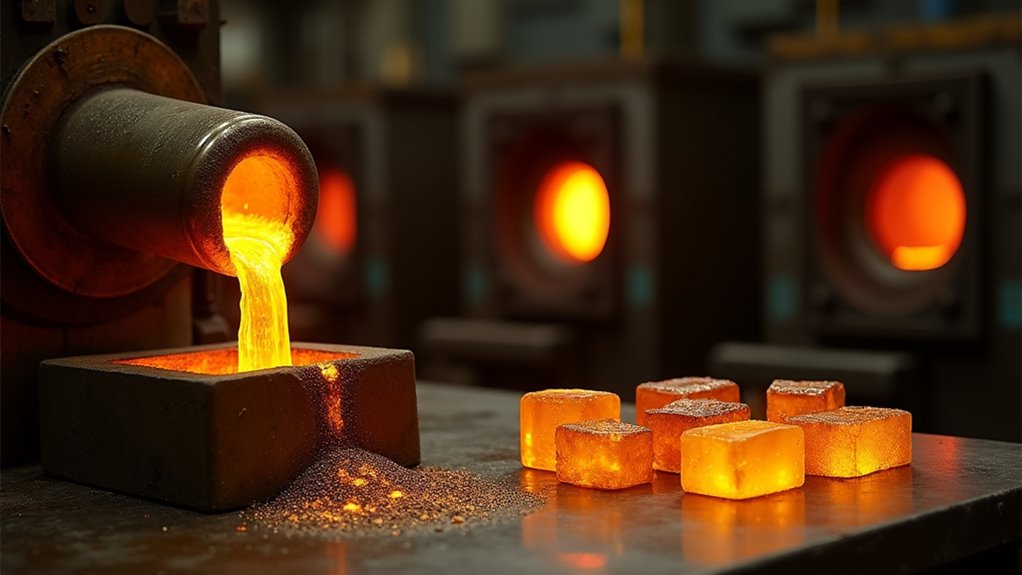

Gold-imitating alloys are the savvy metalhead’s answer to that oh-so-pricey pure gold swagger. These copper-based tricksters, typically rocking an 85% copper and 15% zinc mix, undergo some serious heat treatment gymnastics at a scorching 1900°C. After a 6-hour annealing party at 700°C, these metallic imposters emerge with that coveted golden glow. Sure, they’re not the real deal, but they’re turning heads in furniture and architecture – and there’s way more to their story than meets the eye.

While pure gold maintains its crown as the king of precious metals, gold-imitating alloys have emerged as the clever court jesters – mimicking the monarch’s shine without depleting the kingdom’s treasury. These ingenious imposters, primarily crafted from copper-based alloys mixed with zinc, aluminum, and other metals, have revolutionized decorative applications where the genuine article would be financially impractical.
Gold-like alloys: the royal court’s clever imposters, delivering majestic shine without the sovereign’s ransom.
The secret sauce behind these golden pretenders? A carefully orchestrated dance of elements, typically starring 85% copper doing the waltz with 15% zinc. Some crafty metallurgists throw chromium or indium into the mix, creating a golden sheen that’d make King Midas do a double-take. These alloys don’t just look pretty – they’re tough customers too, with a Rockwell hardness of around 66 HRB. Not too shabby for a wannabe! In fact, some of these alloys can even mimic the 18k yellow gold alloy in terms of appearance, while achieving a similar 58.3% gold content that enhances their aesthetic appeal. Additionally, these alloys often adhere to sourcing compliance standards, ensuring ethical production methods.
The manufacturing process is where things get spicy! We’re talking temperatures that’d make the devil sweat – around 1900°C for melting the initial components. Then comes the fun part: a series of heat treatments that’d make your kitchen oven cry. First up is homogenizing annealing at 680-720°C for what feels like an eternity (actually just 5-6 hours), followed by process annealing at slightly lower temps. It’s like a metallurgical spa treatment, but instead of relaxation, these metals are getting their golden glow on.

These faux-gold alloys have found their way into everything from fancy furniture to architectural bling. They’re the unsung heroes of the decorative world, providing that luxe look without the luxury price tag. And let’s be real – they’re doing Mother Earth a solid by reducing the need for intensive gold mining operations(common gold alloys). Talk about a win-win situation!
But before you get too excited, these golden wannabes do have their limits. They might look like a million bucks, but they won’t make you rich like the real deal. Some compositions can be more temperamental than a teenager, especially when exposed to harsh environments. And if you’ve got sensitive skin, watch out – some variants containing nickel might have you breaking out in more than just a golden glow.
The real genius of these alloys lies in their versatility and cost-effectiveness. They can be tweaked and tuned like a fine instrument, adjusting composition to achieve different shades and strengths. While they’ll never replace the real McCoy regarding intrinsic value, they’ve carved out their own niche in the market. For applications where appearance matters more than authenticity, these clever copycats are proving that sometimes, it’s okay to fake it till you make it – as long as you’re doing it with style!
Frequently Asked Questions
Is Gold Imitating Alloy Toxic When Worn Against the Skin?
Gold-imitating alloys can be toxic when worn against skin, primarily due to potential nickel content.
These sneaky metals release particles that might trigger nasty allergic reactions in up to 20% of people – yikes!

While coatings help minimize risks, sweat and friction can break down these protective barriers.
The real kicker? Some nanomaterials in these alloys could even penetrate skin and enter bloodstreams.
Better watch out for those red, itchy rashes!
How Long Does Gold Imitating Alloy Maintain Its Shine and Color?
Without protective coating, gold imitating alloys typically maintain their shine for 3-6 months before noticeable tarnishing begins.
When properly sealed with lacquer or varnish, these pieces can keep their luster for 2-3 years.

Environmental factors play a huge role – humid conditions and chemical exposure drastically reduce longevity, while dry, controlled environments help preserve the finish.
Regular cleaning and reapplication of sealants can extend the lifespan considerably.
Can Gold Imitating Alloy Be Recycled Like Precious Metals?
Gold imitating alloys can’t match the infinite recyclability of precious metals – not even close!
While real gold keeps its value through endless recycling cycles, these simulants present a messy challenge. The complex mix of base metals and coatings requires aggressive chemical treatments and multiple separation steps, making recycling less economically viable.

Plus, the recovered materials fetch lower market prices than pure metals. Talk about a recycling headache!
Does Gold Imitating Alloy Tarnish When Exposed to Swimming Pools?
Gold imitating alloys definitely take a beating in swimming pools!
The chlorine aggressively attacks the non-gold metals in these alloys, causing serious tarnishing and discoloration.
Those copper components? They’ll turn green faster than a chameleon at a paint store.

Silver elements blacken up real quick too.
It’s basically a metal massacre in there – the chlorine acts like a chemical bully, picking on every metal except pure gold.
Best keep those pretenders far from the pool!
What Testing Methods Verify if Jewelry Is Gold Imitating Alloy?
Testing gold imitating alloy typically requires a multi-pronged approach.
The touchstone method reveals telltale reactions with acids, while magnetic tests can expose base metal content.

For definitive results, XRF spectrometry‘s your best bet – it’ll nail down the exact composition.
Electrolysis spot tests work too, though they might damage the piece.
Pro tip: don’t trust a single test method – cross-reference results for the real deal.