18K gold alloy isn’t just another pretty face in the precious metals crowd. This 75% pure gold mixture struts its stuff across multiple industries – from those stunning engagement rings catching everyone’s eye to mission-critical aerospace components keeping planes in the sky. Its superstar qualities? Exceptional durability, corrosion resistance, and conductivity that make it a heavyweight in electronics, dental work, and chemical processing. There’s more to this glittering powerhouse than meets the eye.

Glitter and glamour aside, 18K gold alloy is a powerhouse material that’s muscled its way into everything from your grandma’s wedding ring to space-age electronics. This versatile alloy, containing 75% pure gold mixed with other metals like copper, silver, or zinc, brings more than just bling to the table. Its enhanced durability makes it a go-to choice for jewelry that needs to withstand daily wear while maintaining that coveted luxe appeal. Many jewelers opt for common gold alloys to achieve specific colors and properties, further enhancing the aesthetic appeal of their creations.
From grandma’s ring to spacecraft circuits, 18K gold alloy proves that true luxury isn’t just about looks – it’s about lasting power.
In the domain of electronics, 18K gold alloy isn’t just showing off – it’s showing up where it counts. The alloy’s superior conductivity and resistance to corrosion make it invaluable in high-performance devices. From aerospace equipment to computer components, this precious metal keeps signals flowing smoothly, even in the most demanding environments (oops, environments).
Dentistry has also taken a shine to 18K gold alloy. Its biocompatibility and strength make it perfect for crowns and bridges that need to handle the daily grind – literally. The material’s malleability allows dentists to create custom-fitted pieces that look natural and last for years, proving that sometimes, a golden smile is more than just metaphorical. Moreover, the composition of 18K gold ensures that it retains its beauty and functionality over time, enhancing its appeal in dental applications. Additionally, the alloy composition of 18K gold helps prevent tarnishing, ensuring long-lasting beauty.

Innovation never sleeps, and recent developments have introduced lightweight 18K alloys incorporating protein and polymer latex. These modern marvels weigh up to 10 times less than traditional gold alloys, making those statement earrings less of a drag on your earlobes. Though there’s a trade-off between weight reduction and durability, these new formulations are changing the game for comfort-conscious jewelry enthusiasts.
The industrial sector has embraced 18K gold alloy for its exceptional performance in harsh conditions. From chemical processing equipment to precision medical instruments, this alloy stands up to heat, pressure, and aggressive chemicals while maintaining its integrity. Its controlled hardness and minimal thermal expansion properties make it ideal for specialized manufacturing processes.
Color versatility adds another dimension to 18K gold’s appeal. By tweaking the mix of alloying metals, craftsmen can create everything from rich rose golds to cool white tones. This flexibility enables stunning two-tone designs and unique aesthetic expressions that have captured imaginations across cultures and generations.
The alloy’s cultural significance can’t be overlooked – it’s associated with luxury and wealth across various societies, making it a sought-after material for both personal adornment and industrial applications. Additionally, the composition of 18K alloy highlights its unique characteristics that balance both beauty and practicality in various applications.

Whether it’s crafting intricate jewelry pieces or ensuring reliable electrical connections in mission-critical equipment, 18K gold alloy continues to prove its worth beyond mere aesthetics. It’s the perfect marriage of form and function, delivering both beauty and performance in equal measure.
Frequently Asked Questions
How Does 18K Alloy Compare to Sterling Silver in Terms of Durability?
18K alloy and sterling silver each bring unique durability traits to the table.
While sterling silver boasts superior hardness and scratch resistance, it’s prone to that pesky tarnishing issue.
18K alloy, though slightly softer, laughs in the face of tarnish and maintains its luster for decades.

Sterling needs constant babysitting with polishing, while 18K just needs basic maintenance.
It’s like choosing between a high-maintenance diva and a low-key performer!
Can 18K Alloy Trigger Allergic Reactions in Sensitive Individuals?
You bet 18K alloy can spark allergic reactions! The culprit’s usually nickel, lurking in some white gold variants and ready to wreak havoc on sensitive skin.
We’re talking classic contact dermatitis here – redness, itching, and that oh-so-annoying swelling showing up within 48 hrs of contact.
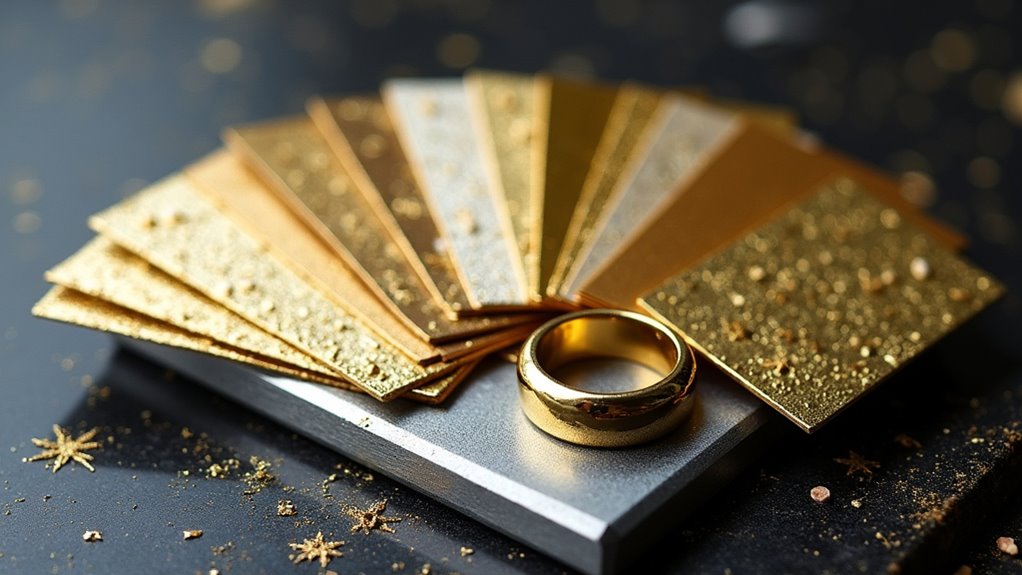
Yellow and rose 18K? Way safer bets for the sensitive souls out there.
But hey, if you’re nickel-sensitive, maybe stick to platinum or pure stuff.
What Is the Average Lifespan of Jewelry Made With 18K Alloy?
The lifespan of 18K alloy jewelry is remarkably resilient – we’re talking 20-30 years with proper care!
But let’s get real: it’s not just about time ticking by. These pieces can last generations when treated right, but abuse them and they’ll show their age faster than a teen’s TikTok career.

Daily-wear items like rings might need some TLC after 10-15 years, while special-occasion pieces could sparkle for decades without breaking a sweat.
How Should 18K Alloy Jewelry Be Stored to Prevent Tarnishing?
To prevent tarnishing, 18K alloy jewelry demands strategic storage in cool, dry environments away from direct sunlight.
The smart collector keeps pieces in airtight containers or anti-tarnish pouches – bonus points for tossing in some silica gel packets!
Each piece deserves its own soft-lined compartment to avoid scratches and tangling.

Pro tip: wipe jewelry with a soft cloth after wear to remove oils and sweat before tucking it away.
It’s not rocket science, but it works!
Is 18K Alloy Recyclable and Environmentally Friendly?
18K alloy stands as an environmental rockstar in the recycling world! The material can be endlessly recycled without losing its precious qualities, making it a sustainable champion.
While refining processes do require some energy, it’s way less intensive than mining new gold. The best part? Recycled 18K maintains identical properties to newly-mined stuff – talk about a win-win!
Its circular economy contribution helps reduce mining’s nasty environmental impacts, though some pesky solders can complicate the process.