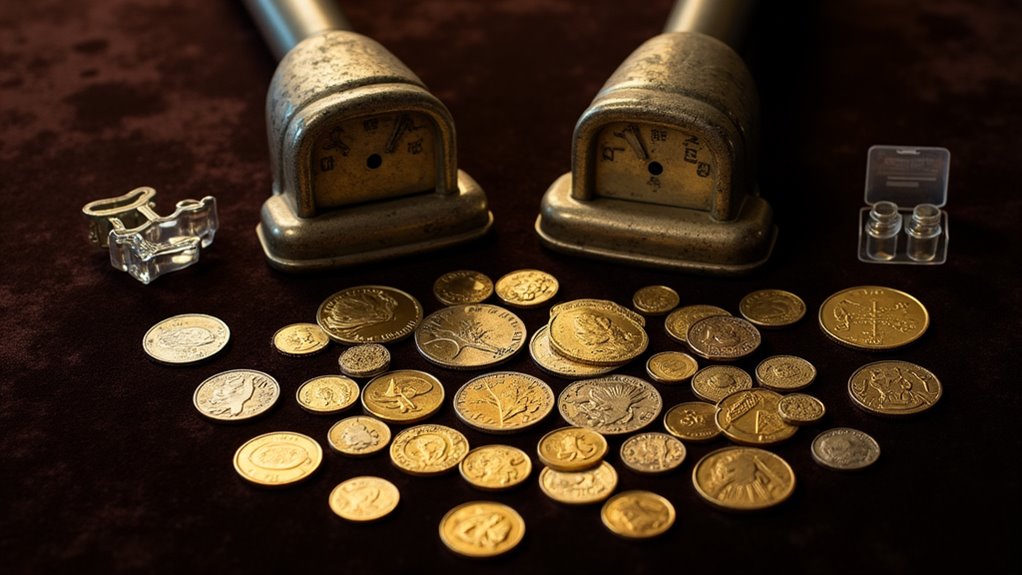
Gold, copper, and silver alloys represent humanity’s most versatile metal blends. These combinations enhance durability while creating stunning aesthetic effects – from electrum’s ancient Egyptian pyramids to modern jewelry’s rose gold allure. Mixing precise proportions yields unique properties: copper adds warmth and strength, silver contributes green hues, while gold provides that coveted precious foundation. The science behind these mashups goes way deeper than their gorgeous surface suggests.

In the dazzling world of metallurgy, few combinations have captivated humanity quite like the marriage of gold, copper, and silver alloys. From the gleaming peaks of ancient Egyptian pyramids to today’s cutting-edge electronics, these versatile metal blends have left an indelible mark on human civilization. Ancient artisans first discovered that mixing these precious metals could yield something even more extraordinary than their individual components – enhanced durability, stunning colors, and practical properties that made them indispensable for everything from jewelry to industrial applications.
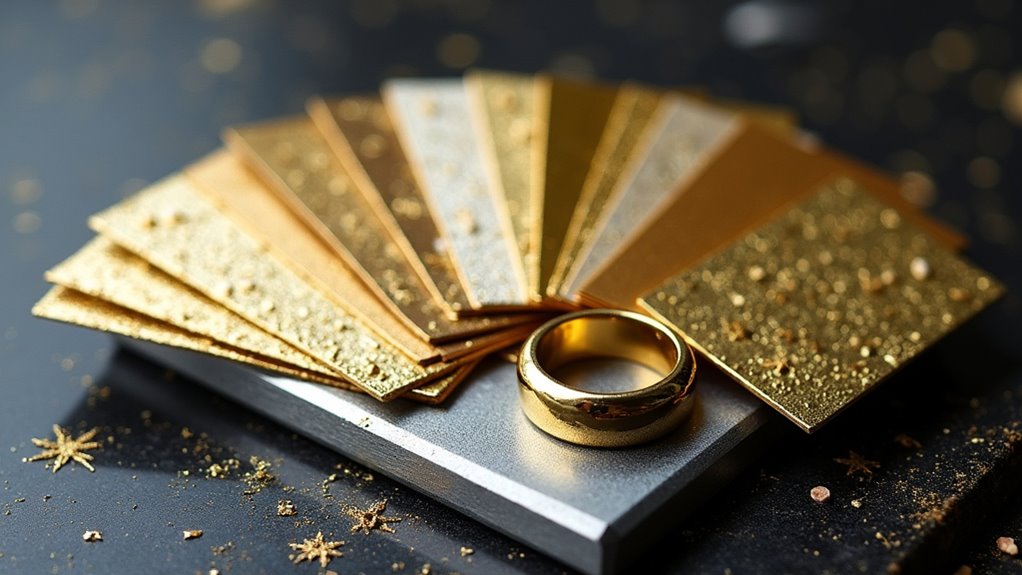
The science behind these alloys is fascinatingly complex, yet their results are undeniably gorgeous. When copper cozies up to gold, it creates a warmer, reddish hue and actually strengthens the final product. Silver, playing its part like a metallic chameleon, can transform gold into various shades of green depending on the proportion used. And let’s not forget about Spangold – that show-off of an alloy that creates a sparkly surface texture through heat treatment, like disco balls for metallurgists! Furthermore, the composition of 14k gold reveals that it contains 58.3% gold, making it a popular choice for durable and beautiful jewelry. The choice between 14k and 18k white gold often hinges on balancing budget and durability. This is why understanding alloyed gold is essential for choosing the right metal for your needs.
Mix gold with copper for strength and warmth, add silver for green hues, and watch Spangold sparkle like nature’s own disco ball.
These alloys aren’t just pretty faces, though. Their enhanced strength and durability make them workhorses in multiple industries. The ancient Egyptians knew what they were doing when they topped their pyramids with electrum, a natural gold-silver alloy that’s stood the test of time for millennia. Modern applications range from dental work (because nobody wants their gold filling to wear out) to aerospace components where reliability is literally a matter of life and death.

The real magic happens in the melting pot, where these metals dance together in precise proportions. Copper, the helpful wingman, actually lowers gold’s melting point, making it easier to work with. These metals are basically besties at the atomic level – gold and copper atoms readily swap places in the crystal lattice, forming solid solutions that would make any chemist swoon. The resulting alloys can range from 24K all the way down to those budget-friendly low-karat varieties that still manage to maintain their usefulness.
The versatility of these alloys is mind-boggling – they can be shaped into intricate designs thanks to their improved ductility and malleability, while simultaneously resisting corrosion like champions. Whether it’s yellow gold engagement rings, rose gold Apple watches, or high-tech electronic components, these alloys continue to prove their worth in countless applications. Additionally, the common gold alloys used in jewelry and industry highlight the unique characteristics of these blends.
And while some might say mixing pure gold with other metals is sacrilege, the enhanced properties and stunning aesthetic effects achieved through alloying suggest otherwise. After all, sometimes the whole truly is greater than the sum of its parts!
Frequently Asked Questions
What Temperatures Are Required to Melt These Alloy Combinations?
These alloys melt at fascinatingly different temps!
Pure metals set the ceiling – copper at 1,084°C, gold at 1,064°C, and silver chillin’ at 961°C.

Mix ’em up and things get spicy! Gold-copper combos dance between 900-1,064°C, while silver-copper blends simmer at 850-961°C.
The real party starter? Add aluminum to gold or copper, and watch temps plummet to around 550°C.
Markets aren’t the only things that get hot n’ cold!
How Can I Test the Purity of My Gold-Copper-Silver Alloy at Home?
Several home testing methods can verify alloy purity!
Basic physical checks include magnet testing (pure precious metals ain’t magnetic) and comparing weight against known standards.

A touchstone’s the old-school favorite – rub the metal and apply acid to check reactions.
But heads-up: home testing’s never 100% accurate. For the real deal, you’ll need professional assaying.
Safety first tho – those acids are no joke!
Which Alloy Blend Is Most Resistant to Tarnishing Over Time?
Looking for tarnish resistance? Pure 24K gold takes the crown, hands down.
But since that’s rarely practical, 18K gold alloys offer stellar resistance while maintaining durability.
Those fancy new silver alloys with germanium or palladium? They’re giving traditional blends a run for their money. Surprisingly tough against tarnish, even in humid conditions.
Meanwhile, copper-heavy mixes are basically asking for oxidation – they’ll turn faster than a politician’s promises.
Are These Alloy Combinations Safe for People With Metal Allergies?
Here’s the hard truth about alloy safety – it’s complicated!
Most people with metal allergies should avoid nickel-containing alloys like crazy. Even “hypoallergenic” options can be sneaky troublemakers.

Platinum’s the superstar for sensitive types, while pure metals like fine silver and titanium are solid bets.
But here’s the kicker – even high-karat gold blends might cause issues.
Best bet? Get patch-tested before dropping serious cash on that shiny new piece!
What Tools Are Needed to Work With Gold-Copper-Silver Alloy Blends?
Working with gold-copper-silver alloys requires a precise arsenal of tools.
The basics? A jeweler’s saw, various pliers, and specialized files get things moving. For joining, you’ll need soldering equipment – torch, flux, and different solder grades.

Don’t forget those finishing touches: polishing compounds, rotary tools, and burnishers make things shine!
Safety gear’s essential too – goggles and proper ventilation ain’t optional, folks. This ain’t your grandma’s craft project!