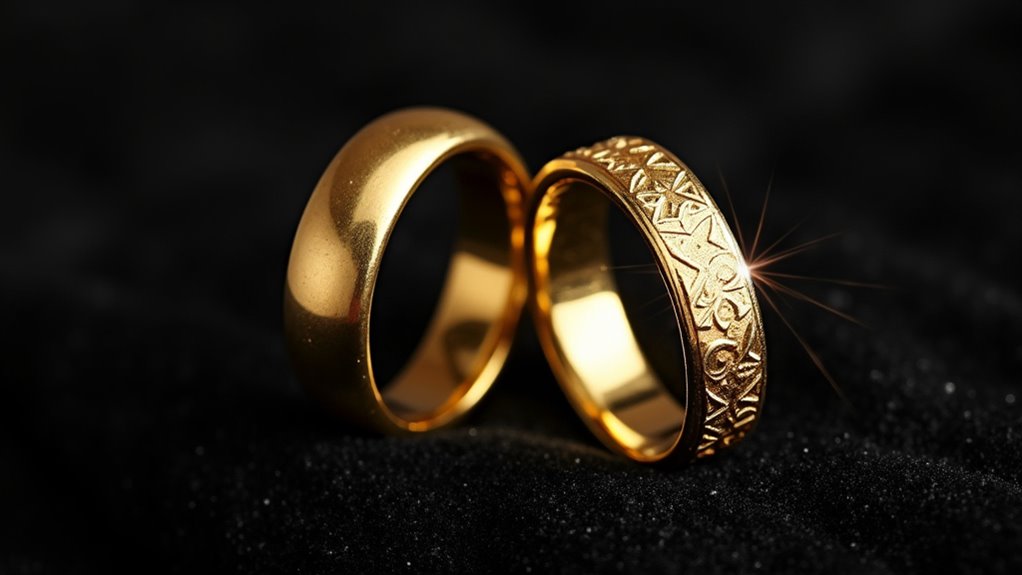
The 50-50 gold-silver alloy delivers a knockout combo of durability and luxe appeal. This super-stable blend flaunts a subtle yellow tinge that shifts between greenish-yellow and yellow-white, depending on the lighting. It’s basically the Swiss Army knife of precious metals – tough enough for electronics, yet refined enough for high-end jewelry. Less prone to tarnishing than its silver-heavy cousins, this hypoallergenic masterpiece maintains its gleam with minimal fuss. The surface barely scratches what makes this alloy truly remarkable.

While pure metals have their merits, the 50-50 gold-silver alloy stands as a demonstration of metallurgical ingenuity that’s got jewelers and tech-heads equally stoked. This perfectly balanced blend boasts a molecular weight of 15241.7384 and brings together the best of both worlds – gold’s nobility and silver’s versatility. The result? A material that’s tougher than either of its parent metals, yet maintains the workability that craftsmen dream about.
The alloy’s physical properties are nothing short of remarkable. It conducts heat and electricity like a champ, while sporting a subtle yellow tinge that sits right in the sweet spot between gold’s warmth and silver’s cool brilliance. What’s really interesting is how it forms these super-stable crystalline phases – AuAg, Au6Ag, and Au2Ag – creating a material that’s as reliable as it is beautiful. This balance of gold’s composition and silver enhances its overall durability, making it comparable to 18k yellow gold alloy in terms of strength. Additionally, it can be soldered using gold solder, making it ideal for intricate jewelry designs.
In the world of applications, this 50-50 powerhouse is crushing it. Jewelry makers can’t get enough of its balanced aesthetics and surprising durability. Electronics manufacturers are all over it for electrical contacts, and precision instrument makers love how it refuses to corrode while maintaining stellar conductivity. It’s like the Swiss Army knife of precious metal alloys – versatile enough to handle whatever you throw at it.

The alloy’s aesthetic game is strong too. It rocks this gorgeous shift from greenish-yellow to yellow-white, depending on how the light hits it. Plus, it’s way less drama-prone than higher-silver alloys when it comes to tarnishing. Polish it up, and you’ve got yourself a surface that gleams like nobody’s business.
From a market perspective, this stuff is pure gold (well, half gold, technically). It’s become the go-to choice for folks who want that precious metal cachet without breaking the bank. Sure, its value does the cha-cha along with gold and silver prices, but its maintenance costs are basically nothing, which keeps accountants happy. Additionally, this alloy’s composition aligns with common gold alloys used in various applications, showcasing its versatility.
The safety profile is where this alloy really shines. It’s totally chill with skin contact, making it perfect for jewelry that’s meant to be worn day in, day out. You don’t need a hazmat suit to handle it, though you might wanna keep it away from strong acids (but hey, that’s just common sense). It’s even got hypoallergenic properties, which is a fancy way of saying it won’t make you break out in hives.
Watch out though – while it’s harder than pure gold or silver, it’s still soft enough to scratch if you’re not careful. But treat it right, and this alloy will keep looking sharp long after lesser metals have given up the ghost. It’s basically the perfect marriage of durability and sophistication, proving that sometimes, the best things in life really are 50-50.
Frequently Asked Questions
Can 50-50 Gold-Silver Alloy Be Used for Medical Implants?
The 50-50 gold-silver alloy shows promising potential for medical implants, combining antimicrobial properties with structural stability.

It releases silver ions to fight bacteria while maintaining biocompatibility thanks to gold’s stabilizing effect. Research indicates lower toxicity than pure silver implants, with solid mechanical performance for joint replacements and vascular devices.
However, more clinical trials are needed to fully validate long-term safety – the jury’s still out on this glittery medical marvel!
What Is the Tarnish Resistance of 50-50 Gold-Silver Alloy?
The 50-50 gold-silver alloy offers moderate tarnish resistance – better than pure silver but not quite gold-level impressive.
While the gold content helps shield against corrosion, the silver portion can still react with sulfur compounds in the air.

Environmental factors like pollution and humidity can speed up tarnishing.
Manufacturing processes matter too – rapid cooling creates a more uniform structure that’s more resistant to tarnish than slow-cooled variations.
How Does This Alloy Compare to Traditional Sterling Silver?
The 50-50 gold-silver alloy outshines sterling silver in several key areas.
It’s considerably harder, more scratch-resistant, and requires way less babysitting when it comes to maintenance.
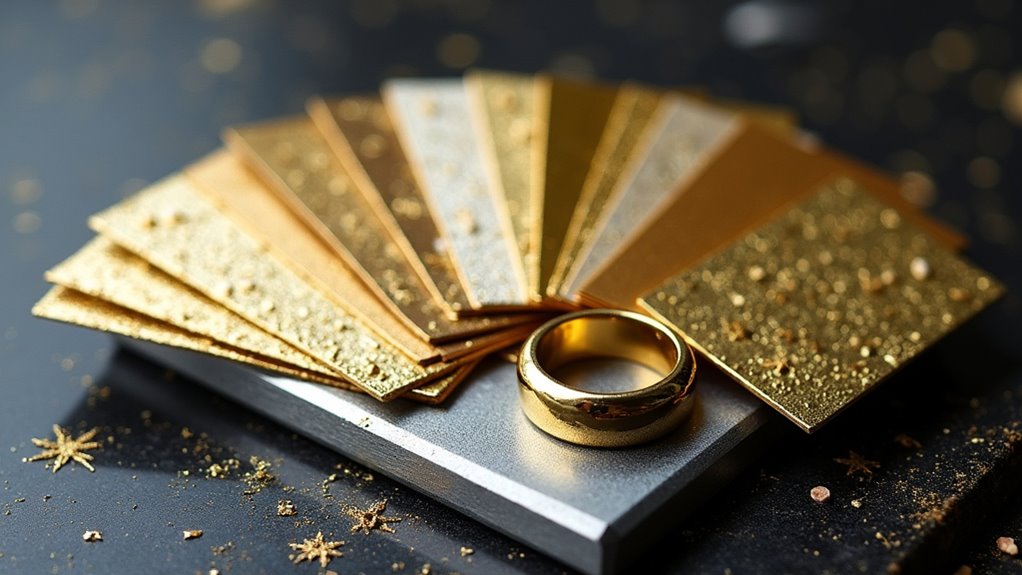
While sterling throws tantrums with tarnishing and oxidation, this alloy stays pristine thanks to gold’s stubborn refusal to react.
Sure, it’ll cost ya more upfront, but you’re getting a metal that’s basically the overachiever of the jewelry world – tougher, prettier, and far less high-maintenance.
Is 50-50 Gold-Silver Alloy Suitable for Engagement Rings?
While the champagne hue of 50-50 gold-silver alloy might catch your eye, it’s not exactly engagement ring material.
Let’s be real – this soft blend warps faster than a vinyl record in summer heat! The alloy’s tendency to scratch, bend, and tarnish makes it a risky choice for daily wear.

Sure, it’s budget-friendly, but who wants a ring that needs babysitting? Better stick to tried-and-true platinum or 14K gold for that special finger.
Can This Alloy Be Recycled and Refined Back Into Pure Metals?
The 50-50 gold-silver alloy can absolutely be recycled and refined back to its pure components.
Through electrolytic refining (hello, Moebius process!), these precious metals break up like a failing marriage. The process is surprisingly efficient – both metals maintain their original properties without degradation.
While it’s not exactly a walk in the park, modern refineries can achieve near-perfect separation. The real kicker? It’s way more eco-friendly than mining new metals!