Rose gold isn’t just regular gold with a pink paint job – it’s a sophisticated alloy that blends pure gold with copper and sometimes silver to create that signature rosy hue. What makes it truly remarkable? This 19th-century innovation packs more durability than its yellow and white gold cousins, thanks to its copper content, while flaunting a romantic, vintage-meets-modern vibe that’s captured the luxury market. The deeper story of rose gold‘s composition reveals even more suprising facts about this blushing beauty.

When it comes to the rosy warmth of that coveted pink metal, there’s no beating around the bush – rose gold is absolutely an alloy. This stunning blend combines pure gold with copper and sometimes silver, creating that signature pinkish hue that’s been turning heads since its 19th-century Russian debut. Back then, they called it “Russian gold,” which sounds way fancier than “pink-ish metal mixture,” dont’cha think?
The magic happens in the proportions – we’re talking 37-75% gold (the star of the show), mixed with 25-43% copper (the blushing beauty contributor), and sometimes a dash of silver (0-20%) to keep things interesting. It’s like a metallurgical cocktail where copper plays wingman to gold’s leading role, creating that signature warmth that makes rose gold pieces absolutely irresistable. Understanding the different types of gold alloys is essential for selecting the perfect piece, as each alloy brings its unique characteristics to the table.
Rose gold’s rosy magic comes from mixing gold’s star power with copper’s blushing charm – a perfect metallurgical dance of precious metals.
What’s particularly fascinating about this alloy is its surprising durability. While pure gold is basically the drama queen of precious metals – beautiful but high-maintenance – rose gold’s copper content gives it some serious backbone. It’s tougher than both yellow and white gold, and unlike its prissy cousin white gold, it doesn’t need that fancy rhodium plating to maintain its looks. In fact, its remarkable strength makes it a popular choice for jewelry designs that require both elegance and robustness! Talk about low-maintenance luxe!

The popularity of rose gold has exploded beyond just engagement rings and wedding bands (though let’s be real – it’s absolutely crushing it in the romance department). These days, you’ll spot this blushing beauty in everything from high-end smartphones to designer home decor. Its versatility is pretty much unmatched, working its magic across both vintage-inspired pieces and ultra-modern designs with equal finesse.
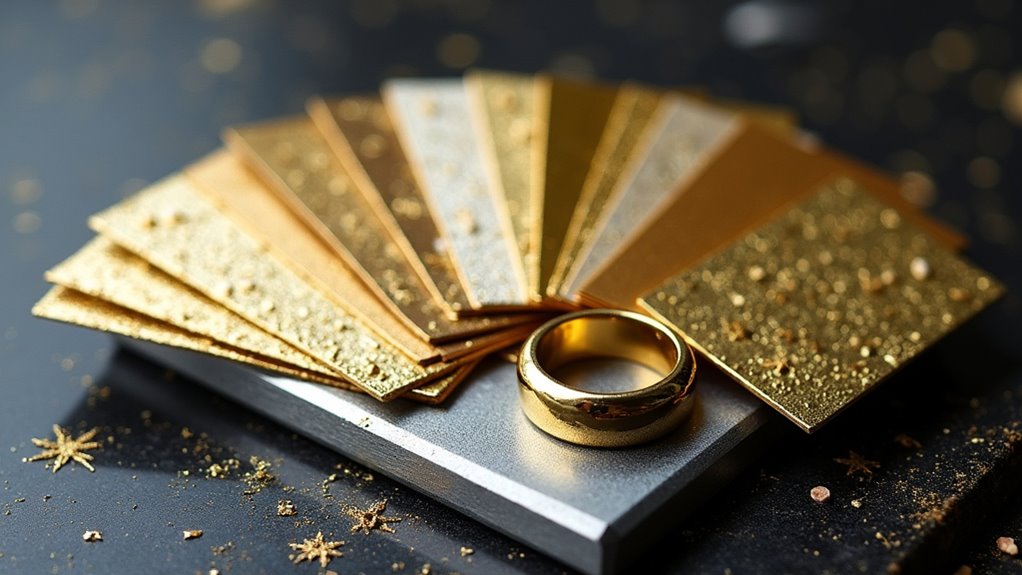
On the technical side, rose gold typically comes in 18k (75% gold) or 14k (58.3% gold) variations. Each composition creates slightly different shades – more copper equals redder tones, while more silver lightens things up for a softer pink. And while it might need an occasional polish to keep its shine, it’s remarkably resistant to tarnishing. Not bad for a metal that basically looks like it’s perpetually blushing!
The alloy’s enduring appeal lies in its ability to complement virtually any skin tone while maintaining its precious metal status. It’s become a symbol of sophisticated luxury that somehow manages to feel both timeless and contemporary. Whether it’s gracing the finger of a bride-to-be or adding warmth to a statement piece, rose gold continues to prove that sometimes, the best things in life come with a hint of pink. Additionally, rose gold is one of the common gold alloys that showcases how varying compositions can significantly influence both aesthetic and functional properties.
Just remember – if anyone tries telling you its pure gold with a natural pink tint, they’re probably also trying to sell you oceanfront property in Arizona.
Frequently Asked Questions
How Much Does Rose Gold Jewelry Typically Cost Compared to Regular Gold?
Rose gold jewelry typically costs 5-25% less than traditional white gold pieces, making it a wallet-friendly yet luxe option.
Its copper-heavy composition keeps production costs down, while skipping that pesky rhodium plating white gold demands.

But here’s the kicker – yellow gold and rose gold? Pretty much neck-and-neck price-wise.
The real savings show up in maintenance costs, since rose gold’s durability means less trips to the jeweler.
Can Rose Gold Jewelry Cause Skin Allergies or Irritation?
Yes, rose gold can definitely trigger skin reactions, primarily due to its copper content and possible nickel traces.
While pure gold rarely causes issues, it’s those pesky alloyed metals that spark the drama. Think redness, itching, and that oh-so-annoying rash.

The higher the gold content (18k+), the lower the risk – but hey, even premium pieces aren’t immune.
Pro tip: anyone with sensitive skin should opt for higher-purity rose gold or consider alternative metals.
Does Rose Gold Tarnish or Fade Over Time?
Rose gold doesn’t tarnish like typical metals – it’s got a secret weapon in that pure gold content!
While the copper component might develop a subtle patina over time (thanks, oxidation!), it’s more of a character-building exercise than a deal-breaker.
The darkening’s usually superficial and can actually enhance its vintage appeal.
Pro tip: proper storage and occasional cleaning keeps that signature pink hue poppin’.
No major fade drama here, folks!
Which Gemstones Pair Best With Rose Gold Jewelry?
Rose gold’s warm blush tones pair magnificently with a range of gemstones!
Classic diamonds remain the go-to choice, creating timeless elegance, while morganite and peach moonstone enhance its romantic vibe.

For drama, rubies and garnets create stunning contrast, while emeralds offer unexpected luxury.
The real showstoppers? Black diamonds and Paraiba tourmaline make ultra-modern statements.
Pro tip: soft pink stones like morganite are having their moment rn with rose gold!
Is Rose Gold More Difficult to Repair Than Yellow Gold?
Rose gold definitely throws more curveballs during repairs than its yellow cousin.
That higher copper content? It’s a real headache for jewelers! The metal’s harder nature makes reshaping tricky, and don’t even get us started on the soldering process – one wrong temperature move and boom, you’ve got color issues.

While yellow gold plays nice during fixes (thanks to its malleability), rose gold demands expert handling to maintain its signature blush.
Talk about high maintenance!