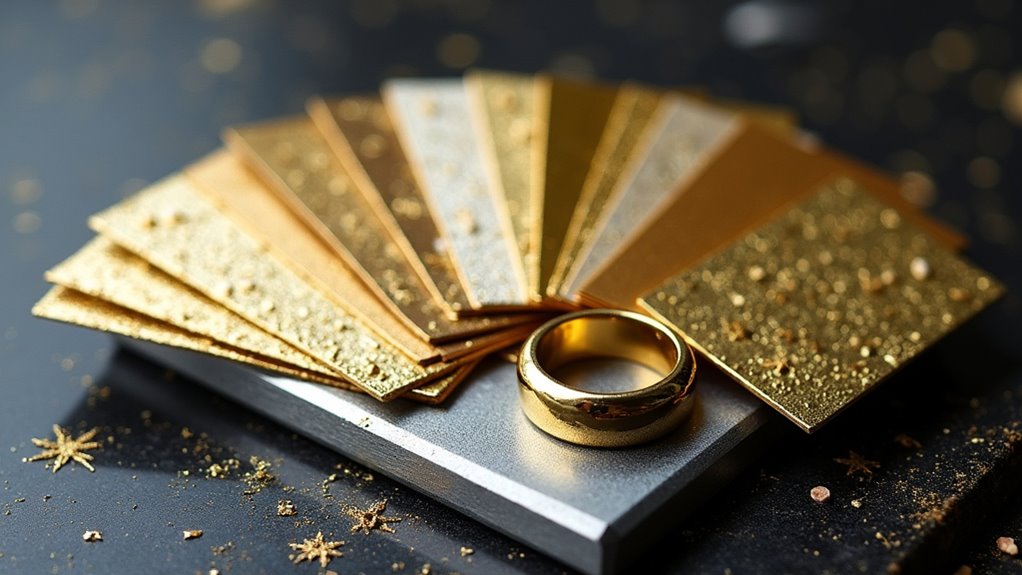
14K rose gold solder blends gold, copper, and trace metals to create that signature rosy glow jewelers can’t get enough of. With melting points between 710-830°C, this finicky material demands serious heat control and pristine surface prep. Modern alternatives like laser welding are gaining traction, but traditional soldering remains irreplacable for repairs and custom work – despite its notorious “sludgy” flow characteristics. The real magic happens when you master its temperamental nature.

When jewelers need that perfect rosy glow in their soldered joints, 14K rose gold solder steps up to the plate – though it’s not exactly playing nice. This fussy yet vital material, primarily composed of gold, copper, and trace amounts of silver or zinc, demands serious attention to detail and a steady hand. The high copper content that gives rose gold its signature blush also makes it a temperamental beast during soldering operations.
The melting point range of 710°C to 830°C keeps jewelers on their toes, requiring precise heat control that’d make a chef jealous. Its notorious “sludgy” flow characteristics don’t help matters – imagine trying to paint with honey that’s having an identity crisis. While easy-flow variants exist, they often compromise that coveted color match, leaving jewelers to choose between workability and aesthetics.
Color matching is where things get really interesting. The rosy tone, thanks to that hefty copper content, plays hard to get when it comes to achieving seamless joins. Adding zinc or silver to improve flow properties can result in yellowish tints that stick out like a poorly concealed secret. Some manufacturers have developed plumb solders that better match specific karats, but repair solders in lower karats might still betray their presence with subtle color variations. 14k white gold alloy is also a popular choice for jewelers seeking different aesthetic options.

Modern alternatives are muscling their way into the scene. Laser welding and pulse arc welding technologies are becoming the go-to solutions for those seeking perfect color consistency, effectively telling traditional soldering to take a hike. Single-piece casting designs cleverly sidestep the whole soldering drama altogether, though they’re not always practical for complex pieces. Additionally, using safer alternatives like those found in gold processing can enhance the overall safety of the refining process, promoting ethical gold mining practices that reduce environmental impact.
Health-conscious jewelers are increasingly reaching for cadmium-free options, recognizing that breathing toxic fumes isn’t exactly a career-enhancing move. Proper ventilation and safety equipment aren’t just suggestions – they’re vital companions when working with these copper-heavy alloys. Borax-based fluxes have become the safer choice for preventing oxidation, proving that sometimes the old ways are still the best ways. Additionally, understanding the common gold alloys used in jewelry can help artisans make informed decisions when selecting solder materials.
Success with 14K rose gold solder demands meticulous surface preparation and application techniques. Thorough cleaning is non-negotiable, and thick paste flux becomes your best friend in the battle against oxidation. Pre-cutting solder pieces helps avoid those awkward moments of fumbling with too much or too little material.
Mastering rose gold solder requires obsessive prep work: pristine surfaces, generous flux, and pre-measured pieces are your non-negotiable allies.
The finale involves careful post-soldering treatments – polishing and annealing – to guarantee the finished piece looks like it grew that way naturally. Despite its challenges, 14K rose gold solder remains a fundamental player in jewelry manufacturing and repair. Its ability to join rose gold components while maintaining that sought-after pink hue makes it irreplaceable, even if it does make jewelers earn their keep.

With proper technique and patience, this demanding material can produce results that are worth every moment of frustration.
Frequently Asked Questions
Can I Use Rose Gold Solder on White or Yellow Gold?
While technically possible, using rose gold solder on white or yellow gold is like mixing oil and water – it’s asking for trouble!
The color mismatch will stick out like a sore thumb, and the different metal compositions can lead to weak joints.
Plus, who wants that awkward pinkish tinge showing up on their pristine white or yellow gold piece?

Pro’s strongly recommend sticking to matching solders for each metal type.
Its just common sense, folks!
How Long Does Rose Gold Solder Typically Take to Flow?
Rose gold solder typically flows within 10-15 seconds once it hits the sweet spot temperature (700-800°C).
But hey, it’s not that simple! Thickness of the metal piece can stretch that time to 30 seconds or more.
The real kicker? Plumb solders flow faster – sometimes in just 5-8 seconds.
Just don’t expect miracles if you’re working with chunky pieces or haven’t prepped your surface properly. Temperature control is everything!
What Safety Precautions Should I Take When Soldering Rose Gold?
When soldering rose gold, safety’s no joke! Proper ventilation is absolutely critical – these fumes are nasty business.
Smart jewelers rock safety glasses and heat-resistant gloves (those burns are brutal). Keep a fume extractor humming nearby, and for heaven’s sake, don’t skimp on that respirator mask.

Chemical fluxes need respect too – they’re basically liquid attitude.
And please, keep that fire extinguisher handy. Those temps aren’t playing around!
Does Rose Gold Solder Change Color Over Time?
Yes, rose gold solder definitely changes color with time – it’s just part of the deal.
The main culprit? Zinc in the solder mix, which loves turning things brassy-yellow.

Add in some environmental factors like moisture and chemicals, and you’ve got a recipe for color shifts.
Even worse? Those pesky oxidation reactions keep happening long after the initial soldering job.
Regular maintenance helps, but let’s face it – change is inevitable in this metals game.
Can Rose Gold Solder Be Used for Repairing Antique Jewelry?
Rose gold solder can be used on antique jewelry, but it’s a tricky business.
While it offers stellar strength for structural repairs, the high heat required can be brutal on delicate vintage pieces.
Smart jewelers opt for lower-temp varieties or laser soldering to protect those precious historical details.
Cold-joining alternatives like rivets or epoxy are sometimes better choices.
Bottom line: it’s possible, but demands serious expertise and a super-careful approach.