Gold alloy composition charts map out the precise metal cocktails behind different jewelry types. Yellow gold blends Au with silver and copper for that classic butter-gold look, while rose gold cranks up the copper for romantic pink hues. White gold? That’s where palladium and platinum crash the party. The charts reveal how mixing metals transforms pure gold’s 24k softness into wearable masterpieces. There’s a whole world of golden alchemy waiting to unfold.

The dazzling world of gold alloys isn’t just about mixing metals – it’s a delicate dance of chemistry that transforms plain old Au into something extraordinary. Gold alloys represent a fascinating blend of science and artistry, where pure gold meets various metals to create compositions that range from practical to breathtaking.
While 24-karat gold might sound impressive at 99.9% purity, it’s actually too soft for most practical applications, making alloying an absolute requirement.
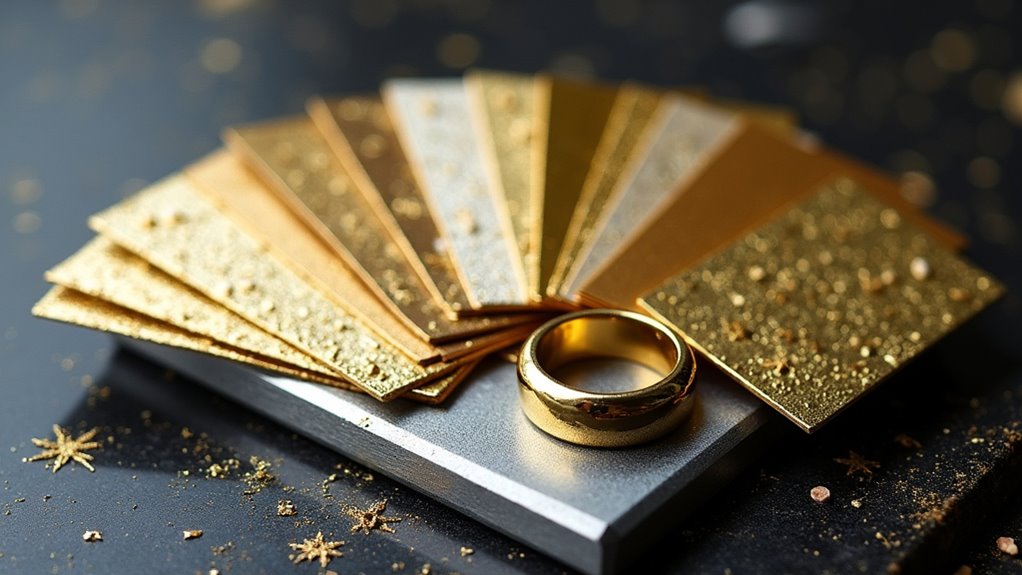
The composition chart reveals yellow gold as the traditional favorite, with 22k versions typically containing 91.67% gold mixed with silver and copper in a carefully orchestrated ratio. This classic combo delivers that warm, buttery glow we’ve all come to associate with “real gold.” The 50 gold 50 silver alloy showcases a unique color that merges the richness of gold with the brightness of silver, making it an intriguing choice for jewelry design.
Yellow gold’s timeless allure comes from its perfect blend of gold, silver and copper, creating that iconic warm glow everyone recognizes.

But here’s where it gets interesting – add more copper to the mix, and suddenly you’re dancing in rose gold territory, with its seductive pink-to-red spectrum that’s been turning heads in luxury markets. Common gold alloys like rose gold are particularly popular for engagement rings due to their romantic hue.
White gold tells a different story altogether, requiring either palladium or platinum to achieve its contemporary silvery appearance. Most white gold alloys clock in at 75% gold content, with the remaining quarter composed of whitening metals plus a dash of zinc for good measure.
Fun fact: that bright white finish everyone loves? It’s actually thanks to a rhodium plating that jewelers apply as a finishing touch.
Green gold might sound like something from a sci-fi novel, but it’s absolutely real and absolutely gorgeous. By playing with silver-to-copper ratios, metallurgists can coax out subtle verdant hues that range from barely-there mint to distinct olive tones.

Though some older formulations used cadmium for enhanced green coloration, modern compositions typically skip this toxic troublemaker.
The mechanical properties of these alloys vary dramatically based on their composition. Lower karat alloys might not sound as prestigious, but they’re actually tougher than their higher-karat cousins. This makes them ideal for pieces that need to withstand daily wear and tear, while maintaining enough precious metal content to justify their “fine jewelry” status.
Each alloying metal brings its own personality to the party. Silver brightens and softens, copper toughens and warms, while palladium and platinum add sophistication and durability.
Even zinc, the unsung hero of many alloy compositions, plays an essential role in enhancing hardness and workability. Together, these metals create a spectrum of possibilities that extends far beyond simple aesthetics – though let’s be honest, the stunning visual results don’t hurt either.

The science behind these compositions might be complex, but the results speak for themselves in jewelry cases and luxury displays worldwide. Whether it’s the warm embrace of traditional yellow gold or the contemporary appeal of white gold, these carefully crafted alloys continue to captivate and inspire, proving that sometimes, the whole truly is greater than the sum of its parts. Additionally, the composition of 14k gold, which includes 58.3% gold content, offers a balance of durability and luxury that appeals to many jewelry enthusiasts.
Frequently Asked Questions
How Does Gold Alloy Composition Affect the Metal’s Resistance to Tarnishing?
Gold alloy’s tarnish resistance hinges on its composition – more gold means less drama with corrosion.
Alloys packing over 50% gold (18+ karats) basically laugh in the face of tarnish, while their lower-karat cousins can’t escape the inevitable darkening.
Base metals like copper and silver are the real troublemakers here, forming those pesky sulfide films.
But throw in some palladium or platinum, and you’ve got yourself a tarnish-fighting superhero of an alloy.
Can Gold Alloys Be Recycled and Melted Down for New Jewelry?
Gold alloys can absolutely be recycled and transformed into fresh jewelry pieces. The process preserves the metal’s quality completely – no degradation whatsoever!
Refiners melt down old pieces, assess purity levels, and create new alloys that match jewelry-grade standards. It’s actually becoming a huge trend, with nearly 30% of global gold supply coming from recycled sources.
The coolest part? Nobody can tell the difference between recycled and newly-mined gold in finished pieces.
Which Gold Alloy Composition Is Best for People With Metal Allergies?

For those battling metal allergies, higher karat gold alloys (18k-24k) are the safest bet.
Pure 24k gold offers zero reactivity but sacrifices durability.
The sweet spot? 18k nickel-free compositions that swap problematic metals for palladium or platinum.
These alloys maintain structural integrity while minimizing allergic reactions.

Pro tip: white gold lovers should specifically request nickel-free versions, as traditional white gold’s nickel content is a common troublemaker for sensitive skin.
How Does Climate Affect the Durability of Different Gold Alloy Compositions?
Climate plays a huge role in how gold alloys hold up! High humidity‘s a real pain, making copper-mixed alloys tarnish faster and coastal air absolutely wreaks havoc with salt-induced corrosion.
Temperature swings aren’t any kinder – they can trigger micro-cracks in some alloys.
But here’s the kicker: platinum or palladium mixed alloys laugh in the face of harsh weather! They’re basically climate-proof, while lower-karat pieces with copper content struggle in humid conditions.
Are There Specific Tools Required for Working With Different Gold Alloys?
Different gold alloys absolutely demand their own specialized tools.
High-karat yellow gold needs delicate touches with softer buffing compounds, while those stubborn white gold pieces require diamond-tipped tools and higher heat for soldering.
Rose gold’s tougher copper content means you’ll need hardened steel tools – no shortcuts!
Jewlers must match their equipment to each alloy’s unique properties, from laser welders for platinum-rich pieces to gentle files for green gold’s softer nature.