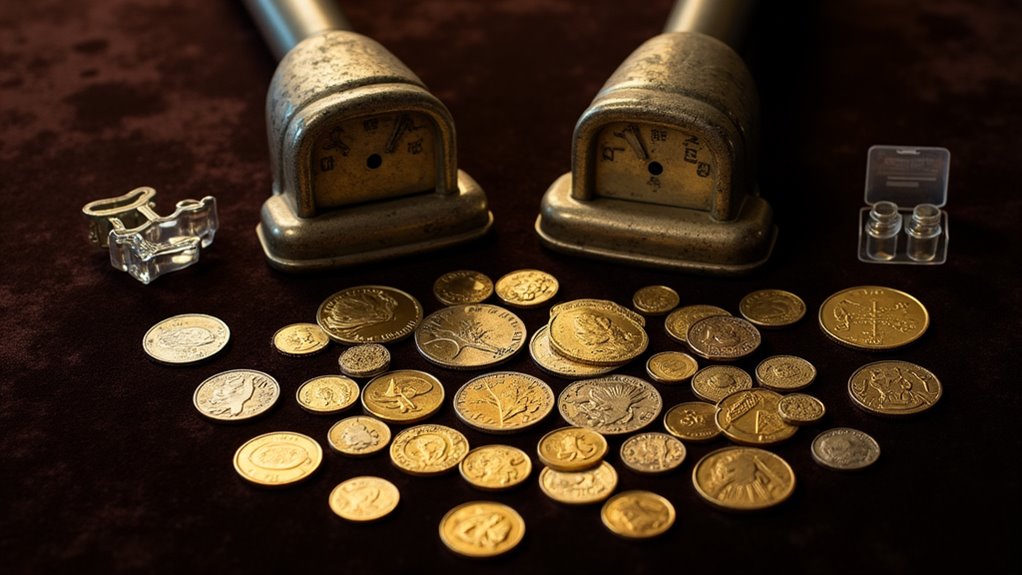
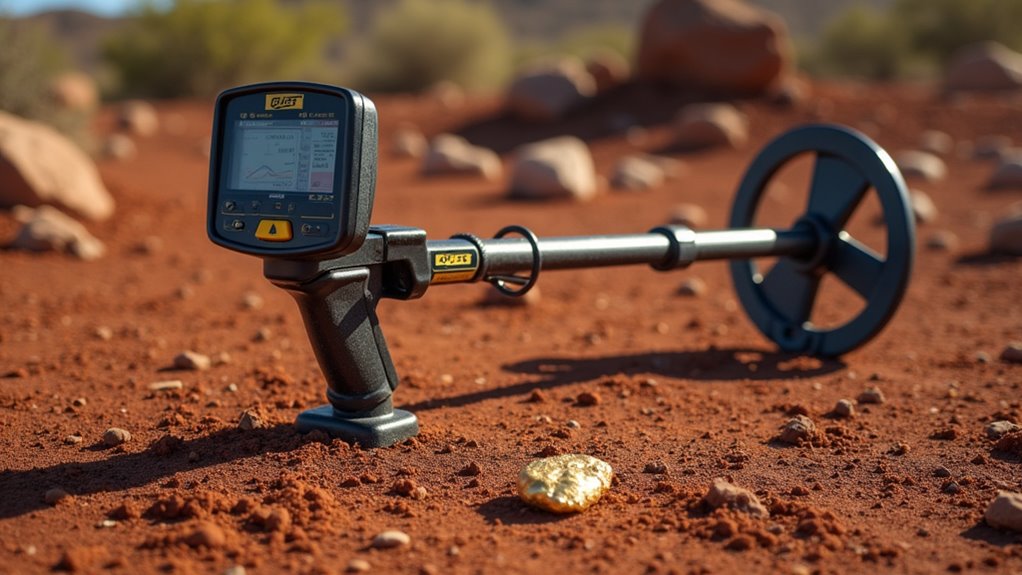
Modern spectrometry techniques have transformed gold testing into a high-tech science. X-Ray Fluorescence (XRF) leads the pack, delivering non-destructive results in just 8 minutes. Portable solutions bring lab-grade accuracy to the field, while ICP-MS digs deep for trace elements. The traditional touchstone method hasn’t vanished – it’s gotten a modern makeover with spectrometry validation. These innovations merge old-school charm with cutting-edge precision, and there’s plenty more beneath the surface.

The glitter of gold might catch your eye, but it’s science that tells you if it’s legit. Modern spectrometry techniques have revolutionized how we test precious metals, making the process faster, more accurate, and increasingly sophisticated than ever before. At the forefront of these innovations stands X-Ray Fluorescence (XRF) Spectrometry, a non-destructive method that’s basically giving traditional testing methods a run for their money.
The real game-changer in the industry has been Energy-Dispersive XRF (EDXRF), which is like XRF’s cooler, more talented cousin. With customizable excitation settings and fancy beam filters, it can analyze everything from tiny earrings to chunky gold bars in about 8 minutes flat. And yeah, it’s got cameras for precise alignment – because apparently, even gold needs its perfect selfie angle. Additionally, crucibles and furnaces are essential tools that help refine the gold after testing. This method is particularly beneficial for yield maximization in small-scale refiners. Moreover, it eliminates the need for harmful chemicals like cyanide and mercury that are traditionally used in gold processing.
EDXRF testing brings laboratory precision to your jewelry counter, serving up detailed analysis faster than you can say “karat weight”
For those who can’t quite let go of tradition, there’s the touchstone method with spectrometry verification. It’s like having your cake and eating it too – you get the satisfying tactile experience of rubbing gold on stone and applying acid, but with the added security blanket of spectometric validation. It’s perfect for jewelers who need portability but don’t wanna compromise on accuracy.

Then there’s the heavy-hitter: Inductively Coupled Plasma Mass Spectrometry (ICP-MS). This bad boy can detect trace elements that other methods wouldn’t spot if they were wearing neon signs. It’s expensive and complicated, sure, but when you absolutely need to know what’s in your gold down to the smallest impurity, ICP-MS is your go-to method.
Speaking of fancy tech, Laser Ablation ICP-MS (LA-ICP-MS) takes things to another level entirely. It’s like having a microscopic gold detective that can create 3D maps of trace elements within samples. While it might be overkill for your average jewelry store, it’s invaluable for forensic analysis and studying high-value artifacts.
Optical Emission Spectroscopy (OES) rounds out the lineup with its ability to handle large batch testing. It’s the workhorse of manufacturing environments, requiring some sample prep but delivering reliable results that keep gold standards in check. Meanwhile, portable spectrometry solutions have made their way into the market, bringing laboratory-grade testing capabilities to the field.
The evolution of these testing methods reflects our growing obsession with precision in precious metal analysis. While traditional methods still have their place, modern spectrometry techniques have transformed gold testing from an art into a science – though let’s be honest, there’s still something satisfyingly old-school about watching acid react on a touchstone. Furthermore, the integration of these advanced spectrometry techniques into gold refining processes enhances metal recovery efforts, ensuring that valuable materials are reclaimed efficiently.

Whether you’re a major refinery or a small jewelry shop, these advances guarantee that when it comes to gold testing, you’ve got options that are literally worth their weight in gold.
Frequently Asked Questions
How Accurate Are Spectrometry Results Compared to Traditional Acid Testing Methods?
Spectrometry crushes traditional acid testing when it comes to accuracy – it’s not even close!
While acid tests hover around 85-90% accuracy with a hefty dose of human error, XRF spectrometry delivers knockout results up to 99% accurate.
Plus, it doesn’t destroy your precious metals like those nasty acids.

Sure, you’ll need a clean surface and proper calibration, but the digital precision beats squinting at acid reactions any day of the week.
What Is the Minimum Sample Size Needed for Accurate Spectrometry Testing?
The minimum sample size for accurate spectrometry testing depends on gold particle distribution and desired precision levels.
Generally, samples should contain at least 20 gold particles for reliable results, with typical commercial testing using up to 500g per sample.
Lower-grade ores (below 1g/t) need larger samples to reduce error margins.
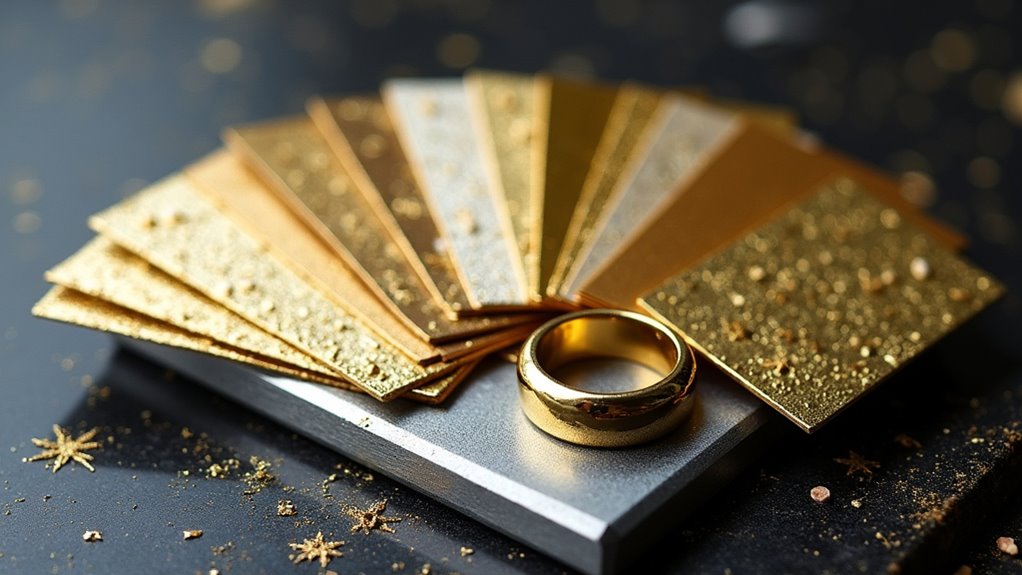
For high-precision analysis targeting 95% confidence levels, the sample must maintain sufficient mass to reflect natural gold distribution patterns.
Can Spectrometry Detect Gold Plating Thickness on Jewelry Items?
Spectrometry absolutely nails gold plating thickness measurements.
Using XRF and EDXRF technology, these methods detect even microscopically thin gold layers without scratching up your precious pieces. The X-rays penetrate the surface, revealing not just thickness but also purity and composition of underlying metals.
It’s scary-accurate stuff – we’re talking precision down to the micron!

Best part? Your jewelry stays pristine throughout the whole process.
How Long Does a Complete Spectrometry Analysis Typically Take?
Spectrometry analysis times vary wildly depending on the technique used.
EDXRF, the gold standard (pun intended!), takes around 8 minutes per sample. Portable XRF analyzers? Lightning-fast at under 2 minutes.
ICP-MS gets down to microsecond-level readings but needs more setup time. OES systems demand several minutes of patience for their detailed results.

Lab prep time can add extra minutes or hours – because precision ain’t quick, folks!
What Happens if Other Precious Metals Are Mixed With Gold?
When precious metals like platinum or palladium mix with gold, they create some seriously interesting effects.
These alloys often show enhanced durability and resistance to wear, though they’ll typically display different colors – platinum makes it whiter, while palladium gives it a cooler tone.
Here’s the kicker: these fancy combos can actually boost the alloy’s market value, unlike when mixing with non-precious metals.
But they’ll still affect gold’s natural properties, like its melting point and conductivity.