Rare gold coins fetch astronomical prices at auction based on a perfect storm of factors. Condition and grading by top services like PCGS drive values sky-high, while historical significance and provenance add serious premium potential. Market dynamics create fierce bidding wars, especially during economic uncertainty when investors scramble for tangible assets. Limited mintage and survival rates send prices soaring – just ask anyone who’s tried nabbing a pristine 20 Francs Napoleon. The rabbit hole of numismatic valuation goes deeper than most realize.

Countless rare gold coins command jaw-dropping prices in today’s market, but determining their true value involves a complex dance of factors that goes way beyond just the gold content. The valuation process at prestigious auction houses requires meticulous examination of multiple elements, each contributing to the final hammer price that makes collectors’ hearts skip a beat.
Rarity and scarcity stand as paramount factors in determining a coin’s worth. When fewer specimens exist, whether due to limited mintage or poor survival rates, prices tend to skyrocket. Take the legendary 20 Francs Gold Napoleon – its limited availability and historical significance make collectors practically foam at the mouth when one surfaces at auction. Additionally, ancient gold coins from various civilizations often hold a unique allure that further drives up demand. Countries with significant gold reserves often see their coins gaining additional prestige, as the metal’s value is inherently tied to national wealth.
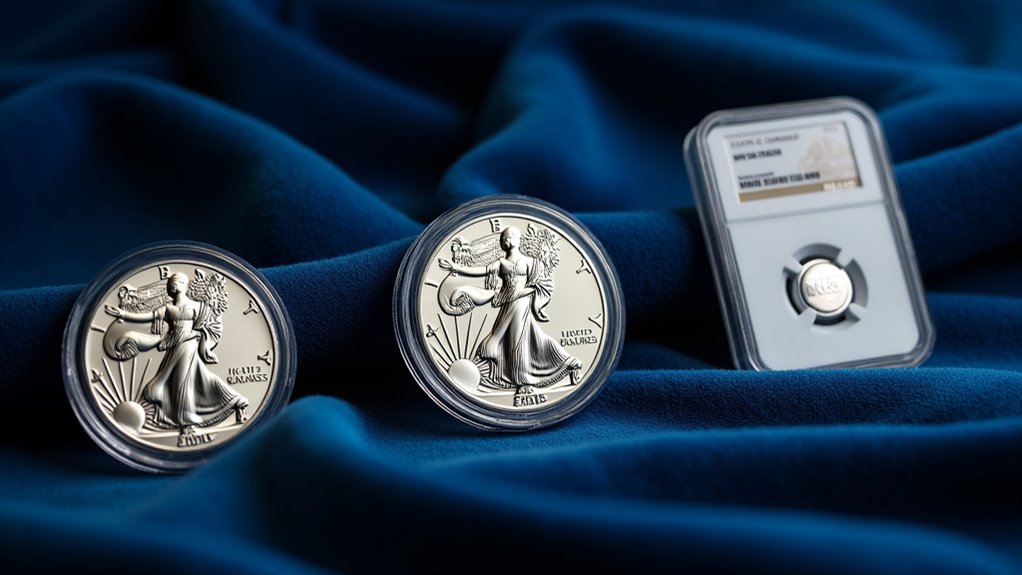
The condition of these numismatic treasures can make or break their value. Professional grading services like PCGS and NGC scrutinize every microscopic detail, from luster to strike quality. A single grade difference (like MS-65 versus MS-64) can mean thousands of dollars in value. And heaven forbid if someone tried to clean that tarnish off – they might as well have thrown money down the drain.
A single misstep in cleaning or handling can devastate a rare coin’s value – wise collectors leave preservation to the experts.

Historical significance plays a fascinating role in valuation. Coins minted during pivotal moments – wars, coronations, or revolutions – tend to carry premium price tags. These pieces aren’t just currency; their metal surfaces whisper stories of triumph, tragedy, and transformation that collectors find irresistible. Coins with rich historical narratives often attract collectors seeking to connect with the past, making them even more valuable.
The intrinsic value of the precious metal content provides a baseline, but it’s just the starting point. Pure gold pieces typically command higher prices than their alloyed counterparts, with current market rates for gold setting the foundation. However, it’s the combination of rarity, condition, and historical significance that truly sends values into the stratosphere.
Market dynamics and collector demand create a fascinating push-pull effect on valuations. When renowned collections hit the auction block, competition can become fierce, driving prices to unexpected heights. Economic uncertainty often amplifies this effect, as investors seek tangible assets with proven track records.
Provenance adds another layer of intrigue to the valuation process. Coins with documented ownership histories, especially those linked to prestigious collections or historical figures, often achieve premium prices. A certificate of authenticity from a respected institution can mean the difference between a good price and an exceptional one.

The timing of an auction can markedly impact final values. During periods of economic instability or when gold prices surge, rare coins often experience increased demand from both collectors and investors seeking safe-haven assets. These market conditions can create perfect storms where values exceed even the most optimistic pre-auction estimates. Additionally, many collectors view numismatics as a wise investment choice, further driving up interest and prices in rare coins.
Frequently Asked Questions
Where Can I Get My Rare Gold Coins Professionally Authenticated?
Rare gold coins can be authenticated by two industry heavyweights: NGC and PCGS – they’re the rockstars of coin grading.
These pros use everything from high-tech XRF analysis to good ol’ fashioned magnification to separate the real deals from the fakes.
Heritage Auctions and Premier Coin Galleries also offer authentication services with a side of market insight.
Just don’t trust that sketchy dealer behind the mall – stick with the big names!
How Should I Store My Rare Gold Coins to Maintain Value?
Serious collectors know proper storage is everything!
Gold coins need a stable environment – think temperature-controlled spaces with low humidity (def not that damp basement).
Smart move: grab acid-free holders and airtight capsules that’ll keep those beauties pristine.

Always handle by the edges w/ cotton gloves (no greasy fingerprints!).
A quality fireproof safe or bank deposit box is clutch – these babies are too precious for rookie storage mistakes!
What Insurance Options Are Available for Valuable Coin Collections?
Specialized coin insurance throws collectors a lifeline beyond basic homeowner’s coverage.
These policies pack a punch – covering theft, damage, and (get this) even mysterious disappearances! The good stuff comes with zero-deductible options and agreed-value coverage that won’t depreciate.

Smart collectors snag policies that protect coins in transit, at shows, or chillin’ in safety deposit boxes.
Pro tip: Regular appraisals keep coverage up-to-date as values skyrocket!
Which Rare Gold Coins Have Shown the Highest Appreciation Over Time?
The 1933 Saint-Gaudens Double Eagle takes the crown, skyrocketing from $7.59M to a mind-boggling $18.8M in just 19 years.
Talk about a golden rocket! The Brasher Doubloon ain’t far behind, climbing from a measly $625K in ’81 to $9.36M by 2021.

Even “smaller” players like the 1848 CAL. quarter eagle have exploded in value – reaching $552K.
These coins aren’t just rare; they’re basically printing money for their lucky owners!
Are Online Coin Auctions as Reliable as Traditional Auction Houses?
Online coin auctions still wrestle with trust issues that traditional houses solved ages ago.
While digital platforms offer killer convenience and global reach, they cant quite match the confidence of handling coins in-person at established auction houses.
Sure, online marketplaces pack serious security features – ratings, escrow, guarantees – but dodgy listings and delivery snafus remain headaches.
Traditional houses edge ahead on reliability, especially for high-value pieces where authenticity is everything.