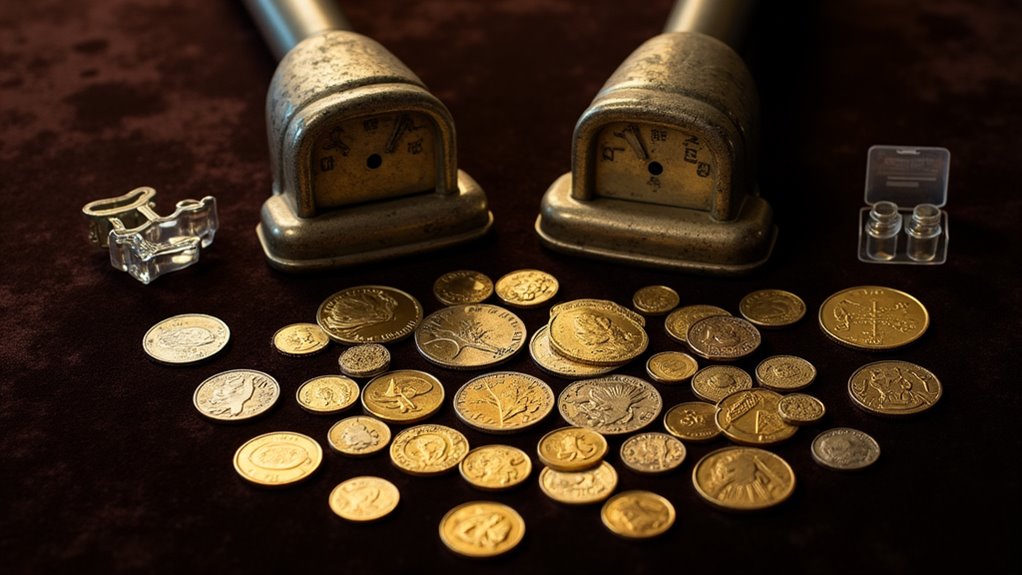
Chinese Gold Pandas pack serious investment punch since their 1982 debut. These stunners feature fresh panda designs yearly, with that iconic Temple of Heaven backing them up. Their shift to metric weights in 2016? Total game-changer. Collectors go nuts for rare editions – like that insane 1997 1kg piece with just 58 minted. Premium prices? Worth it. Market’s hot in Asia and North America, while ethical mining practices keep adding sparkle. There’s way more beneath this coin’s shiny surface.

Treasure hunters, take note – Chinese Gold Pandas stand as one of numismatics’ most enchanting achievements. Since their 1982 debut, these gleaming beauties have captured collectors’ hearts with their annually-changing panda designs and that iconic Temple of Heaven gracing the obverse. What started as a modest offering in four sizes exploded into a numismatic phenomenon that’s got investors and collectors absolutely loosing their minds.
The pandas’ evolution reads like a masterclass in precious metal innovation. In ’83, they added that adorable 1/20 oz size, completing the classic lineup that would dominate for decades. But here’s where it gets spicy – in 2016, they threw tradition out the window and went full metric! No more troy ounces; we’re talking grams now, baby. And while some traditionalists clutched their pearls, the market just shrugged and kept right on climbing. This shift reflects the broader growing tech demand for gold across various industries, influencing precious metal trends. Gold’s historical role as a hedge against economic uncertainty also adds to its allure. Additionally, the ethical gold mining practices have become increasingly important to ensure that the gold used in these coins comes from sustainable sources.
Let’s talk value, cause that’s what makes collectors’ hearts race faster than a caffeinated trader on options day. These coins routinely command premiums that make other bullion pieces look like pocket change. The proof sets from ’86 to ’92? Pure gold (pun absolutely intended). And don’t even get us started on that insanely rare 1997 1 kg edition – only 58 pieces ever struck. Talk about exclusive!

The absence of mint marks adds this delicious layer of mystery, despite production spanning facilities across Beijing, Shanghai, Shenyang, and Shenzhen. It’s like a numismatic treasure hunt, with subtle design variations being the only breadcrumbs leading back to their origin. Collectors live for this stuff!
What really sets these pandas apart is their dual personality – part bullion, part numismatic superstar. While they’ll always be tied to spot gold prices (duh), their collectible appeal often sends values soaring way beyond mere metal content. Low mintage numbers compared to their Western counterparts? Check. Annual design changes that keep collectors coming back for more? Double check. Special editions that make grown collectors weep with joy? Triple check!
The market’s particularly hot in Asia and North America, where serious collectors view complete sets as the holy grail of panda collecting. And while some might balk at the premiums these coins command, smart money knows that rarity plus craftsmanship equals investment potential. Just don’t come crying when that pristine 1982 1 oz you passed on doubles in value – again.
China’s strategy of limiting supply to boost demand? Brilliant, if slightly maddening for collectors trying to complete their sets. But that’s part of the thrill, isn’t it? In the wild world of precious metals, Chinese Gold Pandas remain one of the few series that consistently delivers both substance and style. Just try not to get too obsessed – we’ve seen what panda fever can do to otherwise rational investors! Moreover, the environmental impact of gold mining has prompted a shift towards more sustainable practices in recent years.
Frequently Asked Questions
How Can I Spot Fake Chinese Gold Pandas?
Spotting fake Chinese Gold Pandas ain’t rocket science – but you gotta know the drill!

Genuine coins pack that sweet 99.9% purity stamp and razor-sharp panda details that’ll make your eyes pop.
Pro tip: weight’s gotta match specs perfectly (30g for modern 1-ouncers).
Getting cozy with NGC or PCGS certification is smart, cuz those pros don’t mess around.
Magnet test’s a no-brainer too – real gold tells magnets to take a hike!
What Causes the Milk Spots on Some Chinese Pandas?
Those pesky milk spots on Chinese Pandas? Blame it on manufacturing gremlins!
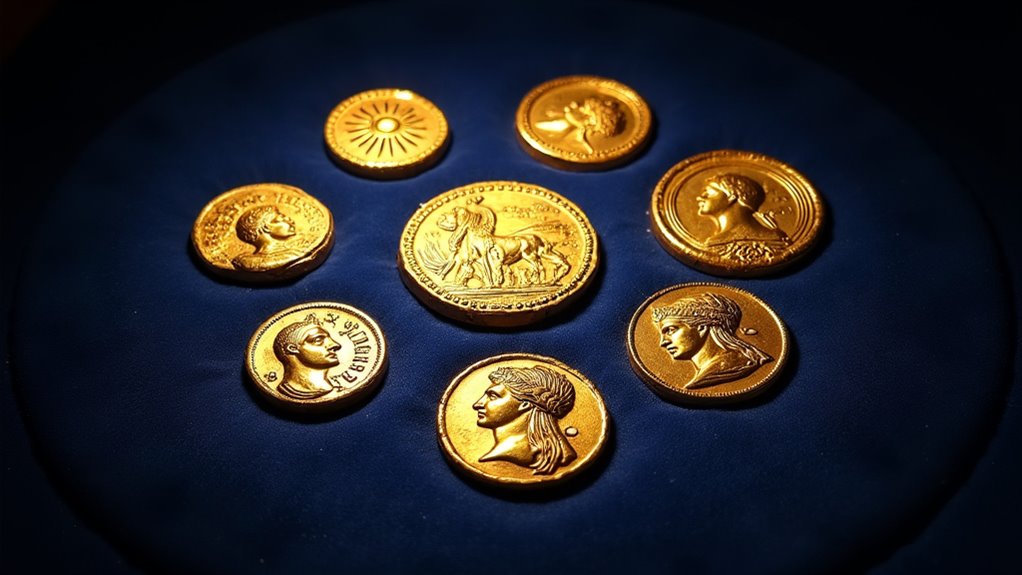
The main culprits are residual cleaning chemicals that get trapped during the minting process. When planchets aren’t rinsed properly, those sneaky solvents get baked right into the surface during annealing.
Over time – boom! – white spots appear. While they’re mostly an aesthetic nuisance, collectors aren’t exactly thrilled when their pristine Pandas develop these unwanted beauty marks.
Should I Keep Chinese Pandas in Their Original Mint Capsules?
Absolutely critical to keep those Pandas snug in their original mint capsules!
It’s not just about looking pretty – these protective bubbles are basically value vaults. Breaking the seal is like throwing money down the drain, since collectors go nuts for untouched specimens.

Plus, those pristine capsules are basically authenticity badges from the Chinese Mint itself.
Raw handling? That’s asking for trouble with milk spots, fingerprints, and grade-crushing marks.
Why Do Some Chinese Pandas Have a Frosted Appearance?
The frosted appearance on Chinese Pandas is a deliberate minting technique that creates stunning visual depth.
It’s achieved through specialized processes that give certain areas – typically the outer ring or background – a matte, textured finish.

This contrasts beautifully with the polished, mirrored surfaces elsewhere on the coin.
The Shenzhen Guobao Mint mastered this effect, which not only enhances the coin’s aesthetics but also helps authenticate genuine pieces.
Pretty clever stuff!
Are Proof Chinese Gold Pandas Worth More Than Regular Issues?
Proof Chinese Gold Pandas typically fetch markedly higher prices than their regular-issue counterparts.

The stark difference comes down to their mirror-like finish, meticulous craftsmanship, and seriously limited mintages. While regular Pandas might sell for 2-3x melt value, proof versions can command jaw-dropping premiums of 5x or more!
Their distinctive “P” mark and pristine presentation make em’ absolute knockouts for serious collectors who’re willing to shell out the big bucks.