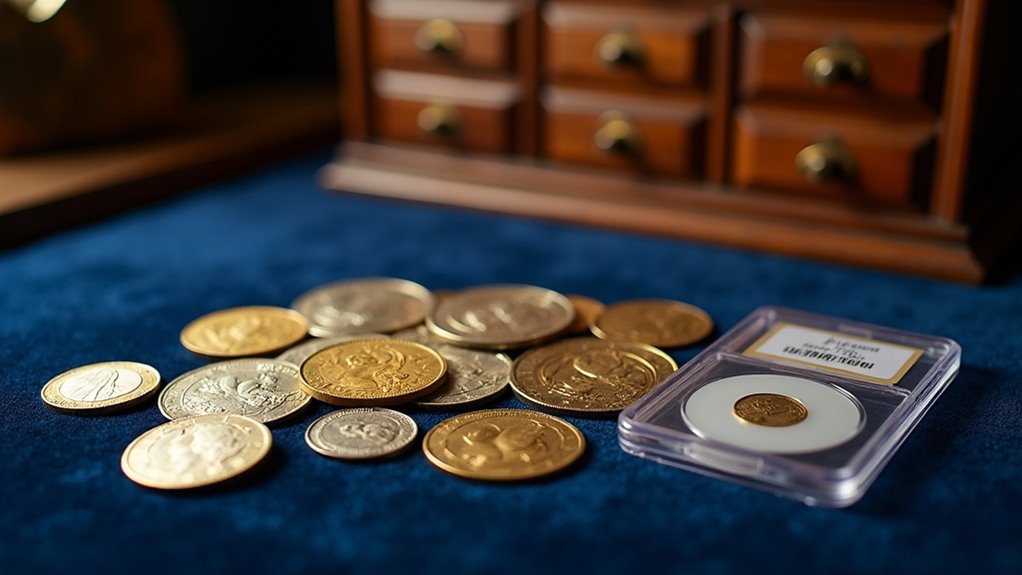

Numismatic investing ain’t your typical buy-low-sell-high game. While rare coins can skyrocket beyond their metal value, this wild-west market demands serious expertise to avoid costly blunders and sophisticated fakes. The good news? Authenticated pieces, especially ancient Greek and pre-1933 U.S. gold coins, have shown remarkable resilience during financial storms. Success requires patience, research, and solid dealer connections – but passionate collectors often score the juiciest returns. The deeper you go, the more treasures you’ll unearth.
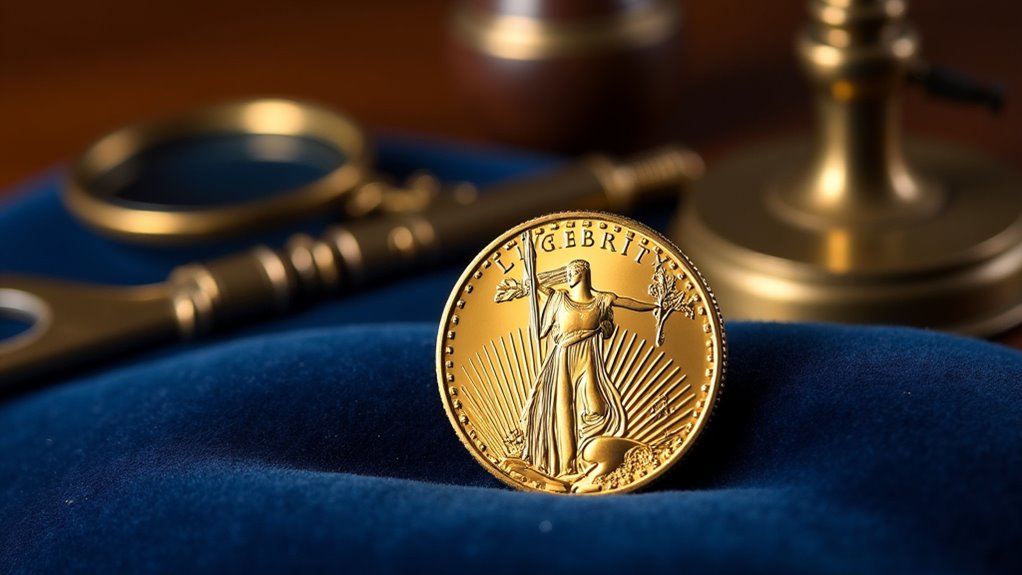
While traditional investors might yawn at the sight of old coins, numismatics has emerged as a fascinating investment frontier that’s got serious collectors and savvy investors alike doing double-takes. Unlike standard precious metal investments, numismatic pieces pack a historical and cultural punch that can send their values soaring way beyond mere metal content. We’re talking serious money here – some rare coins fetch price tags that’d make your grandmother’s pearls look like pocket change.
But hold your horses before diving headfirst into this glittering pool. Numismatics isn’t your typical buy-low-sell-high game. The market’s about as regulated as a wild west saloon, and counterfeiters are getting craftier than ever. You’ll need sharp eyes, deep knowledge, and probably a few hard lessons before you can spot the difference between treasure and trash. And don’t even think about skipping authentication – PCGS and NGC are your new best friends if you’re serious about this game. Knowing how to spot fake gold coins can save you from costly mistakes. Professional grading from top certification services can also significantly enhance a coin’s market value, making it crucial to understand market trends to maximize your investments.
Tread carefully in numismatics – this wild frontier demands expertise, patience, and a keen eye for authenticity to avoid costly mistakes.
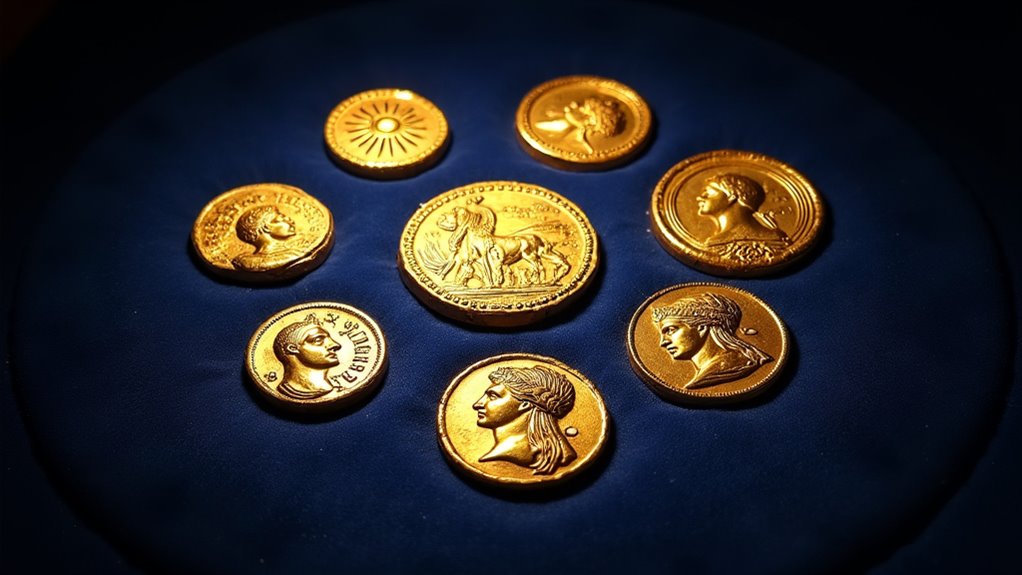
The beauty of numismatics? It’s practically immune to stock market drama. While Wall Street’s having a meltdown, rare coins just sit there, smugly holding their value. Ancient Greek coins, pre-1933 U.S. gold pieces – they’ve weathered more financial storms than most modern banks have seen birthdays. Plus, there’s something oddly satisfying about holding actual history in your hands instead of staring at another digital portfolio. In fact, certain U.S. gold coins have proven to be remarkably resilient investments over time.

Market dynamics are getting spicier by the year. Online auctions have blown the doors wide open, turning what was once a dusty dealer’s market into a global trading floor. Celebrity sales create feeding frenzies, and commemorative events can send prices through the roof faster than you can say “mint condition.”
But here’s the kicker – liquidity can be trickier than a three-dollar bill. Finding the right buyer for your ultra-rare 1804 silver dollar might take more patience than waiting for your teenager to clean their room.
Smart money in numismatics knows the secret sauce: research, authentication, and networking with reputable dealers. The returns can be eye-popping when you nail all three. But remember, this isn’t some get-rich-quick scheme – it’s more like a sophisticated treasure hunt that requires actual expertise. The market’s seen steady growth over decades, but it’s the passionate collectors who typically score the biggest wins.
Bottom line? Numismatics can be a brilliant investment play – if you’ve got the patience of a saint and the eye of an eagle. It’s not for the faint of heart or the looking-for-quick-buck crowd. But for those willing to put in the work, understand the risks, and maybe geek out a little over historical significance, it might just be worth its weight in… well, you know the rest.
Frequently Asked Questions
Where Can I Get My Coins Professionally Graded?
The major players in professional coin grading are PCGS, NGC, ANACS, and ICG – each with their own specialties and quirks.
These grading titans will examine, authenticate, and “slab” coins in tamper-proof holders. Collectors can submit directly or through authorized dealers.

Just don’t expect bargain-basement prices – professional grading ain’t cheap!
But for serious collectors who want their precious metal babies authenticated and protected, it’s worth every penny.
How Do I Protect My Rare Coins From Environmental Damage?
Protecting rare coins demands hardcore dedication to environmental control.
Collectors gotta maintain temps between 60-70°F with humidity at 30-50% (or those babies’ll corrode!).
Non-PVC holders are vital – those cheap plastic ones’ll destroy coins faster than a rookie’s first trade.
Air purifiers? Essential. UV-blocking? You bet.
And please, for Pete’s sake, wear cotton gloves or use tongs – those finger oils are coin-killers!
Regular inspection’s key to catching issues b4 they become disasters.
What Tools Do I Need to Start Collecting Coins?

Starting a coin collection requires some essential gear – and no, a piggy bank won’t cut it!
Beginners should grab a quality magnifying glass (10x-20x), protective gloves (cotton or nitrile), and proper storage holders. Toss in a basic reference guide (like the trusty “Red Book”), and you’re golden!
Don’t forget decent lighting – those tiny mint marks won’t spot themselves.
Pro tip: invest in coin-specific tongs; your fingerprints are persona non grata on these beauties!
Which Coin Collecting Clubs or Organizations Should I Join?

The American Numismatic Association (ANA) stands out as the go-to club for serious collectors – it’s basically coin collecting royalty!
Local clubs offer that essential face-to-face networking magic, while specialized groups like the Early American Coppers Club cater to niche interests.
Pro tip: start with a local club to test the waters, then graduate to the ANA for those sweet member perks like convention access and that killer numismatic library!
How Can I Spot Counterfeit Coins When Buying From Dealers?
Spotting counterfeits requires a multi-pronged defense!
Collectors should examine coins under bright lighting, checking for wonky surface textures and misaligned designs. A jeweler’s loupe reveals those pesky casting marks – dead giveaways of fakery.

The real pros weigh suspicious pieces on precise scales (0.01g accuracy, baby!) and compare dimensions to known specs.
When in doubt, trusted dealers offer XRF testing to verify metallic composition.
Trust but verify – that’s the golden rule!