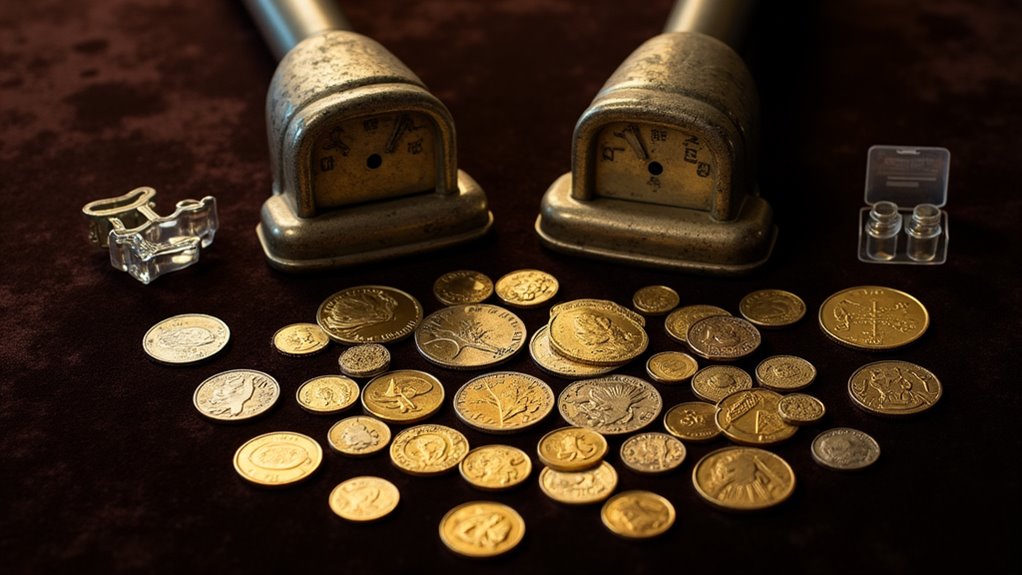
Bullion and numismatic coins couldn’t be more different in the precious metals game. Bullion‘s straight-up about metal content – what you see is what you get, fluctuating with spot prices like a rollercoaster. Numismatic coins? Now those are the divas of the coin world, commanding premium prices for their historical swagger and rarity factor. While bullion plays it safe as an economic hedge, numismatic pieces demand specialized knowledge and careful handling to maximize their potential. There’s way more to this story than meets the eye.

Money talks, but coins speak two distinct languages in the precious metals world. When comparing bullion and numismatic coins, we’re fundamentally looking at two completely different investment vehicles that just happen to share the same parking lot.
Precious metals may share a common ancestry, but bullion and numismatic coins are distant relatives with very different personalities.
Bullion coins are the straightforward, no-nonsense players in the precious metals game – their value tied directly to their metal content like a puppy to its leash. These mass-produced beauties dance to the tune of spot prices, making them perfect for investors who want their wealth preservation served straight up, no chaser. Gold coin collecting has become increasingly popular among investors seeking to diversify their portfolios, particularly in the context of historical periods that capture the imagination.
But numismatic coins? Oh boy, these are the complicated cousins who went to art school and came back with a philosophy degree. Their value isn’t just about the metal – it’s wrapped up in a delicious layer of historical significance, rarity, and condition that makes collector’s hearts go pitter-patter. While bullion prices bounce around like a caffeinated kangaroo following daily metal market swings, numismatic coins maintain their cool, relatively unphased by such mundane matters.

When it comes to liquidity, bullion coins are basically the fast food of precious metals – quick, easy, and available worldwide. Slap ’em on the market, and boom – you’ve got yourself a deal near spot price.
Numismatic coins, however, require a bit more finesse. You can’t just waltz into any dealer and expect top dollar – these babies need specialized markets and buyers who actually understand why that tiny scratch makes all the difference.
The investment horizon tells an interesting tale too. Bullion coins are perfect for those “I might need this next year” scenarios, serving as a hedge against economic chaos and inflation. Meanwhile, numismatic coins are playing the long game, potentially appreciating in value while telling fascinating stories about history that bullion just can’t match.
It’s like comparing a savings account to a vintage wine collection – both store value, but one’s definitely more interesting at dinner parties.

Storage requirements showcase another stark contrast. Bullion coins are pretty chill – throw ’em in a safe, and they’re good to go.
But numismatic coins? These prima donnas demand special handling, specific humidity levels, and protective cases that cost more than some people’s first car. The premiums reflect this difference too – bullion coins stick close to spot price, while numismatics command hefty markups that would make a luxury car dealer blush.
The bottom line? Bullion and numismatic coins serve different masters in the precious metals universe. One’s the reliable workhorse focused on pure value, while the other’s the sophisticated collector’s piece that might just make you rich – if you know what you’re doing and have the patience of a saint. Understanding coin values is crucial for navigating this intricate world.
Choose wisely, fellow metals enthusiasts!
Frequently Asked Questions
Which Type of Coin Is Easier to Sell in Emergency Situations?
Bullion coins are hands-down the go-to choice for emergency liquidation. Their standardized weight and design make em’ a no-brainer when you need quick cash.
Unlike their fancy numismatic cousins (which require specialized buyers and lengthy authentication), bullion pieces can be sold practically anywhere. The spot price tells ya exactly what they’re worth – no haggling needed!
Plus, dealers snatch these up faster than free donuts at an office party.
How Do Storage Requirements Differ Between Bullion and Numismatic Coins?
Storage needs are worlds apart for these metallic siblings!
Bullion coins can tough it out in basic home safes – they’re the low-maintenance cousin, caring mostly about staying dry and secure.
But numismatics? Total divas! They demand museum-grade climate control, individual protective cases, and specialized vaults.

While bullion’s chillin’ in plastic tubes, numismatic pieces need white-glove treatment with strict humidity control and zero environmental fluctuations.
Talk about high maintenance!
Are There Tax Implications When Investing in Different Types of Coins?
Tax implications hit different when you’re playing the coin game!
Bullion and numismatic coins both face that brutal 28% long-term capital gains rate (ouch!) for holdings over a year.

But here’s where it gets spicy – certain bullion coins like Gold Eagles can dodge those collector rates if they’re chillin’ in your IRA.
Meanwhile, numismatic pieces? They’re basically stuck with collectible status, and those pesky transaction costs only offset gains when you sell.
Which Coin Type Better Preserves Value During Economic Downturns?
Bullion coins emerge as the clear winner for preserving value during economic storms.
Their direct link to precious metal spot prices creates a natural hedge against market chaos.

While numismatic coins might look pretty in a display case, their collector-dependent values can take a nosedive when wallets tighten.
Talk about awkward timing!
Bullion’s lower premiums and higher liquidity make it the go-to choice when the economy hits the fan.
No contest here, folks.
How Do Authentication Processes Compare Between Bullion and Numismatic Coins?
Authentication processes for bullion and numismatic coins couldn’t be more different!
Bullion relies on sleek tech – think laser scans and fancy BullionDNA systems that verify metal content in seconds.
Meanwhile, numismatic authentication’s got that old-school vibe – expert eyes scrutinizing every tiny detail, historical cross-referencing, and microscopic analysis.
Bullion’s all about quick, standardized checks, while numismatics demands painstaking individual attention.
One’s a sprint, the other’s definitely a marathon!