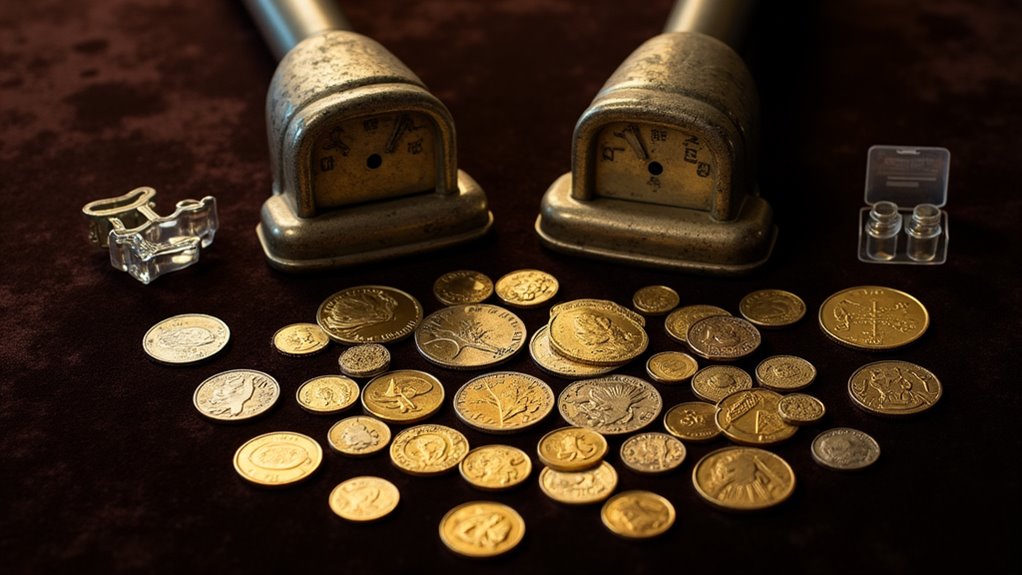
The British Numismatic Treasury revolutionized Britain’s monetary landscape through radical financial policies and crisis management. From the game-changing 1844 Bank Charter Act to John Bradbury’s gutsy Treasury notes during WWI, this powerhouse institution kept the nation’s economy afloat when things got dicey. Working alongside the British Numismatic Society, they’ve preserved countless historical coins that tell the wild story of Britain’s economic evolution – and boy, do these pieces have some tales to tell!

As Britain grappled with financial upheavals throughout its history, the British Numismatic Treasury emerged as a pivotal force in shaping the nation’s monetary landscape. This fascinating institution, deeply entwined with government monetary policies, has been instrumental in managing British coins, medals, and paper money while maintaining economic stability through various crises that rocked the nation’s foundations.
The watershed moment came with the 1844 Bank Charter Act, which established the Bank of England‘s monopoly on banknote issuance – a total game-changer for British currency! But it wasn’t until World War I that things got really interesting. When gold started playing hide-and-seek during the war, John Bradbury swooped in with an absolute genius move: Treasury notes. These “Bradbury notes” weren’t just any old paper – they were the government’s answer to a serious cash crunch, and boy, did they deliver!
The post-war period saw Warren Fisher strutting his stuff, orchestrating what might be the smoothest conversion in monetary history from Treasury notes back to Bank of England notes. Meanwhile, Britain’s adoption of the gold standard wasn’t just showing off – it actually stabilized prices globally and had other countries taking notes (pun totally intended!). In fact, the strategic importance of gold reserves has been recognized by central banks worldwide as a reliable asset during economic uncertainty, reflecting the ongoing significance of national reserves in global finance. This recognition highlights how central banks’ gold holdings function as a buffer against inflation and economic instability.

The Treasury’s collaboration with the British Numismatic Society has been nothing short of epic, creating a powerhouse of research and preservation that’s still going strong today. Speaking of those Treasury notes – they’re absolute works of art! Initially handwritten promissory notes that you could exchange for gold (fancy, right?), they evolved into these gorgeous pieces that numismatists would literally kill for today. Well, maybe not literally, but you get the point. Their exit from circulation after WWI has made them even more valuable to collectors who’re obsessed with pieces from pivotal economic eras.
The British Numismatic Society deserves major props for keeping the flame alive. These folks are like the Indiana Jones of the coin world, documenting everything from die-links to super-rare currency types. They’ve created this incredible platform where both members and non-members can geek out over numismatic research – and trust me, these people know their stuff!
The Treasury’s impact on Britain’s economic and cultural landscape can’t be overstated. During financial crises, these innovative monetary solutions weren’t just about keeping the economy afloat – they were about maintaining public confidence when everything else seemed shaky. The Treasury’s influence extended far beyond British shores, helping shape international monetary systems through the gold standard. Additionally, the strategic value of national gold reserves has become increasingly evident in today’s global economy, underscoring the importance of the Treasury’s historical role.
Today, these historical pieces serve as fascinating windows into Britain’s industrial and economic evolution, reminding us how far we’ve come in the world of currency and finance.
Frequently Asked Questions
How Do I Determine if My Old British Coin Is Genuine?
Determining a British coin’s authenticity requires expert-level scrutiny!

Start with visual examination – check those design details, lettering sharpness, and edge milling patterns.
Magnet tests reveal true metal composition (most legit coins ain’t magnetic), while weight and size measurements should match historical records.
For absolute certainty, professional appraisers can authenticate using specialized tools and expertise.
Pro tip: beware suspiciously pristine surfaces or wonky wear patterns!
What Makes Some British Coins More Valuable Than Others?
Several key factors drive British coin values through the roof!
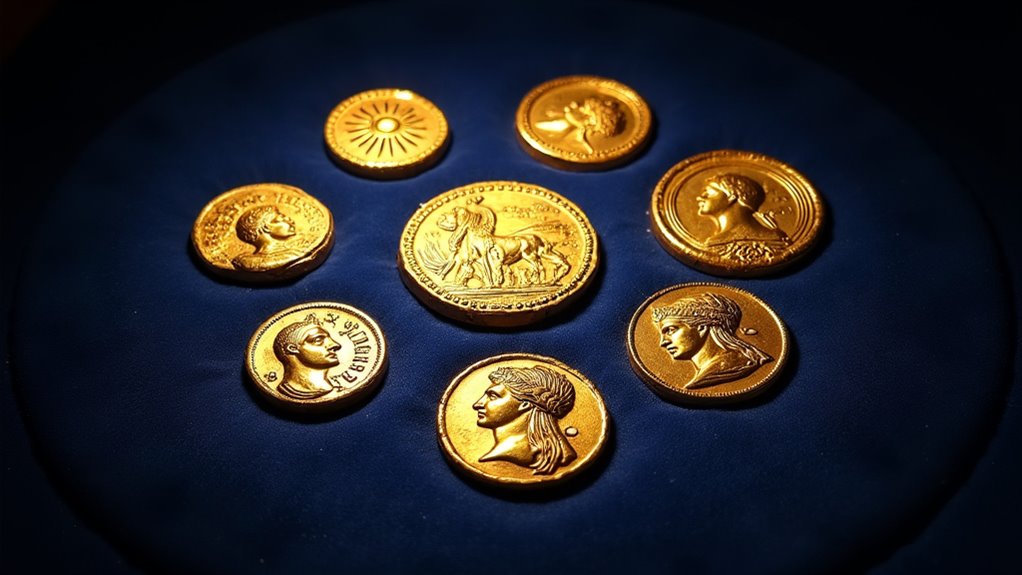
Rarity’s the big player – those low-mintage beauties from special events or with production quirks command serious cash.
Precious metal content (hello, gold and silver!) sets a baseline value that’s always fluctuating.
Then there’s condition – pristine pieces fetch top dollar, while beat-up coins… not so much.
Historical significance and unique designs can send values soaring, especially with royal connections or commemorative pieces.
Where Can I Safely Buy Authentic Historical British Coins?
The Royal Mint stands out as the most secure source for authentic British coins, offering certificates of authenticity and direct-from-source guarantees.

Other trustworthy options include Coincraft, specializing in Pre-Decimal pieces, and GovMint for historic specimens like Gold Sovereigns.
Heritage Auctions provides NGC-certified coins through a secure platform.
Smart collectors should prioritize retailers that offer certification, detailed descriptions, and clear ownership proof – avoiding sketchy dealers who cant verify their stock.
Which British Monarchs’ Coins Are the Most Sought After by Collectors?
Among British monarchs’ coins, Edward VIII pieces command insane attention due to his brief reign and abdication drama.

George III’s 1819 Sovereign is a collector’s holy grail – only a handful exist!
Victoria’s early coins, especially the gorgeous Una and Lion design, fetch premium prices.
George V’s 1917 Sovereign? That’s pure gold-bug catnip, thanks to WWI melting most of em’ down.
These royal heavyweights dominate the collectors’ wishlist’s like nothing else!
How Should I Properly Clean and Store My Antique British Coins?
Proper care of antique coins starts with handling them by their edges using cotton gloves.

For cleaning, only distilled water should be used – never harsh chemicals or abrasives that’ll destroy value!
Storage demands PVC-free holders in climate-controlled spaces away from UV light.
Pro tip: seperate different metals to prevent nasty chemical reactions.
Regular check-ups help catch problems early, while stable temps and low humidity keep those beauties pristine for decades to come.